Key facts: Emergency Water Damage
- Calls are answered 24 hours a day, including weekends and holidays.
- Federal mold guidance gives a one-to-two-day window for drying soaked building materials.
- Shutting the main valve stops a supply-line leak; outside floodwater has to be waited out or pumped.
- Sewage backups are treated as contaminated water and need protective handling.
- This is a referral line: an independent contractor speaks with you on the call.
In this page
- 1Emergencies the line takes calls about
- 2What happens after you call
- 3Why speed matters in Springville homes
- 4Emergency or next-day?
- 5Insurance in an emergency
- 6Emergency pages for parts of Springville
- 7Shutting off the water in a Springville home
- 8What the contractor needs to hear on the call
- 9Common mistakes in the first hour
- 10Who pays for an emergency visit
- 11Emergency questions
What counts
Emergencies the line takes calls about
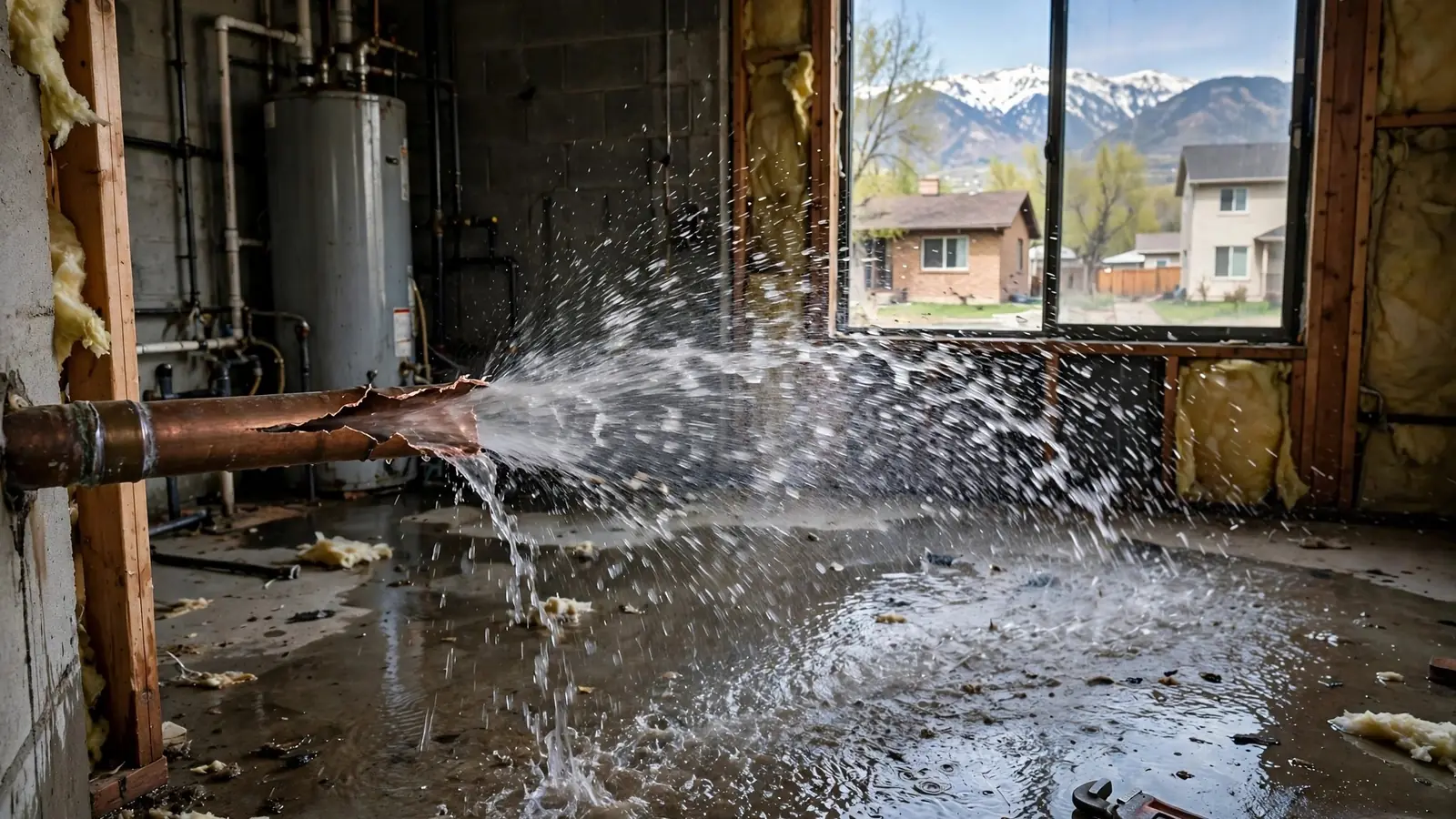
- Burst or frozen pipeA split line in a wall, garage or crawlspace keeps flowing at full pressure until the main valve is closed.
- Water heater failureA tank rupture can empty dozens of gallons onto a basement floor in minutes.
- Window-well floodingSnowmelt or a cloudburst fills a well and pours past the basement window.
- Sewage backupDark water rising through a basement floor drain or toilet.
- Appliance overflowWasher hoses, dishwasher lines and ice-maker connections that let go.
- Roof and ice-dam leaksMeltwater pushed under shingles drips into ceilings during thaws.
The first hours
What happens after you call
- 1
You describe it
Where the water is coming from, which rooms are wet and whether the power is safe.
- 2
Immediate advice
The contractor tells you what to shut off and what to move while you wait.
- 3
Arrival and safety check
Electrical hazards, sagging ceilings and contamination are checked before work starts.
- 4
Water out
Pumps and extractors remove standing water from floors and carpet.
- 5
Drying set up
Wet materials are mapped with meters and drying equipment is placed the same visit.
Time
Why speed matters in Springville homes
Most homes here have finished basements, and water runs straight to them. Carpet pad over a concrete slab soaks through within minutes, and drywall wicks water upward for hours. The sooner extraction starts, the more carpet, trim and drywall can be dried rather than torn out.
Winter adds urgency. A pipe that splits during a cold snap can run for hours before anyone notices, and a cold basement dries slowly. In spring, window wells and foundation seepage can keep adding water until the source outside is dealt with, which is why the first call often covers both stopping the water and protecting the room.
Triage
Emergency or next-day?
| Situation | Usually |
|---|---|
| Water still flowing from a pipe or appliance | Emergency: shut off and call now |
| Sewage coming up a drain | Emergency: stop using water and call |
| Basement flooding from a window well | Emergency: call while water is still rising |
| Ceiling sagging with water above it | Emergency: keep people out from underneath |
| Old dry stain with no active leak | Next day: call during normal hours |
Claims
Insurance in an emergency
You do not have to wait for an adjuster before stopping the damage. Most policies expect reasonable steps to prevent it getting worse, and starting extraction is part of that. Photograph everything first, keep the failed part if there is one, and report the claim as soon as you can.
Local
Emergency pages for parts of Springville
- Hobble Creek CanyonCreek runoff, frozen cabin pipes and harder winter access: see the canyon emergency page.
- WestfieldsSump pump failures and groundwater on the west side: see the Westfields emergency page.
Talk to a local contractor
Questions about emergency water damage?
One call connects you with an independent water damage restoration contractor who serves Springville.
Shutoff
Shutting off the water in a Springville home
Most houses in town have their main valve in the basement or utility room, on the line that comes through the foundation wall from the street, often within a few feet of the water heater. Older homes near Main Street may have a gate valve with a round handle that needs several clockwise turns; newer homes usually have a lever that closes with a quarter turn. If the indoor valve is stuck or you cannot find it, the city meter box near the street has another valve, though it may need a meter key.
If the leak is from a single fixture, a toilet, sink or washer, close the small valve behind or beneath it instead and keep the rest of the house running. For a water heater, close the cold supply on top of the tank and switch the heater off at its gas control or breaker. Write down where your valves are once things are calm; the next emergency will be faster.
On the call
What the contractor needs to hear on the call
A good first call takes two or three minutes and saves time later. Say where the water came from, how long it has been running, which rooms and floors are wet and whether the basement is finished. Mention anything unusual: a sagging ceiling, water near the electrical panel, a smell of sewage, children or anyone vulnerable in the house. If the home is a rental, say so, because the landlord may need to be involved.
The contractor will usually ask for photos once they are on site rather than on the call. What they need first is enough to decide what to bring: pumps for standing water, protective equipment for sewage, desiccant dehumidifiers for a cold basement, or extra air movers for a large finished space.
Avoid
Common mistakes in the first hour
Walking through water to reach a breaker is the most dangerous. Using a household vacuum on water is a close second. Others waste effort rather than risk safety: throwing out damaged items before they are photographed, running a fan in a closed basement and hoping it dries, or painting over a ceiling stain a week later without drying what is above it. When in doubt, stop, photograph and ask on the call.
Payment
Who pays for an emergency visit
Payment arrangements are between you and the contractor you speak with; this site does not set or collect anything. Many contractors work with homeowners insurance on covered losses, which commonly include sudden pipe and appliance failures. Flooding from outside and sewer backups are often treated differently, so ask the contractor how they handle each situation and check your policy.
Questions
Emergency questions
Is the line really answered at night?
Yes. Calls are answered 24 hours a day, every day, and connected to an independent contractor serving Springville.
Should I turn off the power?
Only if you can reach the panel from a dry spot. If the panel is wet or water is near outlets, keep away and say so on the call.
Can I start cleaning up myself?
Move belongings and mop clean water from hard floors if it is safe. Leave sewage, wet ceilings and electrical areas to professionals.
What if it is only a small leak?
If water has reached carpet pad, drywall or a ceiling, it is worth a call even if the drip is small.