
Key facts: Emergency: Westfields
- The Westfields subdivisions sit on lower ground toward Utah Lake, where the water table is closer to the surface.
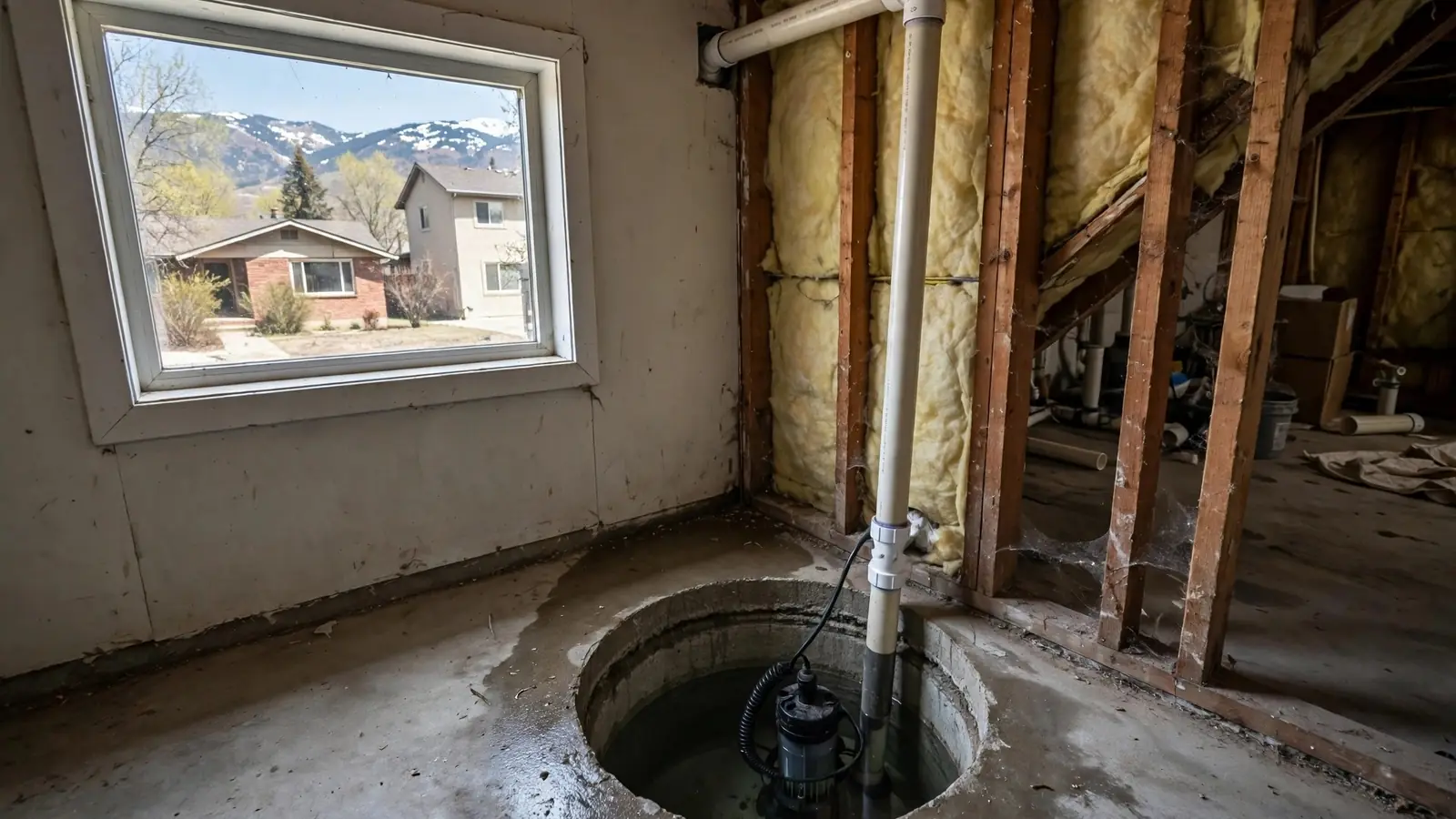
- A sump pump removes groundwater collected by perimeter drains; a failed pump can flood a basement.
- Sump overflow water comes from the ground and is generally treated as contaminated.
- Many policies need a separate endorsement for sump or drain backup.
In this page
- 1Why west-side emergencies spread fast
- 2What the contractor usually does
- 3After the emergency
- 4Power cuts and sump pumps
- 5Upstairs leaks in newer homes
- 6Groundwater that keeps coming
- 7Documenting for the builder or insurer
- 8Carpet, pad and floating floors
- 9Keeping the family comfortable during drying
- 10Questions to ask on the emergency call
- 11A note on water heaters and furnaces
- 12If you rent
- 13Westfields emergency questions
Local pattern
Why west-side emergencies spread fast
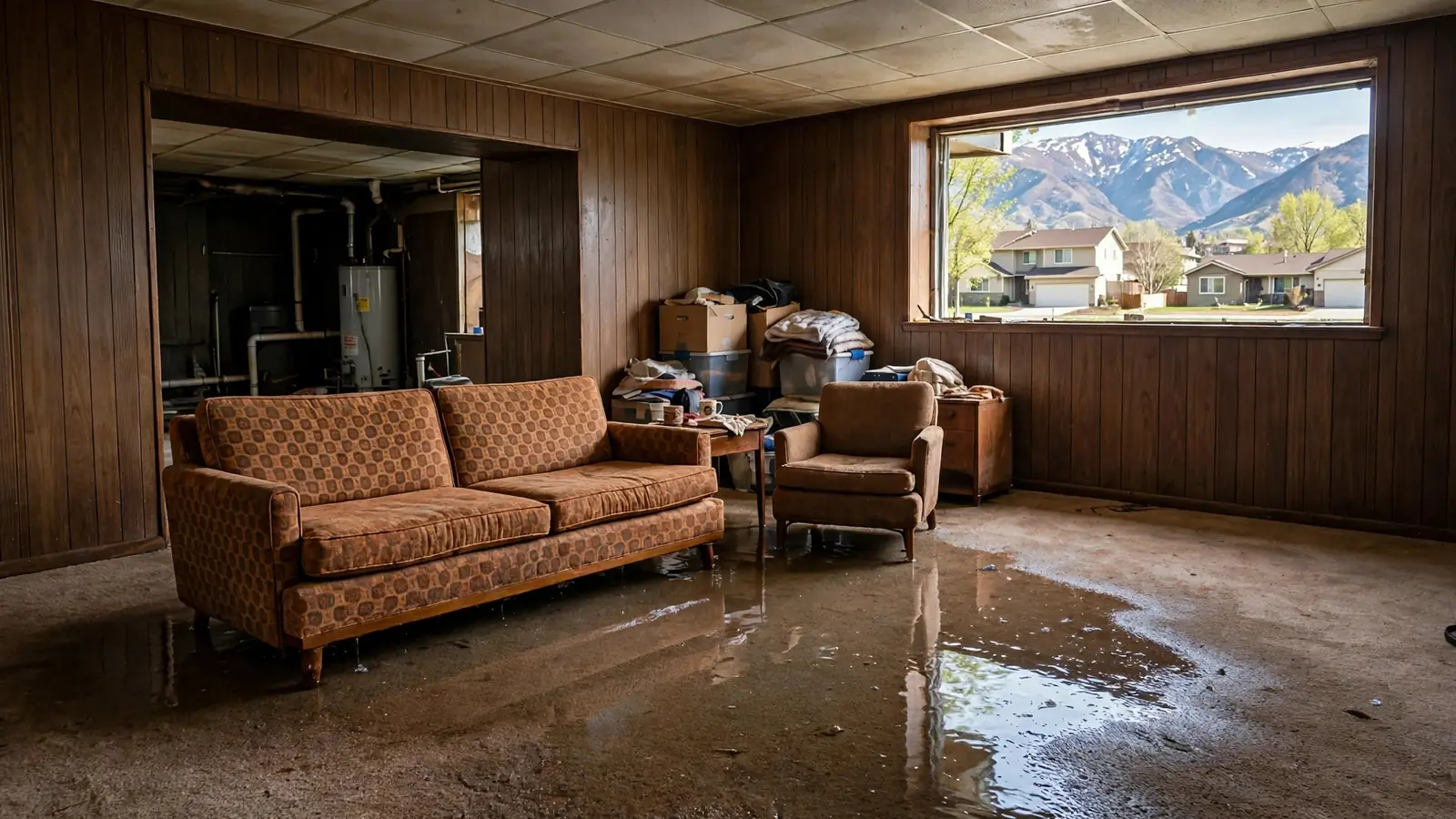
Newer homes here usually have open, finished basements with carpet over a slab and insulated stud walls. Groundwater coming from the pit or up through the slab spreads under the carpet in every direction and wicks into the bottom plates of walls. Because the basement looks only damp at first, people often wait, and the wet area grows.
Upstairs laundries are the other common emergency. A burst washer hose on the second floor sends water through the subfloor and into the ceiling of the great room below. Shutting the washer valves and the main supply quickly limits how far it goes.
Response
What the contractor usually does
- 1
Get the pit working
A temporary pump keeps groundwater down until the unit is replaced.
- 2
Extract
Standing water and soaked carpet are extracted; pad is removed.
- 3
Map moisture
Readings along every wall show how far water wicked.
- 4
Dry
Dehumidifiers and air movers run with daily readings until the basement is dry.
Prevention
After the emergency
Once the basement is dry, a battery backup pump and a high-water alarm are the simplest protection against a repeat. Builder warranties may cover some defects in newer homes, so document everything and notify the builder in writing if the house is still covered.
Outages
Power cuts and sump pumps
Summer thunderstorms and winter storms both knock out power, and they are also when the pit fills fastest. A pump with no power cannot keep up, so the water level in the pit rises and spills onto the slab. If you have a battery backup, check that it is running. If not, bailing the pit with a bucket into a sink or out of a window can hold the level for a while, but only do it if no live electrical equipment sits in or near the water.
When power returns, make sure the main pump starts. A pump that ran dry or sat flooded may not restart, and it is better to find out while you are watching than overnight.
Second floor
Upstairs leaks in newer homes
Two-story homes on the west side often have laundry and bathrooms upstairs. When a hose or fitting fails there, water travels across the subfloor and drops through light fixtures and ceiling joints into the rooms below. Turn off the washer valves or the main supply, switch off power to any light fixture that is dripping, and keep people out from under a sagging ceiling. Contractors may open a small section of ceiling to drain it safely before drying.
Persistent water
Groundwater that keeps coming
Sometimes the sump runs constantly and water still appears along a wall or through the slab. That points to more groundwater than the drain system can handle, common in wet springs on lower ground. The emergency response is the same, protect belongings and extract, but the contractor may advise holding off on new carpet until a drainage contractor has looked at the perimeter drain and pit.
Records
Documenting for the builder or insurer
If the house is still under a builder warranty, write to the builder as soon as possible and keep a copy. Photograph the pit, the pump, the wet areas and any failed fitting. The restoration contractor's moisture log and photos become the record of what was damaged and how it was dried, which helps whoever ends up responsible for the repair.
Talk to a local contractor
Questions about emergency: westfields?
One call connects you with an independent water damage restoration contractor who serves Springville.
Floors
Carpet, pad and floating floors
Most west-side basements have carpet over a thin pad, and many main floors have luxury vinyl plank or engineered wood laid as a floating floor. Groundwater from a sump or seepage is treated as contaminated, so basement pad is usually removed and the carpet often goes too. Floating floors upstairs that took clean water from a laundry leak may be lifted in the wet area so the subfloor can dry, then relaid or replaced.
The contractor will explain which materials they plan to remove and why. Ask them to photograph and measure anything that goes, which keeps the insurance file complete.
During drying
Keeping the family comfortable during drying
Drying a basement usually takes several days with equipment running around the clock. Bedrooms down there will be out of use, and the noise carries. Keep children and pets away from cords and hoses, leave doors and windows as the contractor sets them, and keep the heating or cooling running as advised, because drying is faster in a warm house. If an upstairs bathroom or laundry is out of service, plan around it for a few days.
Ask
Questions to ask on the emergency call
Ask how soon someone can bring a pump if the pit is still overflowing, whether they carry protective equipment for groundwater and sewage, and how they will check the walls for hidden moisture. Ask whether they document the job for insurers and builders, and what licences and insurance they hold. A contractor who answers plainly on the first call is usually the one who explains the drying clearly later.
Equipment
A note on water heaters and furnaces
Basement mechanical rooms often sit right beside the sump pit. If groundwater reached the base of a gas water heater or furnace, leave it off until a qualified technician has checked the controls and burner. Electric units that sat in water need the same caution. Tell the restoration contractor so they can work around the equipment and protect it during drying.
Renters
If you rent
Tenants should stop the water if they can, protect their own belongings and tell the landlord in writing straight away. The landlord normally arranges drying of the building.
Questions
Westfields emergency questions
The power is out and the pit is filling. What now?
Bail if you can do it safely, move belongings up and call; a contractor can bring a pump.
Is sump water dangerous?
It has come through soil, so treat it as contaminated and avoid contact.
Will insurance pay?
It depends on your policy and whether you have a sump or drain backup endorsement.