
Key facts: Insurance adjuster
- Homeowners policies commonly cover sudden and accidental water damage, such as a burst pipe, subject to terms.
- Gradual leaks, poor maintenance and surface flooding are frequently excluded.
- Flood coverage is usually a separate policy, such as through the NFIP.
- Policies generally require the homeowner to take reasonable steps to prevent further damage.
- The Utah Insurance Department handles consumer questions and complaints about insurers in Utah.
In this guide
- 1Report it promptly
- 2Start mitigation without waiting
- 3What adjusters typically look at
- 4Common causes and typical treatment
- 5Documentation that helps
- 6If you disagree
- 7The adjuster's visit
- 8Contents claims
- 9Additional living expenses
- 10Timelines
- 11Mitigation invoices
- 12Public adjusters and help
- 13Keeping calm
- 14Questions to ask the adjuster
- 15Mortgage lenders
- 16One more tip
- 17Before you go
- 18Mold and policy limits
- 19After the claim closes
- 20Insurance questions
Step one
Report it promptly
Call your insurer or agent as soon as the water is under control. You will be given a claim number and usually assigned an adjuster. Write down the claim number, the adjuster's name and how to reach them. Keep a simple log of every conversation: date, who you spoke with and what was said.
Step two
Start mitigation without waiting
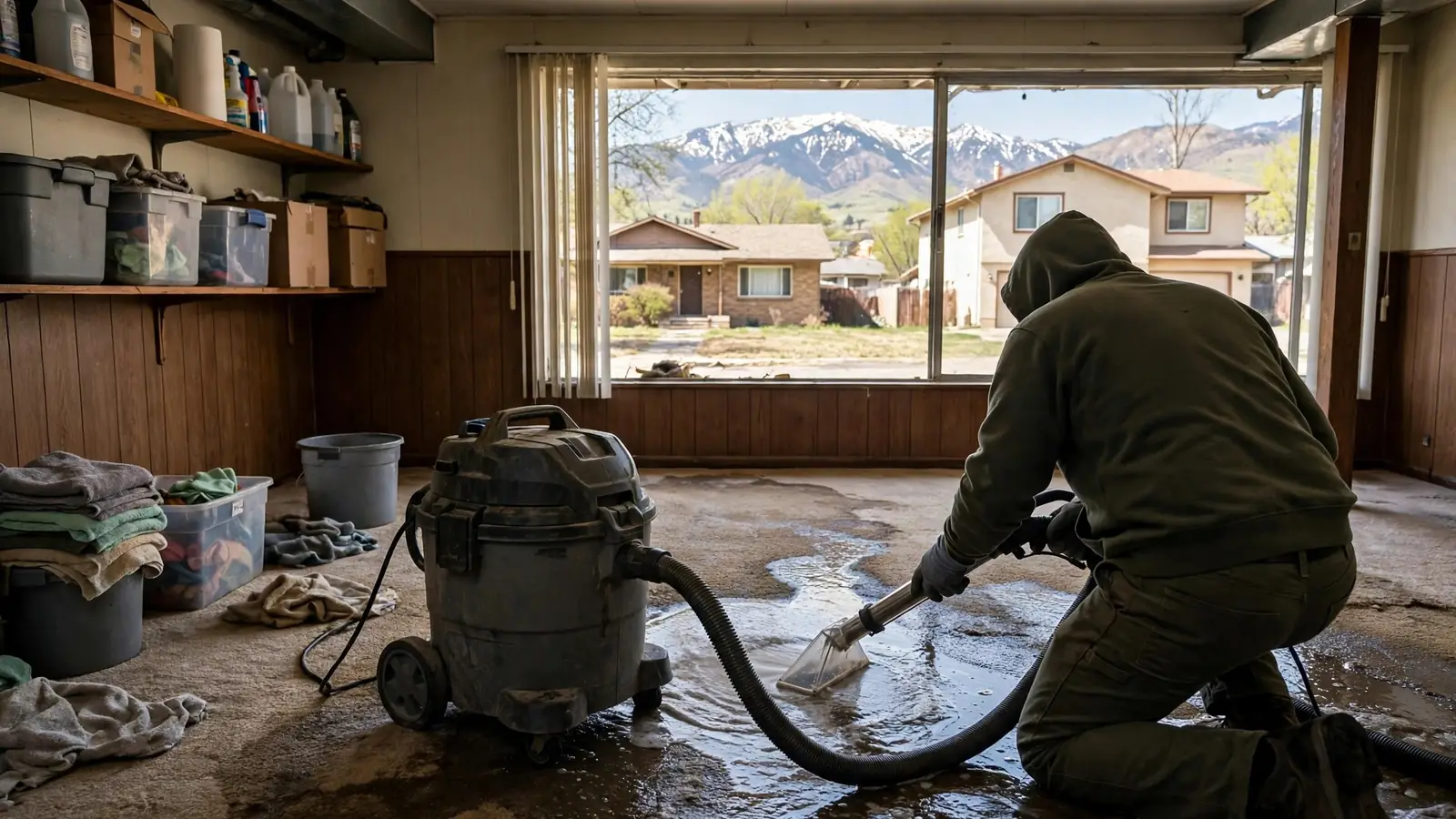
Most policies include a duty to protect the property from further damage. That means you are expected to stop the water and begin drying, rather than leaving the house wet until an adjuster visits. Insurers generally expect reasonable mitigation work, and leaving water in place can lead to mold that a policy may not cover.
Tell the contractor you have filed a claim. Many restoration contractors are used to documenting jobs the way adjusters expect: photos before and during work, a moisture log with daily readings, and a list of materials removed with measurements.
The adjuster's view
What adjusters typically look at
- The causeWas it sudden, like a burst pipe, or gradual, like a slow drip over months? Was it from inside or outside the house?
- The extentWhich rooms, materials and belongings were affected.
- The responseHow quickly the water was stopped and drying started.
- DocumentationPhotos, the failed part, moisture logs and receipts.
- Policy termsDeductible, exclusions, limits and any endorsements.
Coverage patterns
Common causes and typical treatment
| Cause | Often treated as |
|---|---|
| Burst pipe, failed supply hose | Sudden and accidental, commonly covered |
| Water heater rupture | Commonly covered for resulting damage; the heater itself may not be |
| Slow leak over months | Often excluded as gradual or maintenance |
| Snowmelt or surface flooding | Excluded without flood insurance |
| Sewer or drain backup | Covered only with a backup endorsement on many policies |
| Roof leak from ice dam | Varies by policy |
Records
Documentation that helps
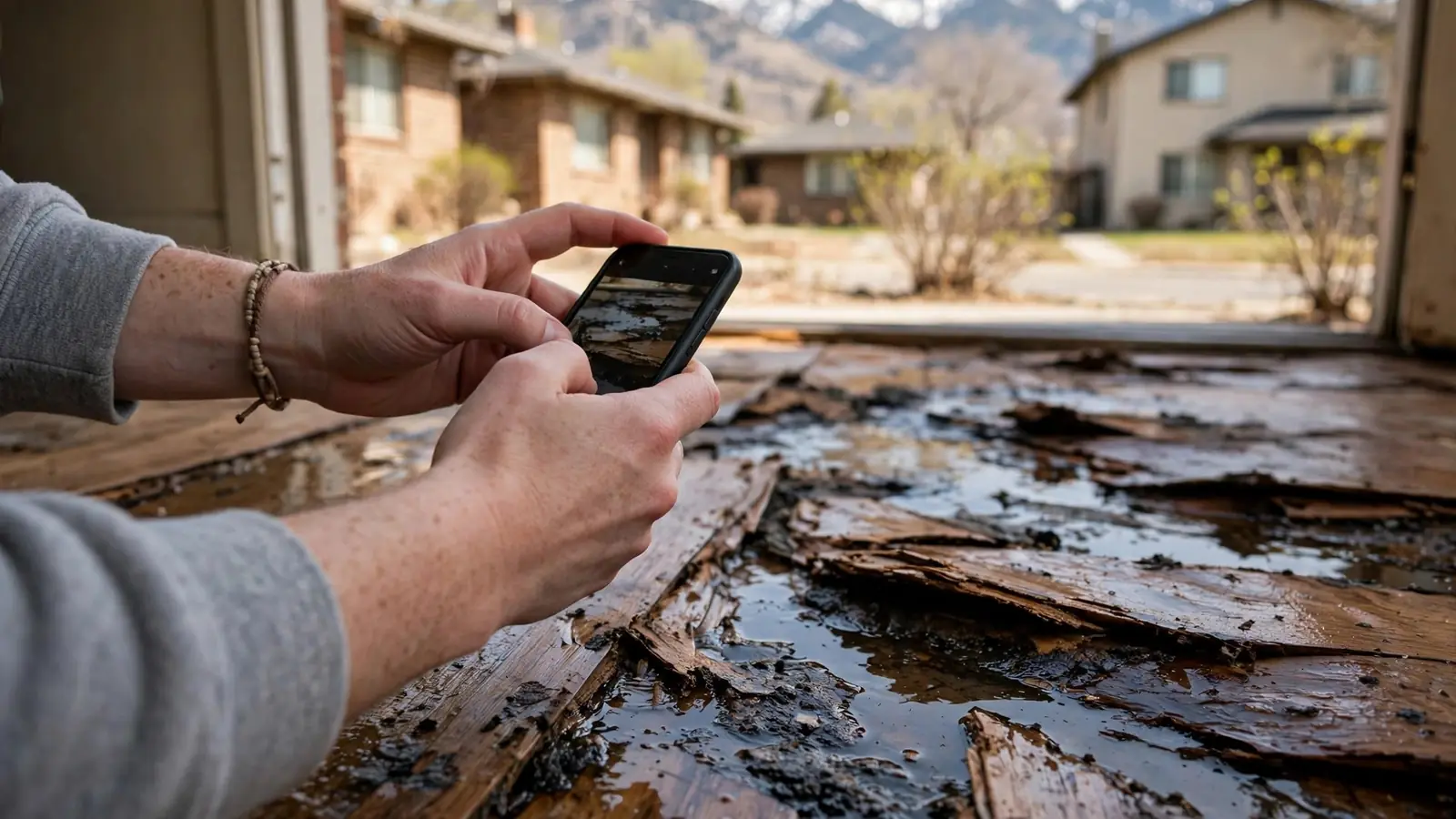
Photos are the backbone of a claim. Take them before anything is moved, during the cleanup and after materials are removed. Keep the failed part if there is one. Ask the contractor for their moisture log and a written scope. Keep receipts for anything you bought or paid for, including hotel stays if the house was not livable. Make a list of damaged belongings with descriptions and approximate ages.
Disputes
If you disagree
If you think the adjuster missed damage or misread the cause, ask in writing for the reasoning and provide your evidence. You can ask for a re-inspection. Policies often include an appraisal process for disputes over the amount of a loss. If you believe an insurer is handling a claim unfairly, the Utah Insurance Department accepts consumer complaints. [3]
The visit
The adjuster's visit
When the adjuster visits, walk them through the house in the order the water travelled. Show the source, the failed part, the photos taken before cleanup, and the materials that were removed. Have the contractor's moisture log and scope ready. Ask questions about anything you do not understand, and ask for explanations in writing. Take notes or ask if you can record the conversation.
Belongings
Contents claims
Belongings are usually handled separately from the building. Make a list of damaged items with a description, approximate age and where you bought them if you remember. Photos, receipts and bank statements help. Do not throw items away until the adjuster has seen them or agreed they can go, unless they pose a health risk, in which case photograph them first.
Living elsewhere
Additional living expenses
If the house is not livable during repairs, many policies cover reasonable additional living expenses, such as a hotel or rental. Keep receipts and ask the adjuster what is covered before you commit to anything.
Deadlines
Timelines
Policies often set deadlines for reporting a loss and submitting proof of loss. Read yours and note the dates. If you need more time, ask in writing.
Call about this problem
Questions about insurance adjuster?
One call connects you with an independent water damage restoration contractor who serves Springville.
Billing
Mitigation invoices
The restoration contractor usually bills the mitigation phase separately from repairs. Insurers review those invoices against the documentation: photos, readings, equipment logs. Clear records make that review smoother. Ask the contractor whether they bill the insurer directly or you, and what you are responsible for.
Help
Public adjusters and help
Some homeowners with large or disputed claims hire a public adjuster, who represents the policyholder rather than the insurer. Utah licenses public adjusters. The Utah Insurance Department can answer questions about licensing and consumer rights.
Approach
Keeping calm
Claims can feel adversarial, but most go smoothly when the cause is clear and documented. Stay organised, respond promptly and keep everything in writing.
Ask
Questions to ask the adjuster
What does my policy cover for this cause of loss? What is my deductible? Are there limits for mold, sewer backup or contents? Do I need written estimates, and from whom? How will payments be made, and will my mortgage lender be named on the check? What deadlines apply to my claim? Asking these early avoids surprises later.
Lenders
Mortgage lenders
If you have a mortgage, the insurer may make claim payments jointly to you and your lender. Lenders often hold funds and release them as repairs progress. Call your lender early to understand their process.
Tip
One more tip
If you are unsure whether to file a claim at all, ask your agent general questions first, compare the likely scope with your deductible and weigh how a claim might affect future premiums. For large losses, filing is usually worthwhile; for minor ones, a conversation first helps you decide.
Last word
Before you go
Finally, keep copies of everything you send to the insurer and everything they send you, in one folder or email thread. When questions come up weeks later, a complete record answers them quickly. Note the dates of every call and visit, and confirm important conversations by email so there is a written trail.
Mold and policy limits
Many policies limit coverage for mold, sometimes to a fixed amount, and may exclude mold that results from long-term leaks. Prompt drying after a sudden loss is the best way to avoid a mold problem the policy may not fully cover. If mold is found during cleanup, ask your adjuster how your policy treats it, and keep the contractor's documentation showing when drying started.
After the claim closes
Keep your claim file for years. It is useful if the problem recurs, if you sell the house and disclose past water damage, or if questions arise about previous repairs.
Questions
Insurance questions
Do I have to use the insurer's preferred contractor?
Generally you can choose your own contractor. Check your policy and ask the adjuster.
Will my premium go up?
It can, depending on the insurer and your claim history. Ask your agent.
Is it worth claiming a small leak?
Compare the likely repair scope with your deductible and talk to your agent before filing.