
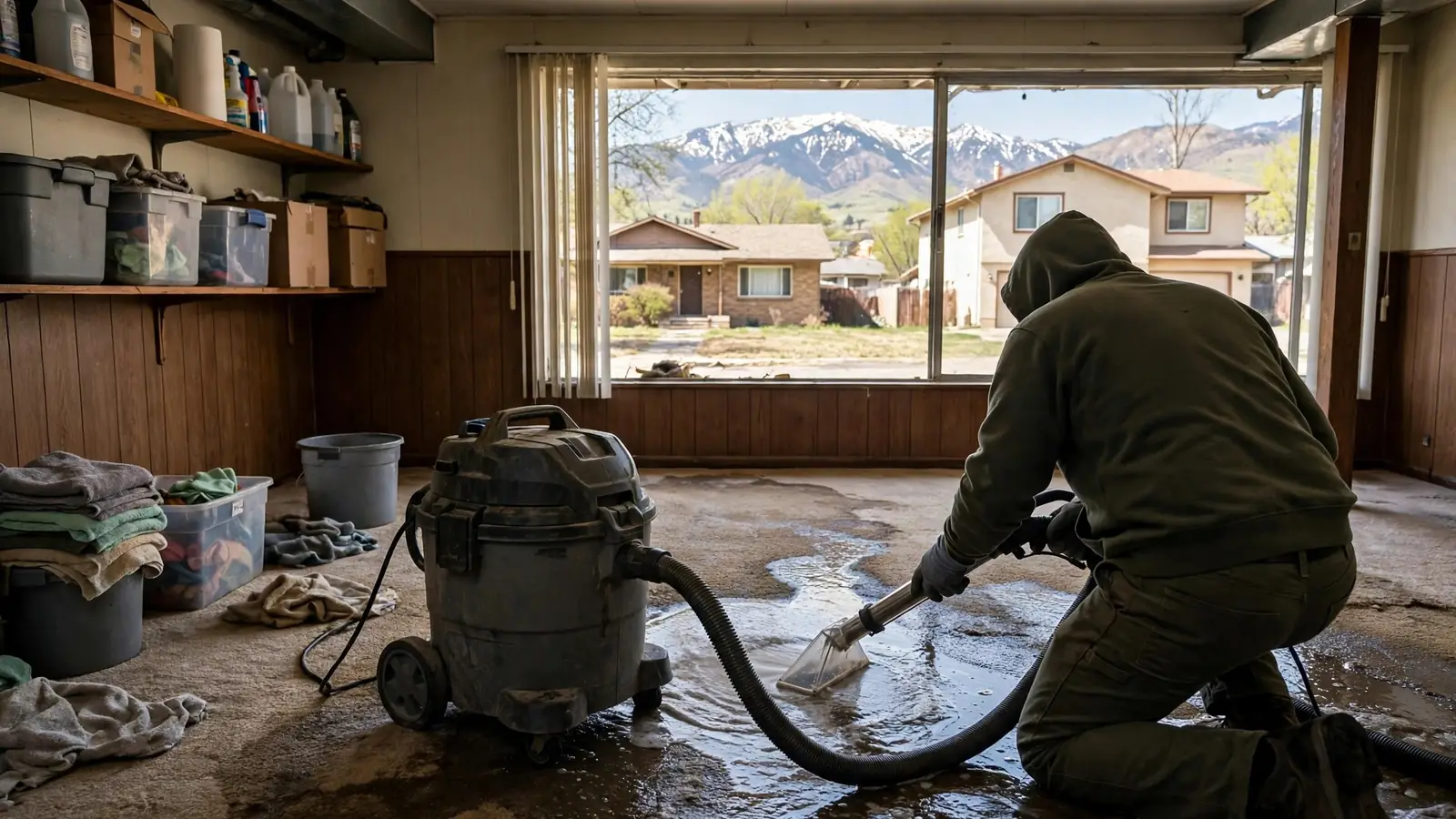
Key facts: Water Damage Cleanup
- The EPA advises drying water-damaged materials within 24 to 48 hours to reduce the chance of mold growth.
- Extraction removes liquid water far faster than evaporation, so it is done before drying equipment is set.
- Carpet pad soaks up water like a sponge and is commonly replaced even when the carpet above it can be saved.
- Drywall is often removed in a straight cut a short distance above the visible wet line so the wall cavity can dry.
- Drying is finished when moisture readings in affected materials match readings in unaffected materials of the same kind.
In this page
- 1The job between the leak and the rebuild
- 2Leaks that usually lead to a cleanup call
- 3Why the source of the water changes the cleanup
- 4Step by step: a water damage cleanup
- 5What usually stays and what usually goes
- 6Flood cuts and why walls get opened
- 7Cleaning up a finished Springville basement
- 8How drying actually works
- 9Tools you may see in your home
- 10Cabinets, vanities and the subfloor beneath
- 11Keeping mold out of the picture
- 12A rough timeline for a clean-water loss
- 13Cleanup and your homeowners claim
- 14What happens once the equipment leaves
- 15Questions to ask the contractor you speak with
- 16Odor after a leak
- 17Cleanup in rental homes
- 18When to call versus handle it yourself
- 19Follow-up checks
- 20More reading
- 21Water damage cleanup questions
What cleanup covers
The job between the leak and the rebuild
People often picture water damage cleanup as mopping and fans. In practice it is a sequence of decisions. Where did the water come from, and how clean was it? How far did it travel inside walls, under flooring and through the basement ceiling? Which materials can be dried where they are, and which hold so much water, or such contaminated water, that drying them would take longer than replacing them? The answers shape every hour of the job.
Cleanup sits between two other phases. Before it comes the emergency stop: shutting off the supply, making the electrical situation safe and protecting belongings. After it comes the rebuild: new drywall, paint, trim, flooring and cabinets. A contractor can do all three, but the cleanup phase is the one that decides how big the rebuild will be. A slow or careless cleanup turns a few feet of wet drywall into a full room of mold-stained framing.
In Springville homes, cleanup very often means a basement. Water from an upstairs bathroom, a laundry hose or a ruptured line in an exterior wall runs downward until it hits the lowest finished surface. That may be a basement family room with carpet over a concrete slab, a bedroom with framed walls against the foundation, or a storage room full of boxes sitting directly on the floor.
Common sources
Leaks that usually lead to a cleanup call
Burst or split supply line
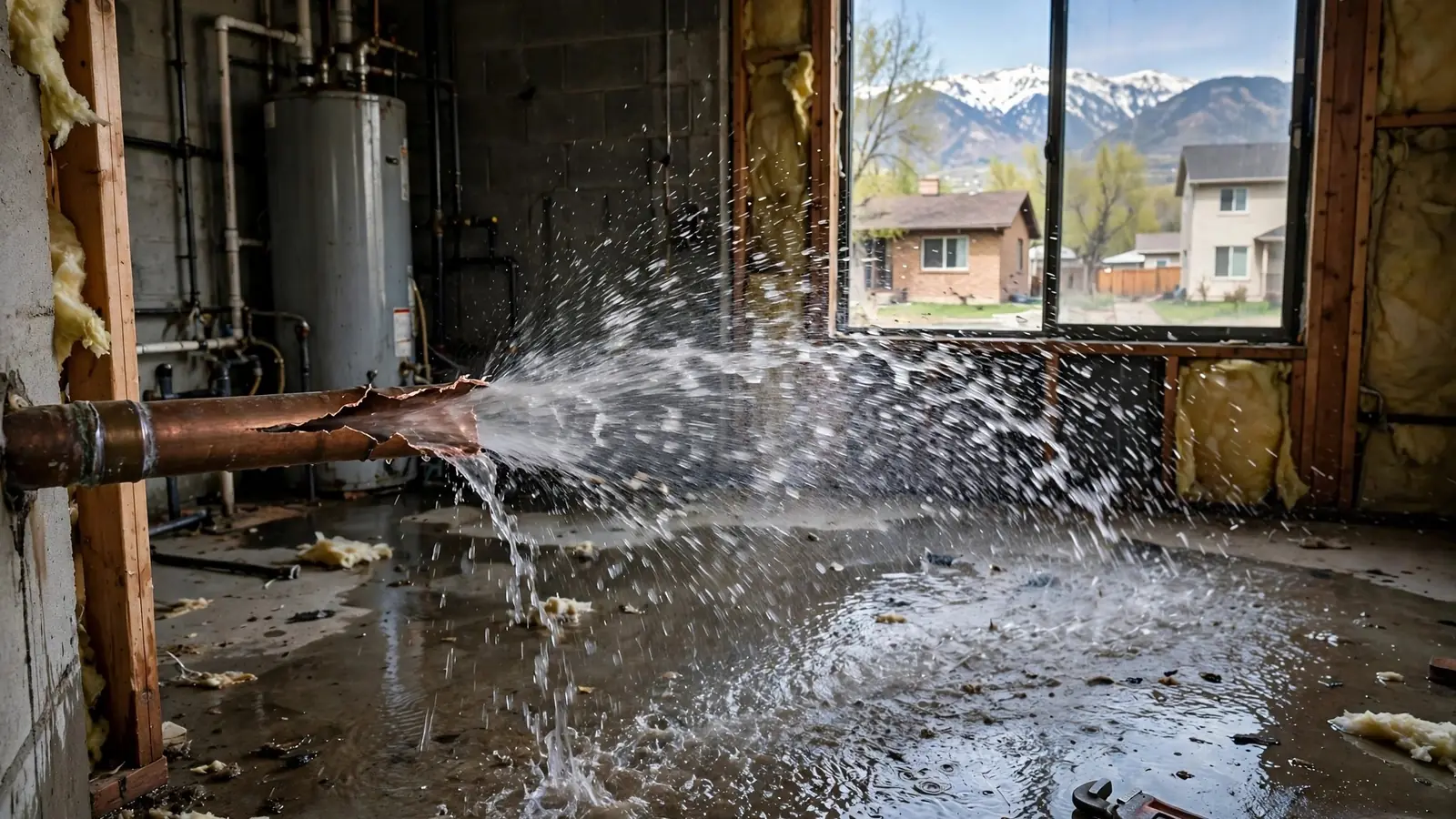
A copper or PEX line that freezes in an outside wall or crawlspace can split and release water under full pressure until someone closes a valve.
Washing machine hose
Rubber fill hoses age and burst. Because they are pressurised, a failure can put a large amount of water on the floor in a short time.
Water heater failure
A tank that rusts through may leak slowly at first and then let go, emptying its contents into a utility room or basement closet.
Toilet, sink or tub overflow
Overflows spread across bathroom floors and drip through to the ceiling below, often along a light fixture or vent.
Dishwasher and ice-maker lines
Small leaks under kitchen cabinets can go unseen for weeks, soaking the cabinet floor and the subfloor below it.
Fire sprinkler or roof leak
Less common in houses, but sprinkler discharges in townhomes and roof leaks during snowmelt send water into ceilings and walls.
Water category
Why the source of the water changes the cleanup
Restoration contractors sort water losses by contamination. Clean water, sometimes called category 1, comes straight from a supply line, a water heater or a sink faucet. Gray water, category 2, carries some contamination, such as discharge from a washing machine or dishwasher. Black water, category 3, is grossly contaminated: sewage, water that has come in from outside across soil, and water that has sat long enough to grow bacteria.
The category decides how aggressive the cleanup has to be. With clean water caught early, carpet can often be dried in place after the pad underneath is removed, and drywall that is only damp may dry without being cut. With gray water, more porous material comes out and surfaces are cleaned and treated. With black water, porous materials that were touched, such as carpet, pad, drywall and insulation, are generally removed and bagged, and the work area is treated as contaminated.
Category can change. Clean water that runs through a dusty wall cavity, under a carpet that has been in place for decades, or sits for a few days in a warm basement can become gray. That is one reason contractors ask how long the water was there before it was noticed.
The process
Step by step: a water damage cleanup
- 1
Stop the source and make it safe
The supply is closed, power is shut off to wet circuits if needed, and trip hazards and sagging ceilings are identified before work starts.
- 2
Inspect and map the moisture
Pin and pinless meters measure moisture in drywall, wood and concrete. A thermal camera may be used to spot cool, wet areas, which are then confirmed with a meter.
- 3
Move and protect contents
Furniture is lifted onto blocks or moved to a dry room, and boxes on the floor are opened and sorted before cardboard collapses.
- 4
Extract standing water
Extractors remove water from hard floors and carpet. Weighted extraction tools can push more water out of carpet and pad than a wand alone.
- 5
Remove what will not dry
Wet carpet pad, swollen particleboard, saturated insulation and drywall below the wet line are removed so hidden cavities are opened to air.
- 6
Set drying equipment
Air movers are placed to move air across wet surfaces and dehumidifiers pull the moisture out of the air. Sealed walls may be dried with injection systems.
- 7
Monitor every day
Readings are taken and logged at the same points each day, equipment is adjusted, and drying continues until materials reach their dry standard.
- 8
Clean, document and hand over
Surfaces are cleaned, the moisture log and photos are compiled, and the scope for repairs is written up for you and your insurer.
Materials
What usually stays and what usually goes
| Material | Usual outcome | Why |
|---|---|---|
| Carpet | Often dried in place | Synthetic carpet tolerates clean water if extracted and dried quickly |
| Carpet pad | Usually replaced | Foam pad holds a great deal of water and is simple to swap |
| Drywall, damp | May be dried in place | Gypsum dries if readings drop steadily and the paper has not delaminated |
| Drywall, saturated or sagging | Cut out | Soft or crumbling board has lost strength and hides wet framing |
| Fiberglass batt insulation | Usually removed | Wet batts compress, stay wet and block drying of the wall cavity |
| Solid hardwood floor | Dried with mats and air | Cupping can reverse if moisture is removed before boards set |
| Laminate and engineered floor | Often replaced | Fiberboard cores swell and do not return to flat |
| Particleboard cabinet bases | Often replaced | Particleboard swells and loses strength once soaked |
Black water changes these outcomes. Porous items touched by sewage or floodwater are generally removed.
Drywall decisions
Flood cuts and why walls get opened
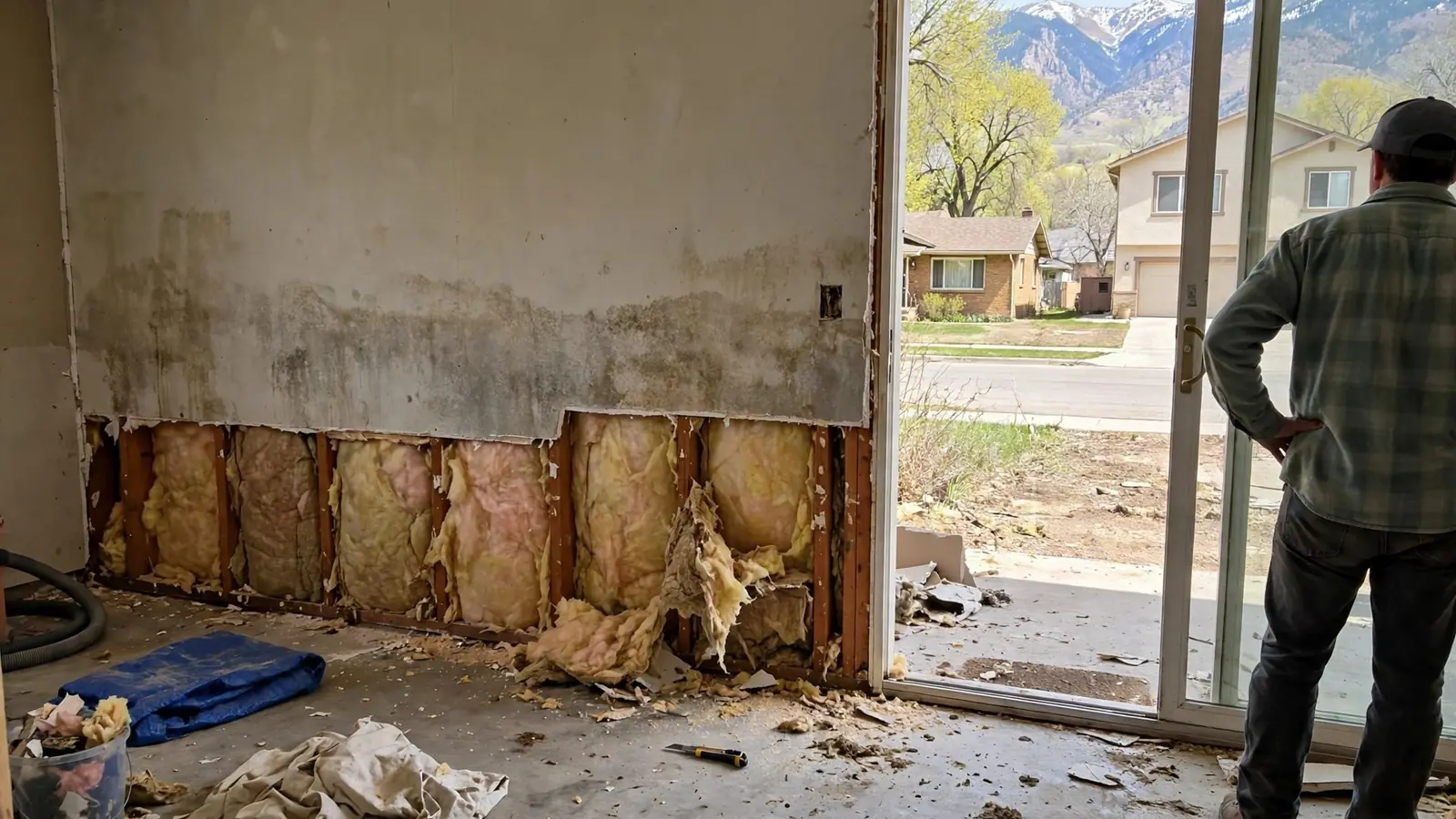
A flood cut is a straight, level cut through drywall a little above the highest point of wet material. Everything below the cut comes off. That sounds drastic, but it is often faster and more reliable than trying to dry a closed wall. Behind finished basement walls in many Utah homes there is fiberglass insulation and sometimes a plastic vapor barrier against the foundation. Water trapped there cannot escape through painted drywall quickly, and it can stay wet for weeks.
Not every wet wall needs to be cut. When water was clean, the exposure was short and readings show the drywall drying steadily, many contractors dry it in place by moving air across the surface and, if needed, drilling small holes behind the baseboard to blow air into the cavity. The deciding factors are the water category, how long it sat, how high it wicked, what is inside the wall and how the readings behave over the first day.
Ask the contractor you speak with how they decide. A good answer mentions readings, water category and what is inside the wall, not a blanket rule.
Basements
Cleaning up a finished Springville basement
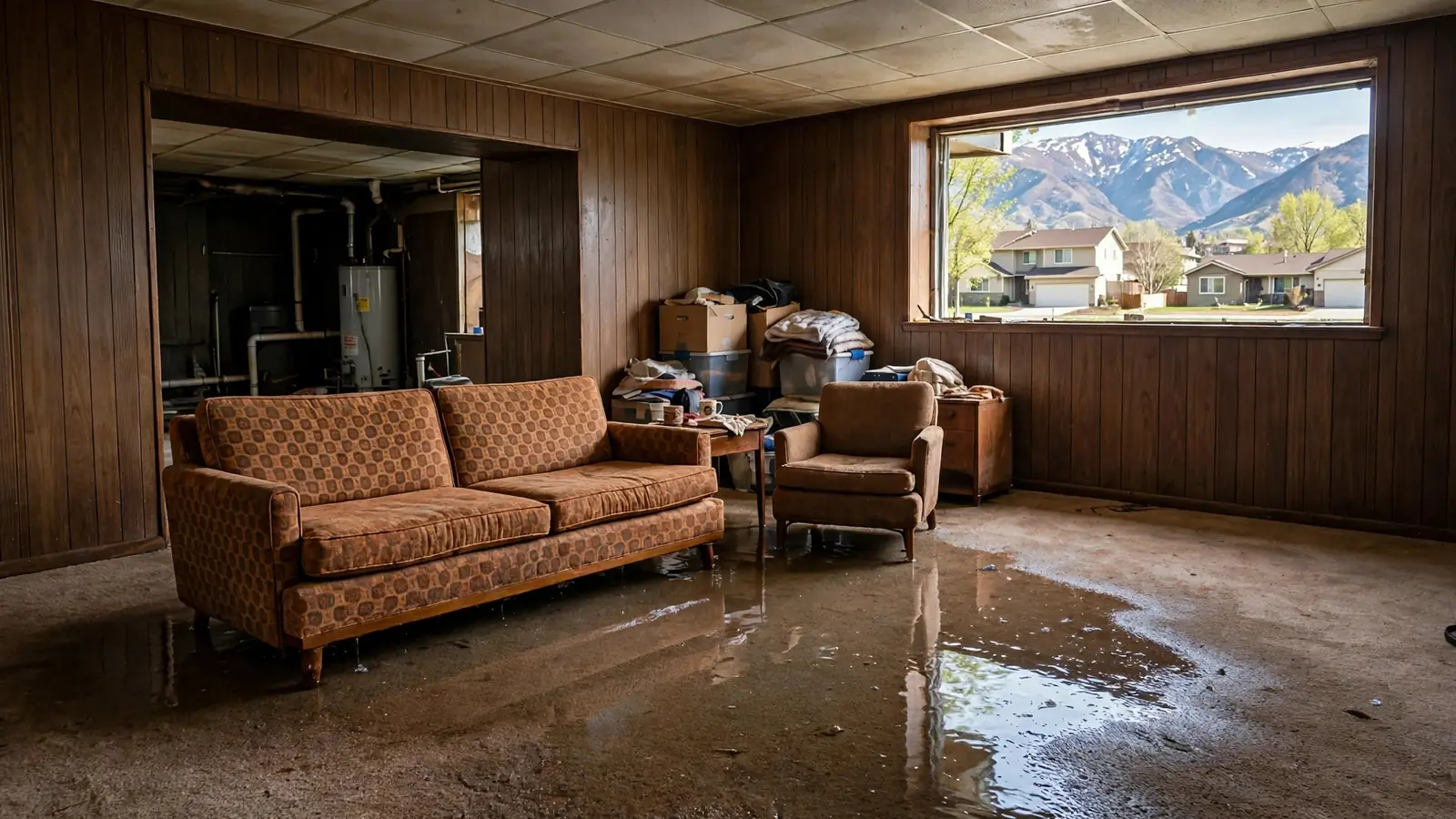
Finished basements are where the hardest cleanups happen. Carpet often sits on a thin pad directly over a concrete slab, so water spreads under it in every direction. Interior walls may be framed with wood bottom plates sitting on the concrete, which wick water upward. Exterior walls may have insulation against the foundation. And the room usually has limited airflow and no outside windows other than a window well.
The cleanup tends to follow a pattern. Carpet is pulled back or removed, pad is cut out, and the slab is extracted and dried. Bottom plates and lower drywall are checked carefully. Storage rooms are emptied, because boxes on wet concrete pull moisture up into their contents. Dehumidifiers do much of the work, because the cool slab and still air make evaporation slow.
- Carpet pad on concrete is usually removed
- Wood bottom plates are read with a meter
- Stored boxes need emptying fast
- Dehumidifiers matter more than fans below grade
Drying science
How drying actually works
Drying is a balance of three things: moving air, dry air and warmth. Air movers blow fast air across wet surfaces, which speeds evaporation. That evaporated water has to go somewhere, and in a closed house it ends up in the air. Dehumidifiers pull it back out, so the air stays dry enough to keep absorbing moisture from the materials. Warmth speeds the whole process up, which is why drying a cold basement takes longer than drying a warm upstairs room.
Springville's dry climate helps outdoors, but it does not dry the inside of a closed wall or the underside of a carpet pad. A wet house sealed against winter cold will hold its humidity unless dehumidifiers remove it. Opening windows can help on mild, dry days, but in winter it simply cools the materials and slows drying.
Professionals measure progress instead of guessing. They take readings from affected materials and compare them with the same type of material in an unaffected part of the house. Drying is done when the wet areas read like the dry ones. That comparison is what goes into the drying log your insurer may ask for.
Equipment
Tools you may see in your home
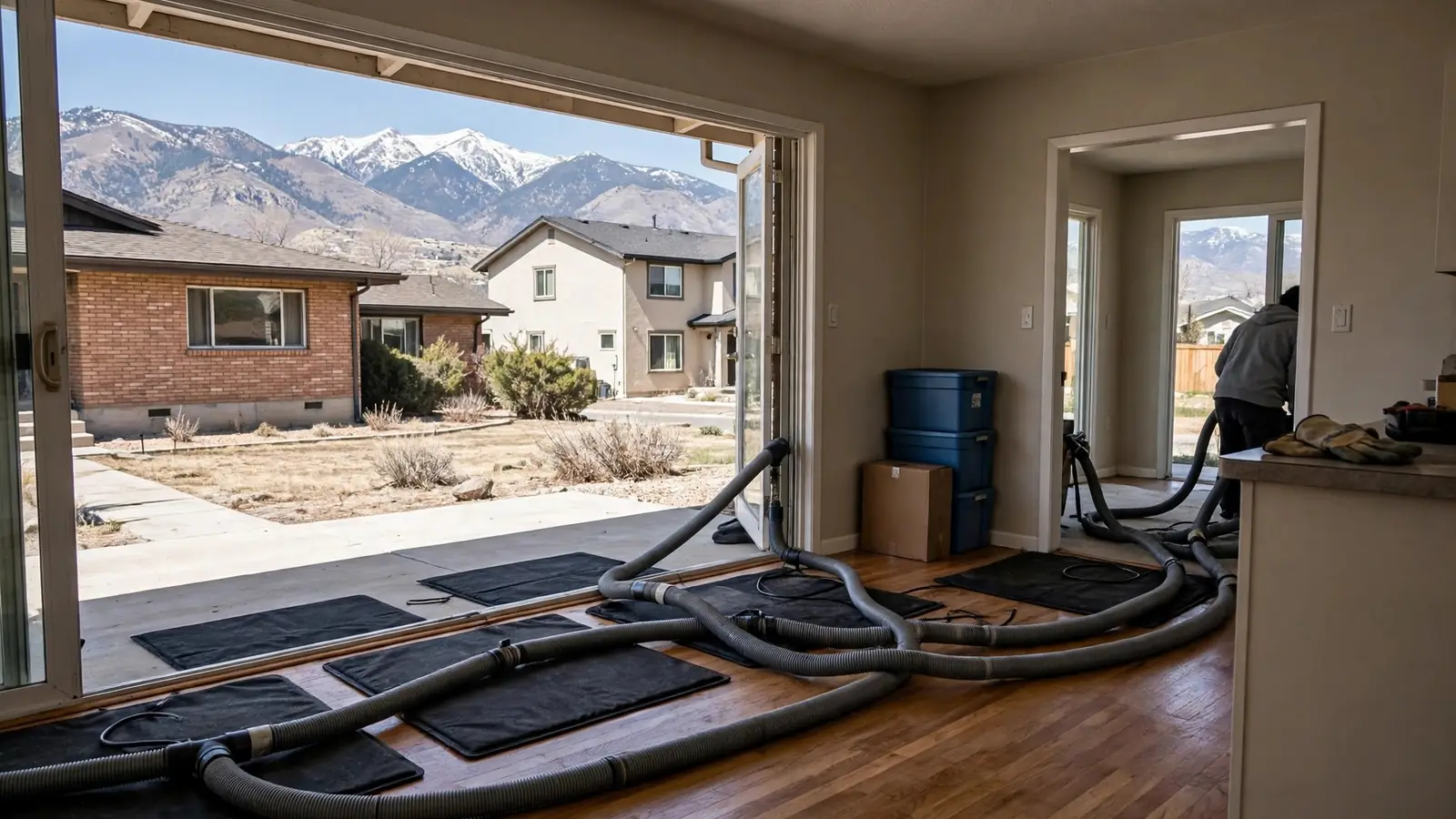
- Extraction unitsPortable or truck-mounted machines that remove standing water from carpet and hard floors.
- Air moversLow, angled fans that push air across floors and walls. Several are usually placed around a room.
- DehumidifiersRefrigerant or desiccant machines that pull water vapor from the air. They often run continuously and drain into a sink or hose.
- Moisture metersPin meters measure moisture inside wood and drywall; pinless meters scan surfaces without leaving holes.
- Thermal cameraShows temperature differences that often point to wet areas. Readings are confirmed with a meter before decisions are made.
- Wall and floor drying systemsMats and injection hoses that push or pull air through hardwood floors and closed wall cavities.
Kitchens and baths
Cabinets, vanities and the subfloor beneath
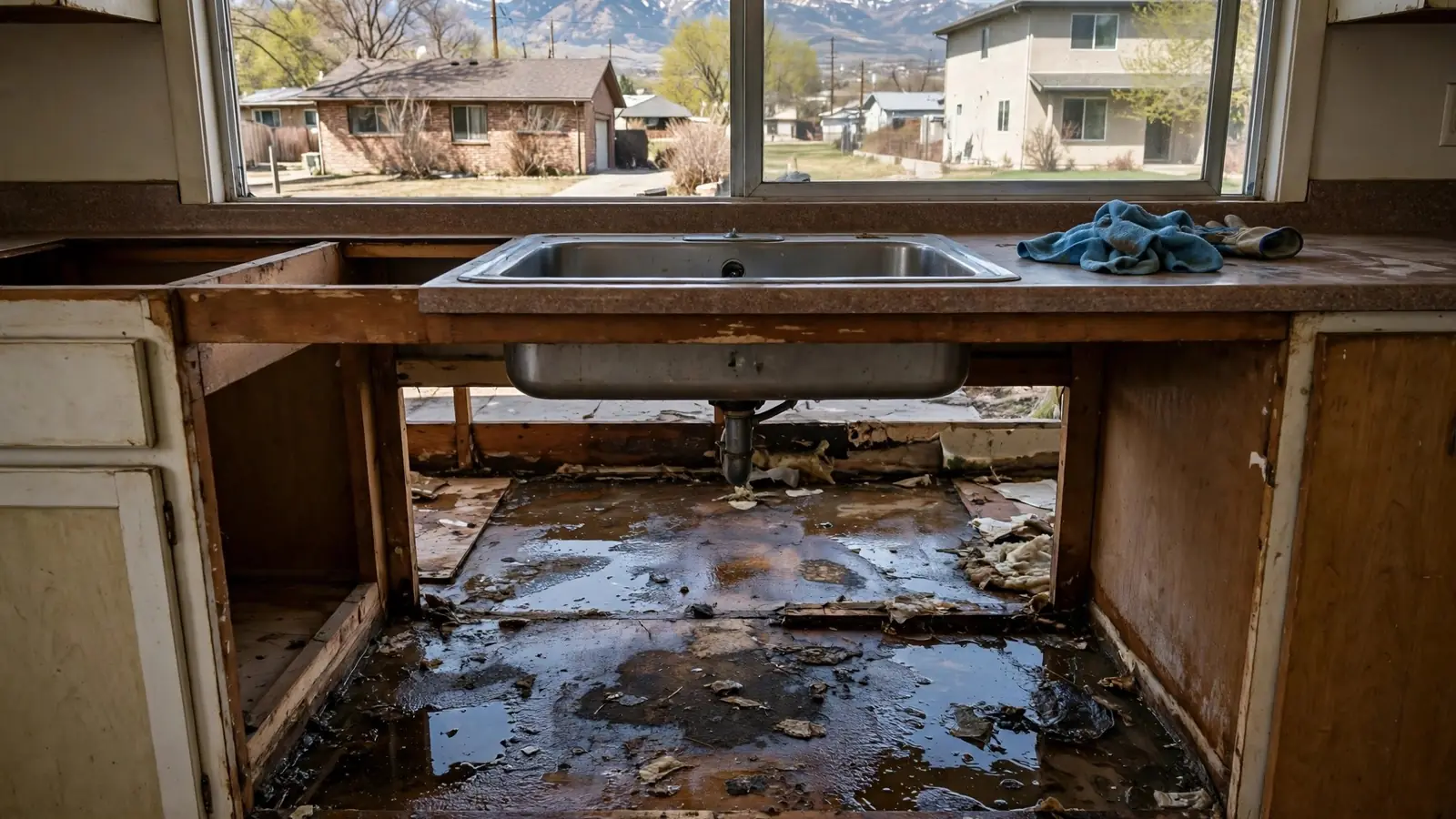
Leaks under sinks are some of the most stubborn. A dishwasher supply or a drain connection can drip for weeks behind a toe kick before anyone notices. By then the cabinet floor has swollen and the subfloor beneath may be soft. Cleanup often means removing the toe kick or the cabinet floor to see what is underneath and to get air to it.
Whether cabinets can be saved depends on what they are made of and how long they were wet. Solid wood boxes may dry. Particleboard and fiberboard boxes usually swell at the bottom edge and stay that way. Countertops are often salvageable if the cabinets have to be replaced, but stone tops need careful removal. A contractor will usually explain the options before cutting anything that cannot be undone.
Talk to a local contractor
Questions about water damage cleanup?
One call connects you with an independent water damage restoration contractor who serves Springville.
Mold risk
Keeping mold out of the picture
Mold needs moisture, food and time. Drywall paper, wood and dust provide the food. Cleanup removes the moisture and shortens the time. That is the whole reason restoration moves so fast in the first two days. According to EPA guidance, materials that are dried within 24 to 48 hours are much less likely to grow mold. [1]
If water sat longer, or a leak was hidden, mold may already be present when the contractor opens a wall. At that point the job shifts toward remediation: containment, careful removal and cleaning. The contractor should tell you plainly if they see growth and explain how they will handle it.
Timeline
A rough timeline for a clean-water loss
| When | What usually happens |
|---|---|
| First hour | Water shut off, photos taken, contents lifted, call placed |
| Day one | Inspection, moisture mapping, extraction, removal of pad and saturated materials, equipment set |
| Days two to four | Daily readings, equipment repositioned, further removal if readings stall |
| When dry | Equipment removed, final readings logged, scope for repairs written |
| Afterwards | Drywall, paint, trim and flooring repairs, if you choose to have them done |
Insurance
Cleanup and your homeowners claim
Sudden and accidental water from inside the house, such as a burst pipe or a failed supply hose, is commonly covered by homeowners insurance, subject to the policy wording and deductible. Gradual leaks, long-term seepage and surface flooding from outside are often treated differently. Read your policy or call your agent to find out what applies.
Most policies ask you to prevent further damage. Starting extraction and drying is usually part of that, and it does not have to wait for an adjuster. Keep photos from before cleanup, any pieces of the failed part, the contractor's moisture log and a list of damaged belongings. Our insurance guide covers the process in more detail.
After the drying
What happens once the equipment leaves
When the last readings match the dry reference points, the equipment comes out and the house is quiet again. What remains is a set of open walls, bare slab or subfloor, and a written scope describing what has to be put back. Some homeowners hire the same company for repairs; others take the scope to a general contractor they already trust. Either way, the moisture log matters, because it shows that nothing was closed up while still wet.
Before new drywall goes on, it is worth looking at the cause one more time. A frozen line in an outside wall may need rerouting or better insulation. A washing machine may need braided supply hoses and a drain pan. A water heater near the end of its life may need replacing before it fails again. Fixing the source is a plumbing job, not a restoration job, but the cleanup is the moment when the problem is easiest to see.
Choosing a contractor
Questions to ask the contractor you speak with
- Which water category do you think this is, and why?
- How will you decide what to remove and what to dry in place?
- Will you take daily moisture readings and share the log?
- How will you know the structure is fully dry?
- Do you work directly with insurance companies, and how?
- What licences, certifications and insurance do you carry?
Odor after a leak
A damp smell is common during and just after cleanup. It usually fades as materials dry. If an odor lingers after readings show the structure is dry, it may point to a pocket of moisture that was missed, contaminated water that soaked into something porous, or early microbial growth. Tell the contractor; a lingering smell is worth investigating rather than masking with fragrance.
Rentals
Cleanup in rental homes
In a rental, the landlord usually arranges cleanup of the building, while tenants protect and document their own belongings. Report the leak to the landlord immediately and in writing. Prompt cleanup protects everyone's interests.
Judgment
When to call versus handle it yourself
Wipe up a small spill on a hard floor yourself. Call when water has soaked into carpet, reached drywall, come through a ceiling, sat for more than a few hours, or come from a contaminated source. Those are the situations where hidden moisture and mold become likely.
Follow-up checks
A few weeks after repairs, look again at the area: the bottom of new drywall, the edge of new flooring and around the original source. Catching a second leak early is far easier than dealing with a new round of damage.
More reading
For quick answers to short questions, see the FAQ. The area pages explain how cleanup differs across Springville neighborhoods, and the guides cover frozen pipes, snowmelt flooding and insurance claims.
Questions
Water damage cleanup questions
How long does cleanup take?
Extraction and setup usually happen on the first visit. Drying often takes several days, depending on materials, temperature and how much was wet. The contractor's readings show when it is complete.
Can my carpet be saved?
Often, if the water was clean and work started quickly. The pad underneath is usually replaced. Carpet touched by sewage or floodwater is generally removed.
Why do the machines need to run all the time?
Drying is continuous. Turning equipment off at night lets humidity climb back up and slows the process, which can extend the job.
Do I have to leave the house?
Usually not for a clean-water loss, although the equipment is loud and warm. Sewage or extensive damage may make parts of the house unsafe to use.
Can I call at night?
Yes. Burst pipes and appliance leaks often happen overnight, and the line is answered at all hours by an independent Springville-area contractor.