
Key facts: Frozen pipes
- Water expands as it freezes, building pressure inside a pipe between the ice and a closed faucet.
- Pipes in exterior walls, unheated garages, crawlspaces and outside hose bibs are most at risk.
- A frozen pipe often leaks only after it thaws, when water flows through the split.
- The American Red Cross advises letting faucets drip during extreme cold and keeping cabinet doors open on outside walls.
- Never thaw a pipe with an open flame.
In this guide
- 1Why pipes split
- 2Where Springville pipes freeze
- 3If you think a pipe is frozen
- 4When the pipe has split
- 5Preventing frozen pipes
- 6Insurance and frozen pipes
- 7Why cold snaps catch Springville off guard
- 8Hose bibs and sprinkler systems
- 9After the repair
- 10Signs a pipe froze without bursting
- 11If you have a vacation coming
- 12One more tip
- 13Before you go
- 14Frozen pipe questions
How it happens
Why pipes split
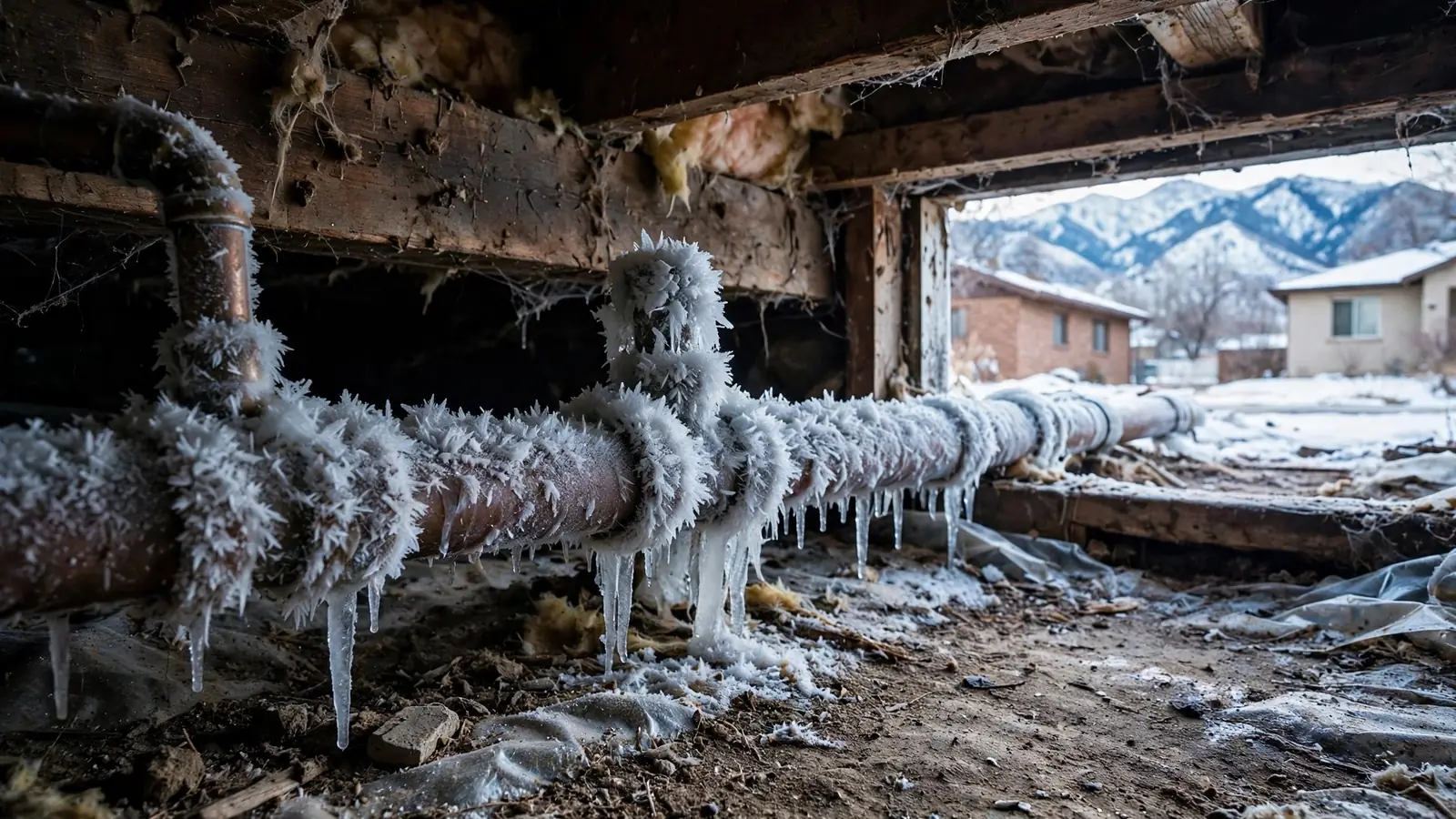
Water expands when it freezes. In a pipe, the ice plug forms first in the coldest spot. As more water freezes, pressure builds in the section between the ice and the closed faucet. That pressure, not the ice itself, is what splits copper and cracks fittings. PEX is more flexible and resists splitting better, but its fittings can still fail.
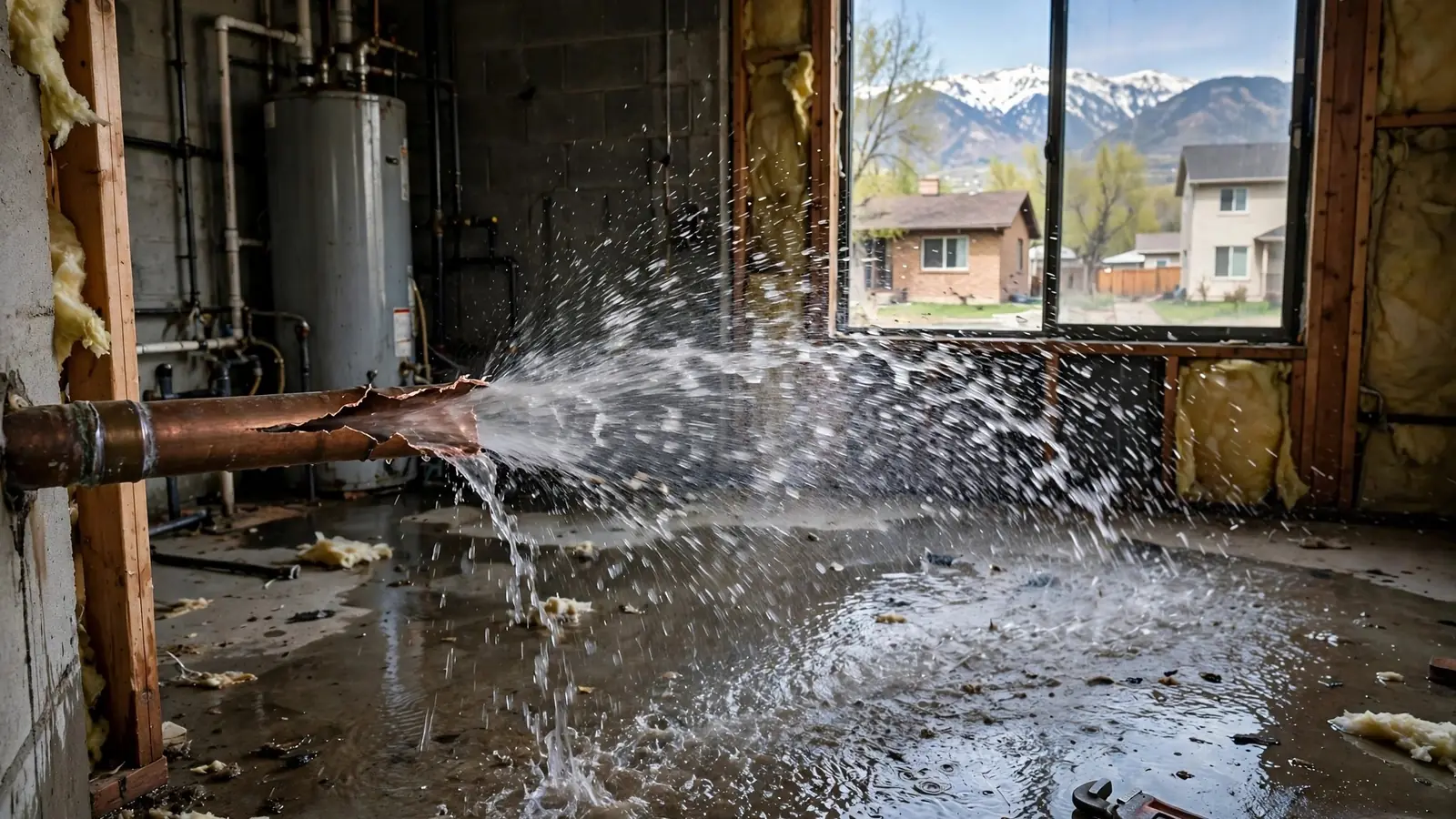
The pipe often does not leak while it is frozen, because the ice blocks the flow. The leak starts when the weather warms or the heat reaches that wall, the ice melts, and water flows through the split under full pressure. That is why burst pipe calls in Springville often come on the first mild afternoon after a cold snap.
At-risk spots
Where Springville pipes freeze
- Exterior wallsKitchen and bathroom lines on north-facing or poorly insulated outside walls.
- GaragesLines to garage sinks, laundry or upstairs bathrooms run through unheated garage walls and ceilings.
- CrawlspacesVented crawlspaces under additions or older homes let cold air reach pipes.
- Hose bibsOutdoor faucets without frost-free valves, or with hoses left attached, freeze and split inside the wall.
- Basements under bay windows or cantileversFloor overhangs leave pipes close to outside air.
- Vacant or vacation homesCabins and homes up Hobble Creek Canyon where heat is lowered while away.
Thawing
If you think a pipe is frozen
- 1
Check the faucets
If one faucet gives only a trickle or nothing while others work, its line may be frozen.
- 2
Keep the faucet open
Open it so water can flow and relieve pressure as the ice melts.
- 3
Warm the area gently
Use a hair dryer, space heater kept at a safe distance, or warm towels. Start near the faucet and work back.
- 4
Never use an open flame
Torches and open heaters can start a fire inside the wall.
- 5
Know where the main valve is
If the pipe has split, you will need to close it quickly once water starts to flow.
After
When the pipe has split
Close the main valve at once. Then follow the first-hour steps: stay away from wet electrical items, photograph the damage and protect belongings. Water from a split supply line is usually clean at first, which gives the best chance of drying materials in place if work starts quickly.
Water from a burst pipe in an upstairs wall often travels down inside the cavity and appears in the basement ceiling or along the bottom of the wall. Moisture readings are the only reliable way to find out how far it went.
Prevention
Preventing frozen pipes
| Step | When |
|---|---|
| Disconnect garden hoses and shut interior valves to hose bibs | Autumn |
| Insulate pipes in garages and crawlspaces | Before winter |
| Seal gaps where cold air reaches pipes | Before winter |
| Open cabinet doors on outside walls | During cold snaps |
| Let faucets on outside walls drip | During extreme cold |
| Keep heat at a steady minimum when away | Whole winter |
Coverage
Insurance and frozen pipes
Sudden water damage from a pipe that freezes and bursts is commonly covered by homeowners insurance. Some policies exclude freezing damage if a home was left vacant or unheated without draining the plumbing, so cabin and second-home owners should check their policy wording.
Cold snaps
Why cold snaps catch Springville off guard
Most of the winter, Springville homes cope with the cold without trouble. Problems cluster around the sharpest cold snaps, when temperatures fall well below normal for several days, often with wind. Pipes that have survived many winters can freeze when the cold lasts long enough to chill a wall cavity or garage completely. Wind makes it worse by pushing cold air through gaps around sill plates, vents and pipe penetrations.
The homes most affected are often those with recent changes: a garage converted to living space, a new bathroom on an outside wall, or an addition with plumbing in a cold corner. Older homes with pipes routed through crawlspaces are also vulnerable.
Call about this problem
Questions about frozen pipes?
One call connects you with an independent water damage restoration contractor who serves Springville.
Outdoors
Hose bibs and sprinkler systems
Outdoor faucets are a classic failure point. Frost-free hose bibs are designed with the valve inside the heated wall, but they only work if the hose is disconnected so water can drain from the barrel. A hose left attached through the first freeze can trap water and split the pipe inside the wall, where the leak shows up in the basement ceiling when the tap is next used in spring.
Lawn sprinkler systems and secondary irrigation lines also need draining or blowing out before winter. Backflow devices above ground are especially vulnerable to splitting.
Prevent a repeat
After the repair
Once a plumber has repaired the split, take a moment to fix the reason it froze. That may mean adding insulation, sealing an air leak, rerouting a pipe away from an exterior wall or adding heat tape where appropriate. Without that step, the same pipe is likely to freeze again in the next cold snap.
Weakened pipes
Signs a pipe froze without bursting
Sometimes a pipe freezes and thaws without splitting, but the fitting or joint is weakened. Watch for small drips or damp spots near that pipe in the weeks after a cold snap. Fix them early before they fail fully.
Leaving home
If you have a vacation coming
Before leaving in winter, set the heat to a safe minimum, open cabinet doors on outside walls, shut off and drain outside lines, and consider shutting off the main water. Ask someone to check the house during cold snaps.
Tip
One more tip
Garages are a frequent trouble spot. Keep the big door closed on cold days, especially if a laundry, sink or bathroom line runs through a garage wall. A small, safe heat source may be needed in garages with plumbing during deep freezes.
Last word
Before you go
Keep a hair dryer and the location of the main shutoff in mind every winter.
Questions
Frozen pipe questions
Can PEX pipes freeze?
Yes. They resist splitting better than copper, but they can still freeze and fittings can fail.
How long does it take to thaw a pipe?
It depends on where it is. Keep the faucet open and keep gentle heat on the area. If you cannot reach the frozen section, a plumber may be needed.
Is a burst pipe at night an emergency?
Yes, once the water is flowing. Close the main valve and call; the line is answered around the clock.