
Key facts: Flood Cleanup
- Water that enters a home from outside after crossing the ground is generally treated as contaminated (category 3) by restoration contractors.
- FEMA maps part of the Hobble Creek corridor through Springville as a special flood hazard area.
- Standard homeowners insurance usually excludes flood from surface water; the National Flood Insurance Program sells separate flood policies.
- NFIP flood policies typically take 30 days to take effect after purchase.
- The CDC advises discarding porous items that cannot be cleaned and dried after contact with floodwater.
In this page
- 1Floods in Springville are mostly basement floods
- 2The usual entry points
- 3Why a flooded basement is not always pumped all at once
- 4How flood cleanup usually proceeds
- 5What usually survives floodwater
- 6Spring runoff and Springville window wells
- 7Silt, odor and sanitising
- 8Flood damage and insurance in Utah
- 9What to record before cleanup starts
- 10Reducing the next flood
- 11How flood cleanup differs from a pipe leak
- 12Belongings stored in the basement
- 13Seepage that rises through the floor
- 14Garages and crawlspaces
- 15Electrical and gas safety after a flood
- 16Mud and debris removal
- 17What a finished flood job looks like
- 18Neighborhood floods
- 19Calling during runoff season
- 20Keeping some belongings
- 21Flood season preparation
- 22Children's items and toys
- 23Vehicles and garages
- 24How long flood cleanup takes
- 25Flood cleanup in rentals and basements apartments
- 26Quick note
- 27Flood cleanup questions
What counts as a flood
Floods in Springville are mostly basement floods
When people in Springville say their house flooded, they rarely mean a river through the living room. They usually mean water in the basement that came from outside: snowmelt that filled a window well and pushed through the window, groundwater seeping through a foundation crack during a wet spring, a heavy summer storm overwhelming a driveway drain, or a sprinkler or secondary irrigation line that broke beside the house.
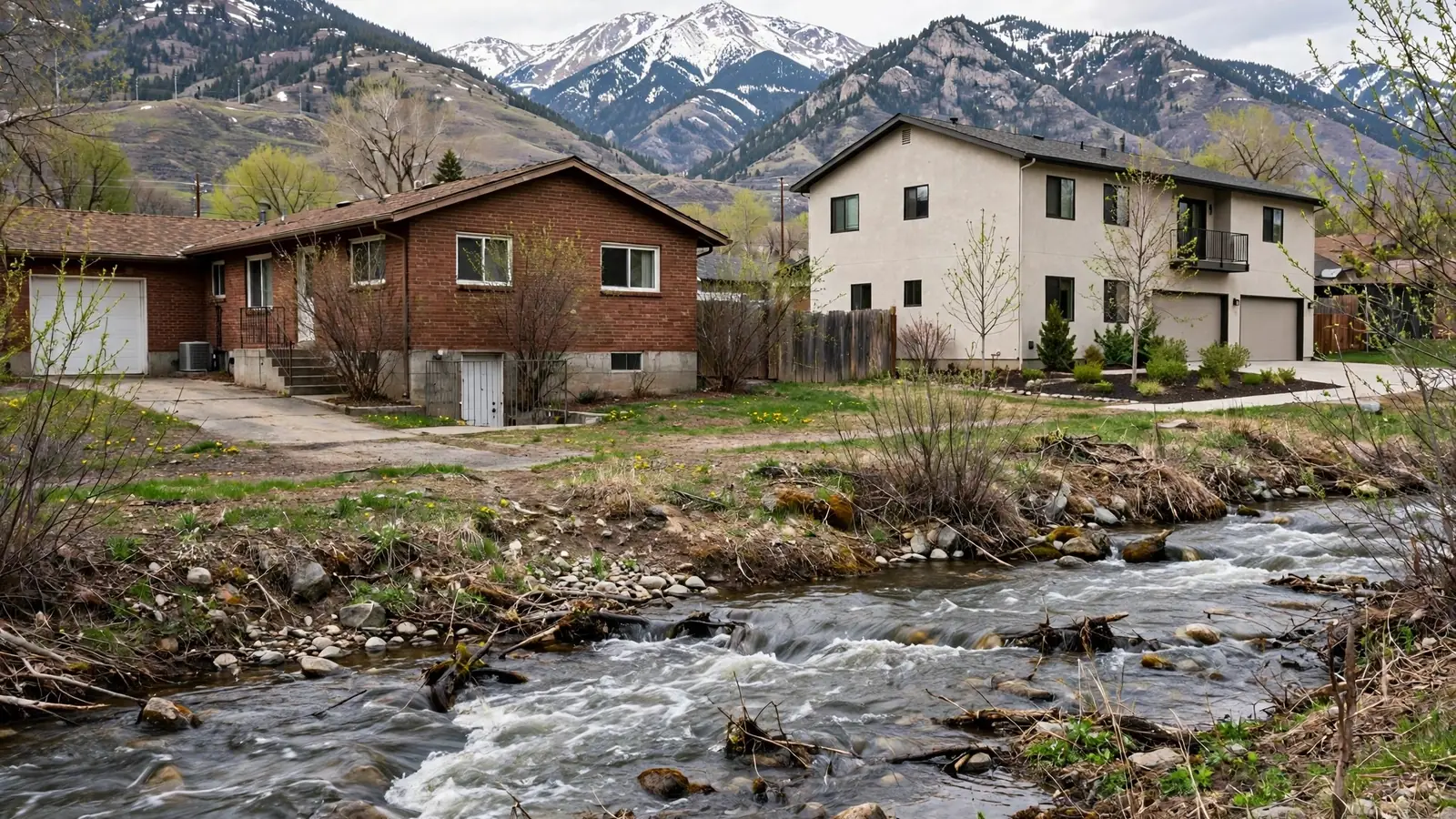
Real creek flooding does happen. Hobble Creek drains a large canyon east of town, and in big snow years spring runoff runs high. The city clears debris at bridges and diversion points along the creek to keep the channel flowing, and asks residents near the stream to keep their own banks clear. Homes closest to the creek, particularly along Canyon Road, have the most exposure.
Whatever the route, outside water has one thing in common: it is not clean. It has soaked through soil, fertilised lawns, roadway grime and sometimes sewage. Restoration contractors treat it as category 3 water, and that shapes every decision in the cleanup.
How floodwater gets in
The usual entry points
Window wells
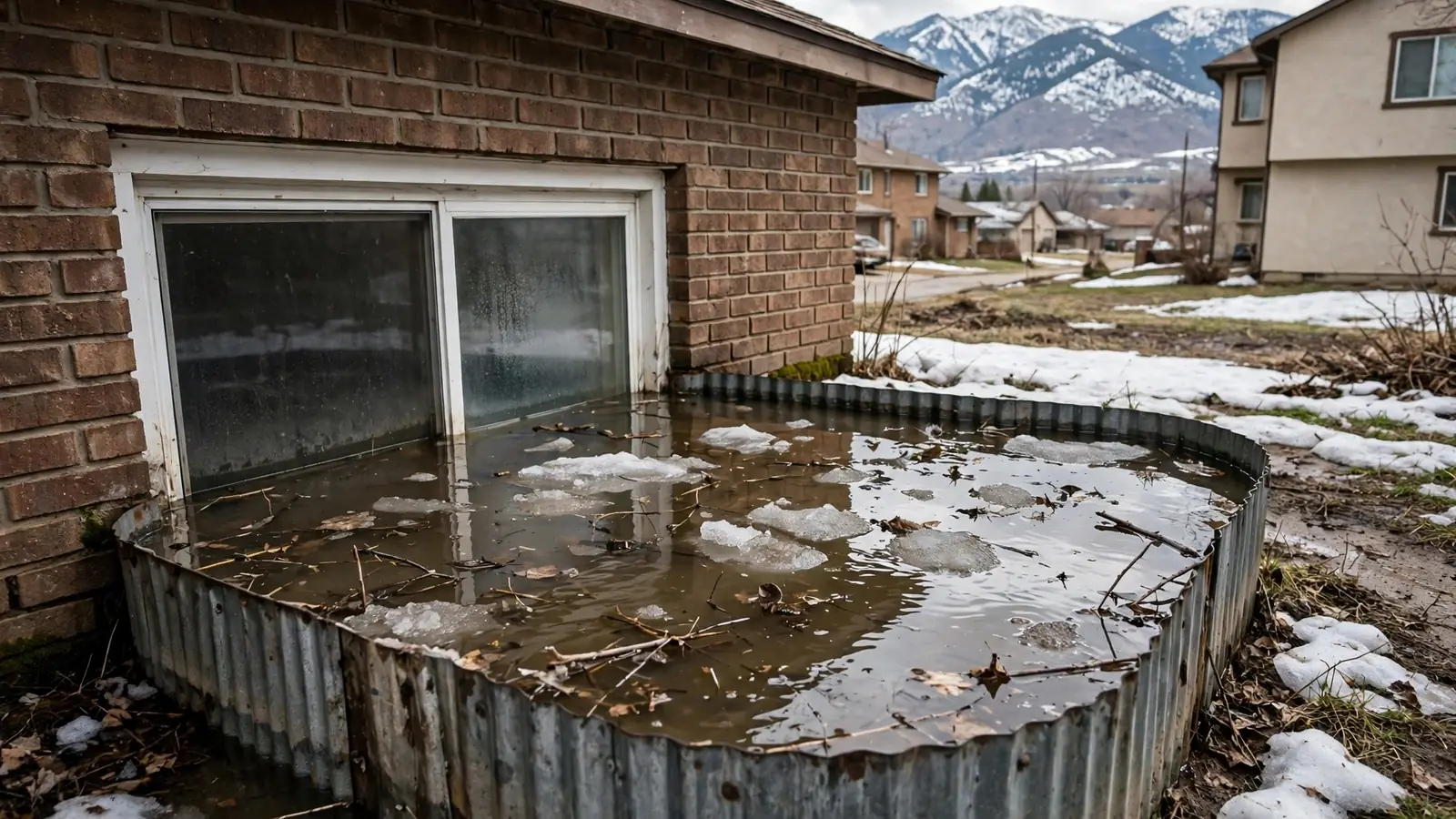
A well without a cover fills with snow and rain. When the drain at the bottom clogs or the soil is saturated, water rises above the sill and pours in.
Foundation cracks and wall joints
High groundwater pushes water through cracks, tie holes and the joint between the floor slab and wall.
Exterior basement stairs
Stairwell drains clog with leaves and ice. When they back up, water runs under the door.
Poor grading and downspouts
Soil that slopes toward the house and downspouts that empty against the foundation feed water to the walls.
Irrigation line breaks
A broken pressurised irrigation line beside the house can flood a basement as quickly as any storm.
Creek overflow
Homes near Hobble Creek can take surface water during heavy runoff or debris blockages.
Pumping out
Why a flooded basement is not always pumped all at once
If the soil outside is still saturated, the water pressure outside the foundation and the water inside the basement may be holding each other in balance. Pumping all the water out at once can let outside pressure push on the walls. FEMA and many emergency management agencies advise lowering the water gradually in that situation. In most Springville basement floods the water is a few inches deep and comes from a single window well or crack, and this is not a concern, but deep flooding after prolonged runoff is a different case.
Once the source has stopped, contractors remove water with submersible pumps and extractors, then turn to the wet materials. In a flood, extraction is only the beginning. Everything the water touched has to be assessed for contamination as well as wetness.
The process
How flood cleanup usually proceeds
- 1
Confirm the source has stopped
Window wells are pumped and cleared, irrigation is shut off, or creek levels are watched until water stops entering.
- 2
Make the space safe
Power to the basement is checked, gas appliances that were submerged are left off for inspection, and protective gear is used.
- 3
Remove the water
Pumps and extractors take out standing water, mud and debris.
- 4
Remove contaminated porous materials
Carpet, pad, insulation and drywall touched by floodwater are generally removed, bagged and taken away.
- 5
Clean and sanitise
Hard surfaces, concrete, framing and anything kept are cleaned of silt and treated.
- 6
Dry the structure
Air movers and dehumidifiers dry framing, slab and remaining materials, with readings taken daily.
- 7
Document for the claim
Photos, a list of removed materials and moisture logs are put together for your insurer or flood policy.
Keep or discard
What usually survives floodwater
| Item | Usual outcome | Reason |
|---|---|---|
| Wall-to-wall carpet and pad | Discarded | Cannot be reliably cleaned of contamination |
| Drywall below the water line | Removed | Paper and gypsum absorb contaminated water |
| Fiberglass insulation | Removed | Traps water and contaminants |
| Concrete slab and foundation | Cleaned and dried | Non-porous enough to clean |
| Wood studs and plates | Usually cleaned and dried | Structural wood is cleaned and dried rather than replaced unless damaged |
| Upholstered furniture and mattresses | Usually discarded | Padding holds contamination |
| Hard plastic, metal, glass items | Cleaned and kept | Can be washed and disinfected |
| Paper, photos, documents | Case by case | Valuable papers can sometimes be frozen and restored by specialists |
This follows general public-health guidance; your contractor will assess your specific items.
Snowmelt season
Spring runoff and Springville window wells
Many homes in Springville were built with basement bedrooms that rely on egress window wells. Those wells are a weak point. Snow piles into them all winter. When it melts quickly, or when a spring storm adds rain on top, water collects at the bottom. A gravel base and a drain should carry it away, but drains clog with leaves and silt, and frozen ground can stop water soaking in.
When the water level in the well rises above the window sill, it comes through the window frame or the glass gives way. The result is a sudden flood in a basement bedroom, often on carpet. Clear well covers, clean drains and good grading go a long way to prevent it.
- Clear snow out of wells in late winter
- Check that well drains run
- Fit clear covers over wells
- Keep downspouts away from wells
Cleaning
Silt, odor and sanitising
Floodwater leaves a film of silt behind. On concrete and framing it dries to a grey-brown dust that carries bacteria and odor. Contractors remove it with scrubbing and cleaning solutions before drying, because drying silt in place bakes the smell into the structure.
After cleaning, many contractors apply an antimicrobial product to framing and slab. The goal is not to replace drying but to reduce microbial growth while drying happens. Ask what product is being used and whether it is registered for the purpose, especially if anyone in the household has sensitivities.
Insurance
Flood damage and insurance in Utah
This is where flood cleanup differs most from a burst pipe. Standard homeowners policies generally exclude damage from surface water, rising water and flooding. Some policies also exclude or limit damage from groundwater seepage and sewer or drain backup unless an endorsement was purchased. Flood coverage usually comes from a separate policy, most often through the National Flood Insurance Program. [2]
Even if you are not in a mapped flood zone, flood policies are available. NFIP policies generally have a 30-day waiting period before they take effect, so they cannot be bought after water starts rising. If you have flood coverage, report the loss quickly, photograph everything before it is removed, and keep a list of discarded items. If you do not, the cleanup is still worth doing properly, because leaving contaminated materials in place creates bigger problems.
Documenting
What to record before cleanup starts
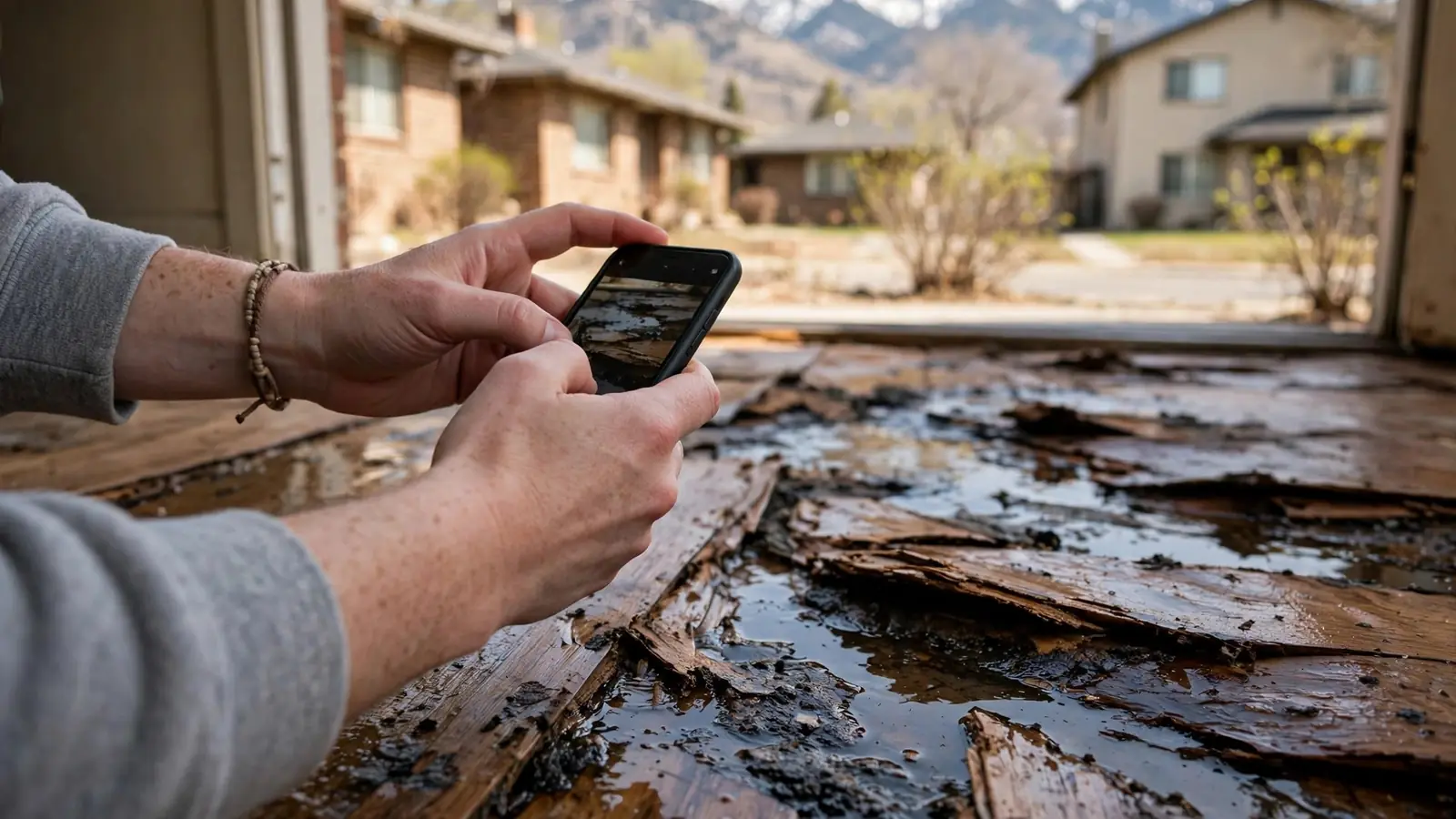
- The water linePhotograph the highest point the water reached on walls, furniture and appliances.
- Each room and itemTake wide shots and close-ups, including model and serial plates on appliances.
- The sourcePhotograph the window well, the crack, the clogged drain or the creek level that caused the flood.
- Removed materialsAsk the contractor to photograph and measure carpet, drywall and insulation before disposal.
- ReceiptsKeep receipts for pumps, fans, hotel stays and any supplies you bought.
Afterwards
Reducing the next flood
Once the basement is dry, the source deserves attention. Window-well covers and working well drains prevent the most common Springville basement flood. Extending downspouts several feet from the foundation and regrading soil so it slopes away from the house help keep water off the walls. Sealing foundation cracks from the inside rarely solves groundwater problems alone, but it can help with minor seepage.
Homes that flood repeatedly may need a perimeter drain and sump pump, a job for a foundation or waterproofing contractor. Homes near Hobble Creek may want to look at the FEMA flood map for their property and consider flood insurance. None of this is part of the cleanup itself, but the contractor who handled the cleanup has usually seen where the water came in and can point you in the right direction.
Flood vs leak
How flood cleanup differs from a pipe leak
| Factor | Burst pipe (clean water) | Outside floodwater |
|---|---|---|
| Water category | Usually category 1 | Generally category 3 |
| Carpet | Often dried in place | Generally removed |
| Drywall | Sometimes dried in place | Removed below the water line |
| Cleaning | Light cleaning | Silt removal and sanitising |
| Typical insurance | Homeowners policy, subject to terms | Separate flood policy, if held |
| Prevention | Pipe insulation, shutoff valves | Grading, well covers, drainage |
Contents
Belongings stored in the basement
Basements in Springville often double as storage: holiday decorations, food storage shelves, camping gear, children's keepsakes. Floodwater reaches all of it. Cardboard boxes are the first casualty, because they soak up water and collapse, spreading moisture into everything inside. Moving boxes off the floor and opening them quickly is one of the most useful things you can do while waiting for help.
Food storage deserves special care. Public-health guidance is to throw away food that came into contact with floodwater unless it is in undamaged, commercially sealed metal cans, which can be cleaned and sanitised before opening. Home-canned jars, packages, sacks of grain and anything in plastic buckets that were submerged are generally not safe to keep. That is a painful loss for many families, so photograph and list everything for any claim.
Some contents can be cleaned and restored. Hard plastics, metal, glass and many tools respond well to washing and disinfecting. Many restoration contractors offer contents cleaning or can pack items out to a facility. Ask on the call whether that is something they handle.
Groundwater
Seepage that rises through the floor
Not every basement flood arrives as a rush of water. In wet springs, groundwater around a foundation can rise high enough to push moisture up through the slab and along the joint where the floor meets the wall. The result is a slow sheet of water spreading from one side of the room, or damp patches that appear under carpet days after a storm. West-side neighborhoods closer to Utah Lake and lots near drainages are more prone to it.
Seepage cleanup looks like any other flood cleanup once water is in the room, but the source is harder to stop. Pumping a window well does nothing for water rising from below. Contractors will often dry the room while advising you that the problem may return until drainage around or under the house is improved. It is honest advice and worth listening to before you install new carpet.
Seepage water is also classed as contaminated in most cases, because it has passed through soil. Even when it looks clear, contractors tend to remove carpet pad and lower drywall in affected areas rather than dry them in place.
Talk to a local contractor
Questions about flood cleanup?
One call connects you with an independent water damage restoration contractor who serves Springville.
Other spaces
Garages and crawlspaces
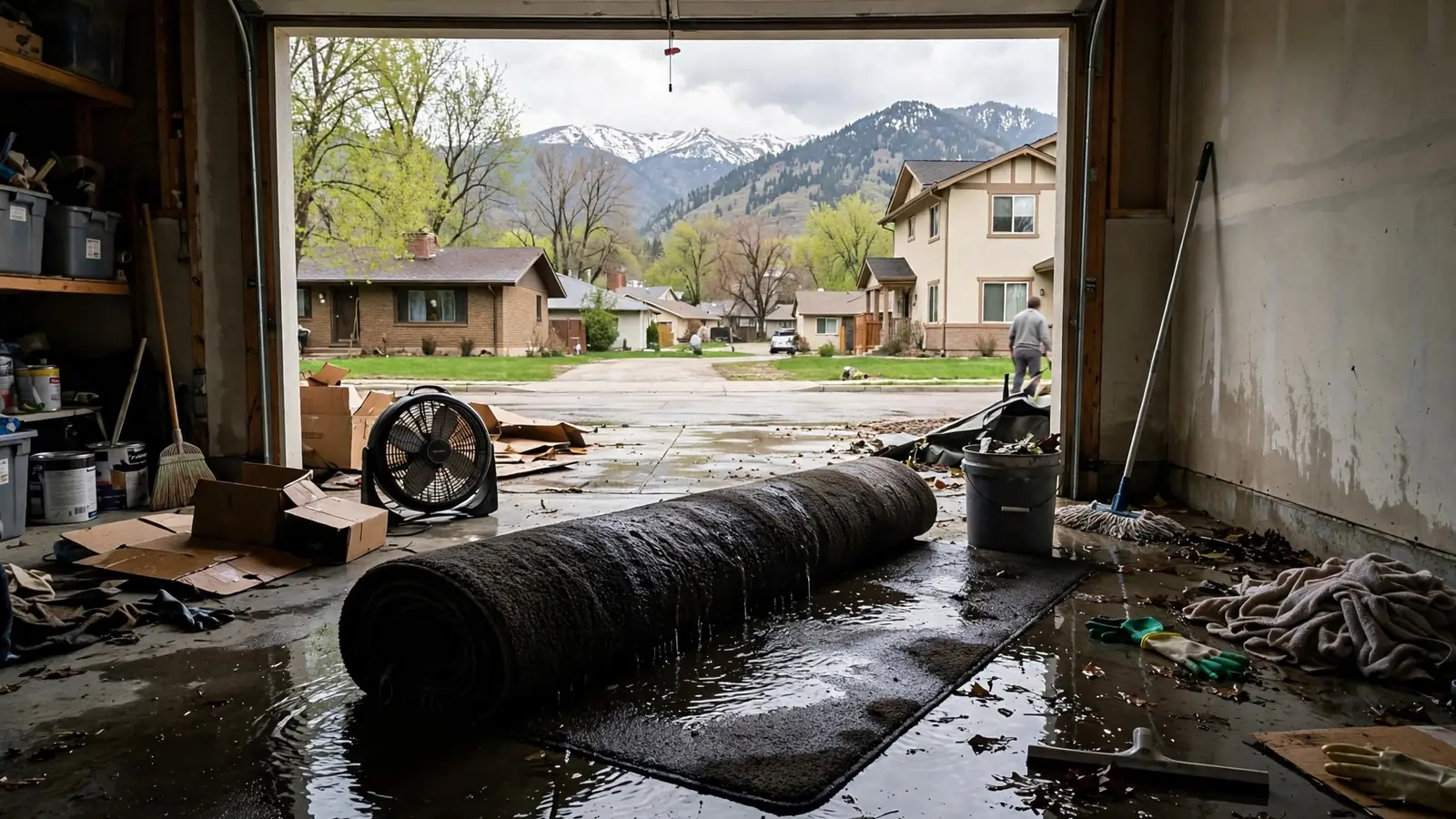
Floodwater does not only reach basements. Attached garages on low lots take water under the big door, soaking stored items, drywall at the base of the shared wall and anything on the floor. Crawlspaces under older homes and additions fill with water that then sits on bare soil. Garage cleanup is mostly about removing wet stored items, cutting out wet drywall and drying the slab. Crawlspace cleanup involves pumping out water, removing wet insulation and debris and drying the framing above.
Utilities
Electrical and gas safety after a flood
If water reached outlets, the electrical panel, a furnace or a water heater, those systems need checking before they are used. Ground-fault protected outlets may trip and need resetting once dry, but outlets and wiring that were submerged should be inspected by an electrician. Gas appliances that were under water need a qualified technician to inspect controls and burners. Do not relight pilots on appliances that were flooded.
Mud
Mud and debris removal
A creek or storm flood leaves mud behind, sometimes inches deep. It is shoveled and scraped out while still wet, because dried mud is harder to move and spreads dust. Hard surfaces are then washed down. Mud often contains sewage and chemicals from streets and yards, so protective gear is essential. Dispose of it as instructed by the city.
Completion
What a finished flood job looks like
When a flood cleanup is complete, the affected area is typically down to clean, dry concrete and framing, with walls opened at the bottom and porous materials gone. The contractor provides photos, a list of removed materials and a drying log showing the structure reached its dry standard. From there, repairs can begin with water-tolerant materials if flooding may recur.
Many homes at once
Neighborhood floods
When several homes flood at once, as can happen near Hobble Creek in a heavy runoff year or on a low street after a storm, demand for contractors spikes. Calling early, documenting thoroughly and doing what you safely can yourself, such as moving belongings and starting to remove water from concrete, all help. Watch for unsolicited door-to-door offers after a flood and check any contractor's credentials before signing anything.
Busy weeks
Calling during runoff season
During heavy runoff years, flood calls cluster in the same weeks. Calls through this site are answered around the clock and connected to an independent contractor. If water is still entering, say so; the plan changes when the source is ongoing. If neighbors are also flooded, mention it, because it may point to a shared drainage or creek issue worth reporting to the city.
Salvage
Keeping some belongings
Hard items such as tools, dishes, glass and metal can usually be cleaned and kept after a flood. Wash them with detergent and water, then disinfect. Photographs, documents and keepsakes that got wet may be salvageable by specialists if they are kept cool or frozen until they can be treated.
Prepare
Flood season preparation
Before spring, check the FEMA map for your address, review your insurance, clear window wells and drains, test the sump pump, move valuables off the basement floor and keep a list of important contacts. A little preparation reduces both damage and stress when water rises.
Children's items and toys
Soft toys, bedding and anything children put in their mouths should be discarded if floodwater reached them, unless they can be washed in hot water. Hard plastic toys can be washed and disinfected. Public-health agencies advise caution with anything young children handle.
Vehicles and garages
If floodwater entered a garage with vehicles inside, do not start them until they are checked. Report vehicle damage to your auto insurer, which is separate from your home policy.
How long flood cleanup takes
Removal and cleaning usually take one to two days for a typical basement. Drying follows over several more days, longer in cold weather or if groundwater keeps the slab damp. Rebuilding waits until readings show the structure is dry and the cause of the flooding has been addressed. Rushing new carpet and drywall into a basement that is still wet, or that will flood again next spring, leads to repeat damage and mold. A patient finish saves effort and disruption.
Flood cleanup in rentals and basements apartments
Basement apartments are common in Springville homes. When one floods, the tenant may need somewhere else to stay while it dries, especially if sewage or floodwater was involved. Landlords should arrange cleanup promptly and keep tenants informed; tenants should document their belongings for renter's insurance.
Quick note
Keep this page bookmarked before spring so the steps are at hand when you need them.
Questions
Flood cleanup questions
Can carpet be saved after a basement flood?
Usually not when the water came in from outside. Floodwater is treated as contaminated, and carpet and pad touched by it are generally removed.
Does homeowners insurance cover a flooded basement?
It depends on the source. Burst pipes are commonly covered; surface water and flooding usually are not without a flood policy. Seepage and drain backup depend on your policy and endorsements.
How fast should cleanup start?
As soon as the water stops. Contaminated water and wet materials get harder to deal with every day they sit.
Can I clean it up myself?
Small amounts of water on concrete can be handled with care and protective gear. Floodwater in a finished basement usually needs removal of materials, cleaning and professional drying.
Is help available at night during runoff season?
Yes. Calls are answered 24 hours a day and connected to an independent contractor serving Springville.