
Key facts: Snowmelt basement flooding
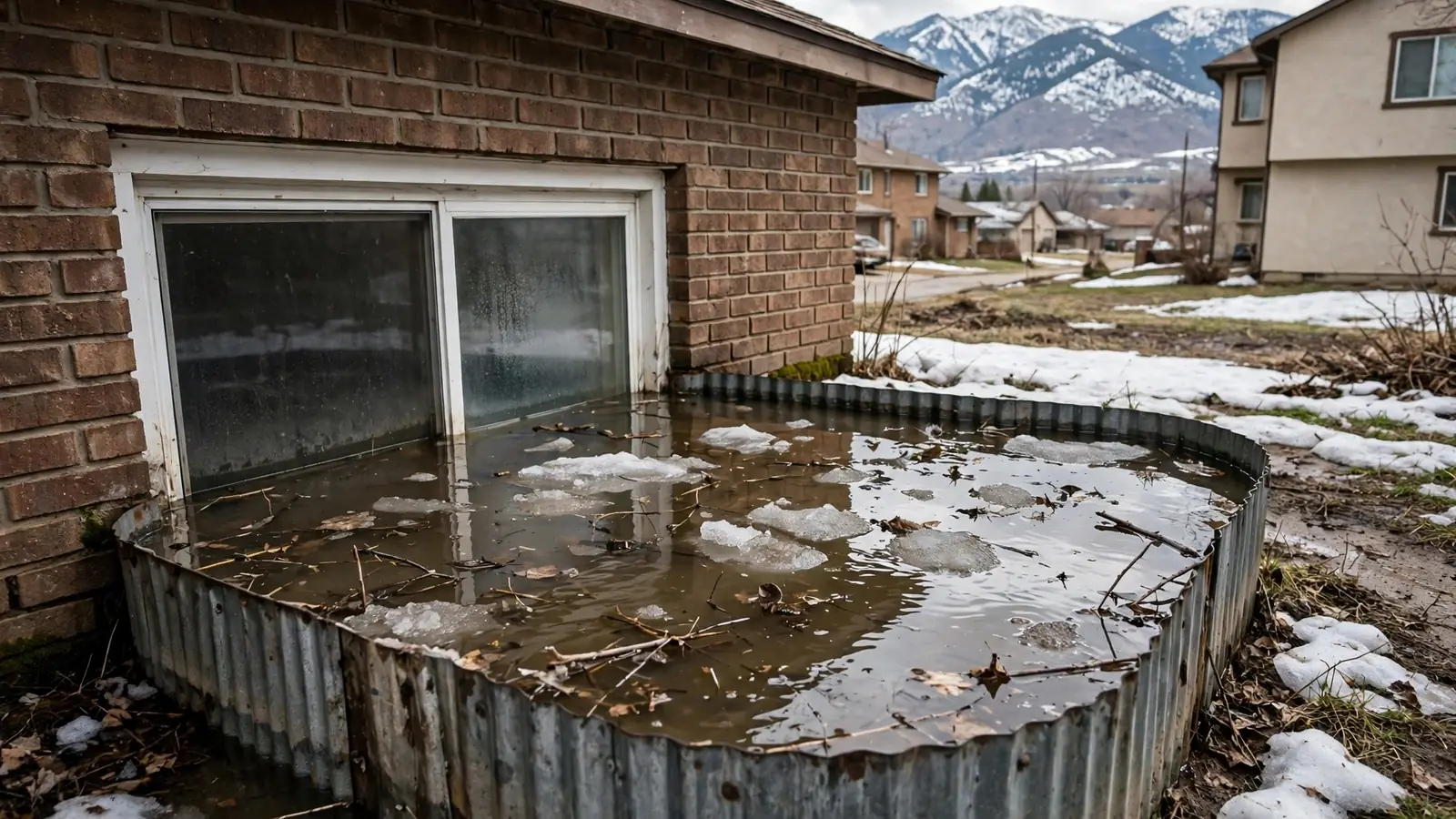
- Egress window wells collect snow and rain and rely on a drain or gravel base to carry water away.
- Water rises over the sill when a well drain clogs or the surrounding soil is saturated.
- Snowmelt that enters through a well or wall has crossed soil, so contractors usually handle it as contaminated water.
- Standard homeowners policies usually exclude surface water flooding; flood coverage is a separate policy.
- Hobble Creek runs high during spring runoff, and Springville City clears debris along the channel to reduce flood risk.
In this guide
- 1Why spring is flood season
- 2How the water gets in
- 3What to do when it happens
- 4Why the cleanup is more involved
- 5Preventing the next flood
- 6Insurance
- 7Late-winter checklist
- 8When the well keeps filling
- 9Basement bedrooms and safety
- 10Living with a basement that takes water
- 11Why it happens in the same homes
- 12Groundwater after the melt
- 13One more tip
- 14Before you go
- 15Snowmelt flooding questions
The pattern
Why spring is flood season
Through winter, snow piles up on lawns, against foundations and inside window wells. When temperatures climb, it melts quickly, and the ground below may still be frozen or already saturated. Water that cannot soak in runs toward the lowest point it can find, which is often the gravel at the bottom of a window well or the soil against a basement wall.
Rain on snow makes it worse. A warm spring storm can melt a winter's worth of snow in a day or two. Springville's position at the foot of the mountains, with Hobble Creek carrying runoff from the canyon, means groundwater around many homes rises in spring as well.
Entry points
How the water gets in
- Over the window sillThe well fills above the sill and water forces past the window frame or breaks the glass.
- Through the slab jointHigh groundwater pushes water up where the floor slab meets the wall.
- Through cracksHairline foundation cracks that stay dry all year leak when soil is saturated.
- Under exterior stair doorsStairwell drains freeze or clog and water backs up to the door.
- From downspoutsDownspouts that dump next to the foundation feed water straight to the wall.
Response
What to do when it happens
- 1
Stay safe
Do not wade into water near outlets or appliances. Shut power from a dry spot if you can.
- 2
Bail or pump the well
If water is pouring from a window well, lowering the level in the well slows it down.
- 3
Move belongings
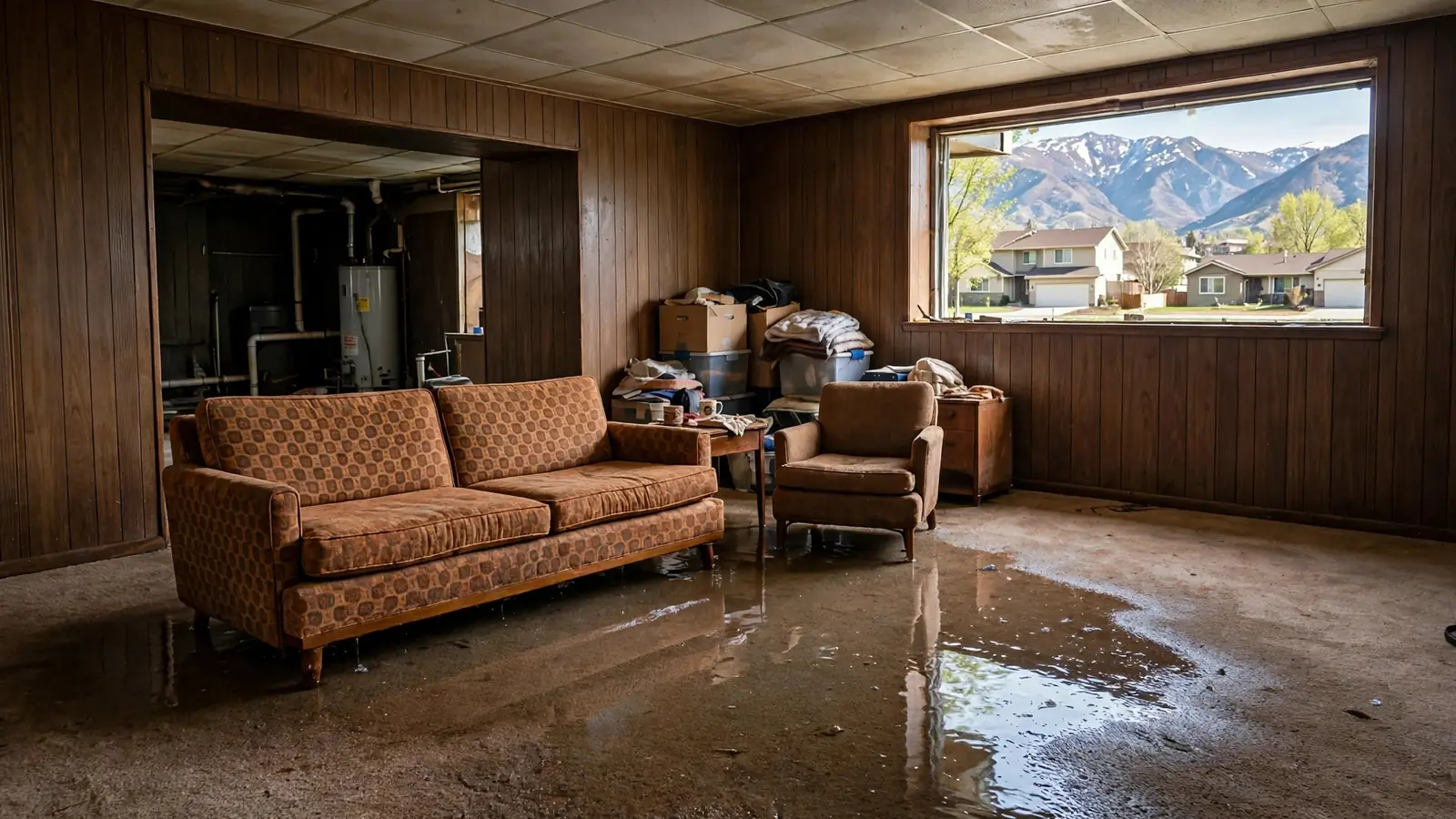
Lift furniture and get boxes, rugs and electronics off the floor.
- 4
Photograph
Record the water level, the well and every damaged item.
- 5
Call
Floodwater in a finished basement usually needs removal of pad and lower drywall plus professional drying.
Cleanup
Why the cleanup is more involved
Water that comes in from outside has passed through soil, mulch and lawn. Restoration contractors generally treat it as contaminated, which means carpet pad, carpet and the lower part of drywall that it touched are usually removed rather than dried in place. Concrete and framing are cleaned and dried.
That can be frustrating if the water looked clear. The reason is that the contamination is not visible, and the materials most likely to hold it are also the hardest to dry.
Prevention
Preventing the next flood
| Fix | What it does |
|---|---|
| Clear window-well covers | Keep snow and rain out of the well |
| Clean the well drain | Lets collected water escape before it reaches the sill |
| Extend downspouts | Moves roof water several feet from the foundation |
| Regrade soil | Slopes the ground away from the house |
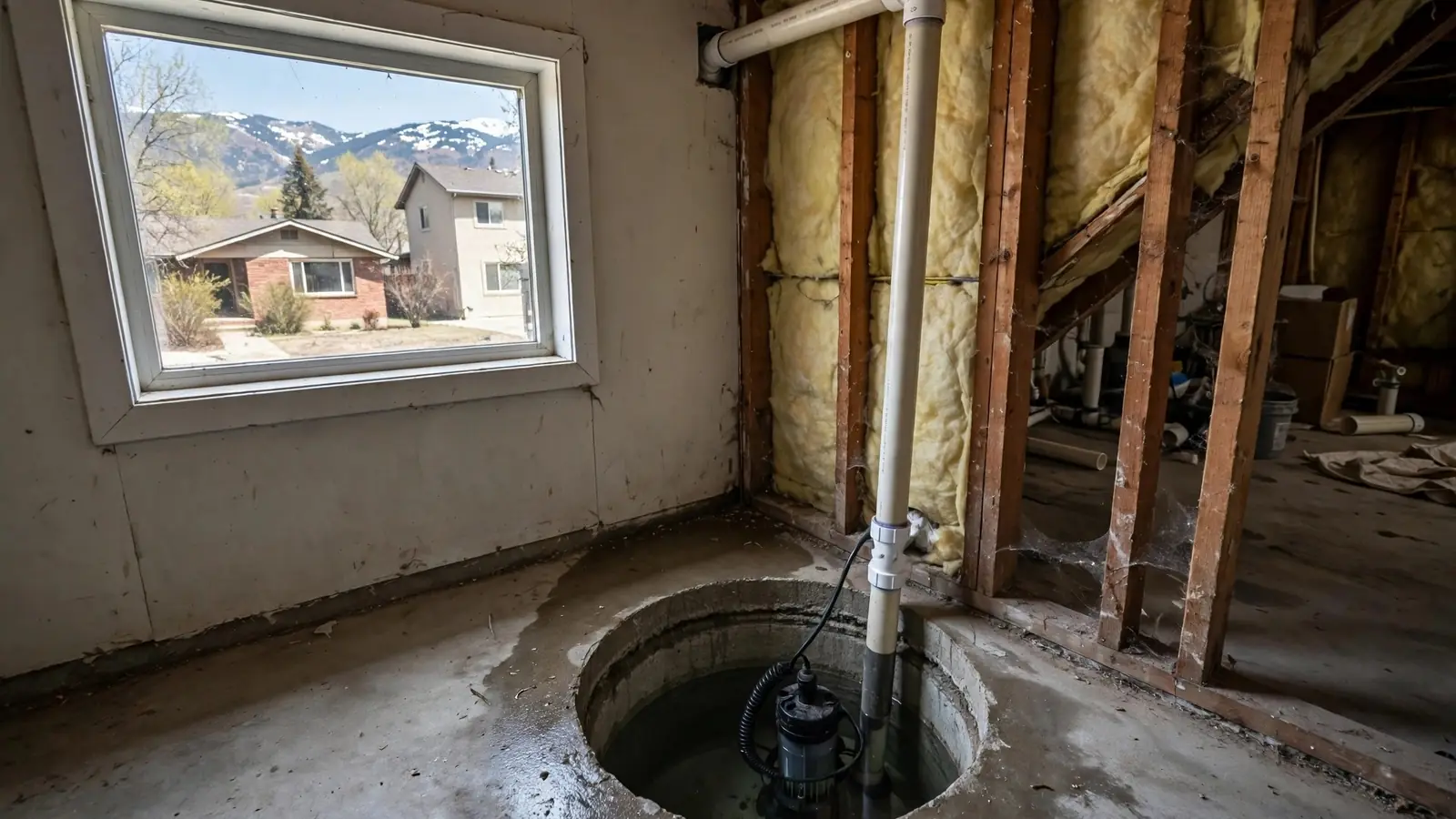
| Sump pump and perimeter drain | Removes groundwater that rises under the slab |
| Shovel snow away from the foundation | Reduces meltwater against walls in late winter |
Coverage
Insurance
This is the hard part. Most homeowners policies exclude surface water and flooding, and many limit groundwater seepage. Flood insurance through the National Flood Insurance Program covers flooding, usually after a 30-day waiting period. [2] Read your policy, and ask your agent about flood coverage and sewer or drain backup endorsements before spring.
Before the melt
Late-winter checklist
In late February or early March, before the big melt, walk around the house. Shovel snow away from the foundation, especially on the sunny side where it will melt first. Clear snow out of window wells and check whether the drain at the bottom is visible. Make sure downspouts are not buried and that their extensions are in place. If you have a sump pump, pour water into the pit to confirm it runs. These steps take an hour and prevent most spring basement floods.
Recurring problems
When the well keeps filling
If a window well fills during every storm, its drain is probably clogged or was never connected. Some wells have a gravel base with no drain at all, relying on the soil to absorb water. In clay soils or when the ground is frozen, that does not work. A contractor can clear or install a drain that connects to the perimeter drain or to daylight. A clear cover remains the simplest fix of all.
Call about this problem
Questions about snowmelt basement flooding?
One call connects you with an independent water damage restoration contractor who serves Springville.
Bedrooms
Basement bedrooms and safety
Basement bedrooms need egress windows for safety, and those windows sit in wells. If a bedroom window well floods, the bedroom is usually the first room hit. Keep beds and belongings off the floor near the window in spring, and make sure covers can still be pushed open from inside in an emergency.
Adapting
Living with a basement that takes water
Some basements will always be at risk in big snow years. If yours is one, store belongings on shelves or in plastic bins rather than cardboard on the floor, choose flooring that tolerates water, keep a wet-dry vacuum and a submersible pump on hand and know who to call.
Patterns
Why it happens in the same homes
Basement flooding tends to repeat in the same houses because the causes are physical and permanent: a low lot, a well on the uphill side, a downspout pointing at a wall. Fixing the cause breaks the cycle; cleaning up alone does not.
Lingering water
Groundwater after the melt
Even after snow is gone, groundwater can stay high for weeks. Seepage may continue into May in wet years. Keep checking the basement and run a dehumidifier.
Tip
One more tip
Neighbors on the same street often flood in the same storms. Talking with them about which fixes worked can save a lot of trial and error. If several homes flood together, report it to Springville City Public Works in case a street drain or ditch is part of the problem.
Last word
Before you go
Keep a simple flood kit near the basement stairs: a flashlight, rubber boots, gloves, a few heavy-duty trash bags, a bucket and the number to call. It turns a frantic search into a few calm minutes of action.
Questions
Snowmelt flooding questions
Will my carpet need replacing?
Usually yes if the water came in from outside, because it is treated as contaminated.
Can I prevent window well flooding?
Covers, a working drain and good grading prevent most of it.
Do I need a sump pump?
If the basement takes water from below through the slab, a perimeter drain and sump pump may be the lasting fix.