
Key facts: Hobble Creek Canyon
- Springville was originally called Hobble Creek; the canyon, creek and golf course keep the name.
- FEMA flood maps show special flood hazard areas along parts of Hobble Creek.
- Springville Public Works clears debris at bridges and diversion structures along Hobble Creek to reduce flood risk.
- Canyon homes and cabins are colder than the valley floor, so pipes freeze more readily.
- Homes left unheated or vacant may face policy limits on freeze damage.
In this page
- 1The canyon
- 2Water risks specific to canyon homes
- 3Flood zones along the creek
- 4Cabins and seasonal homes
- 5When water damage happens up the canyon
- 6Canyon vs valley water damage
- 7Drying cold buildings
- 8Septic and wells
- 9Runoff season, step by step
- 10Older cabins and newer homes
- 11Remote monitoring
- 12Debris and silt
- 13Canyon home checklist
- 14Questions to ask on the call
- 15A typical canyon call
- 16Golf course and recreation areas
- 17Wildlife and access
- 18More canyon questions answered in detail
- 19A year in the canyon
- 20How cleanup in the canyon differs
- 21What to tell the contractor when you call
- 22Why canyon losses grow so large
- 23Buying or owning in the canyon
- 24Who else may be involved
- 25Calling at any hour
- 26Keeping records for the next season
- 27Roof snow in the canyon
- 28The bottom line
- 29Help for Hobble Creek Canyon homeowners
- 30Hobble Creek Canyon questions
About the area
The canyon
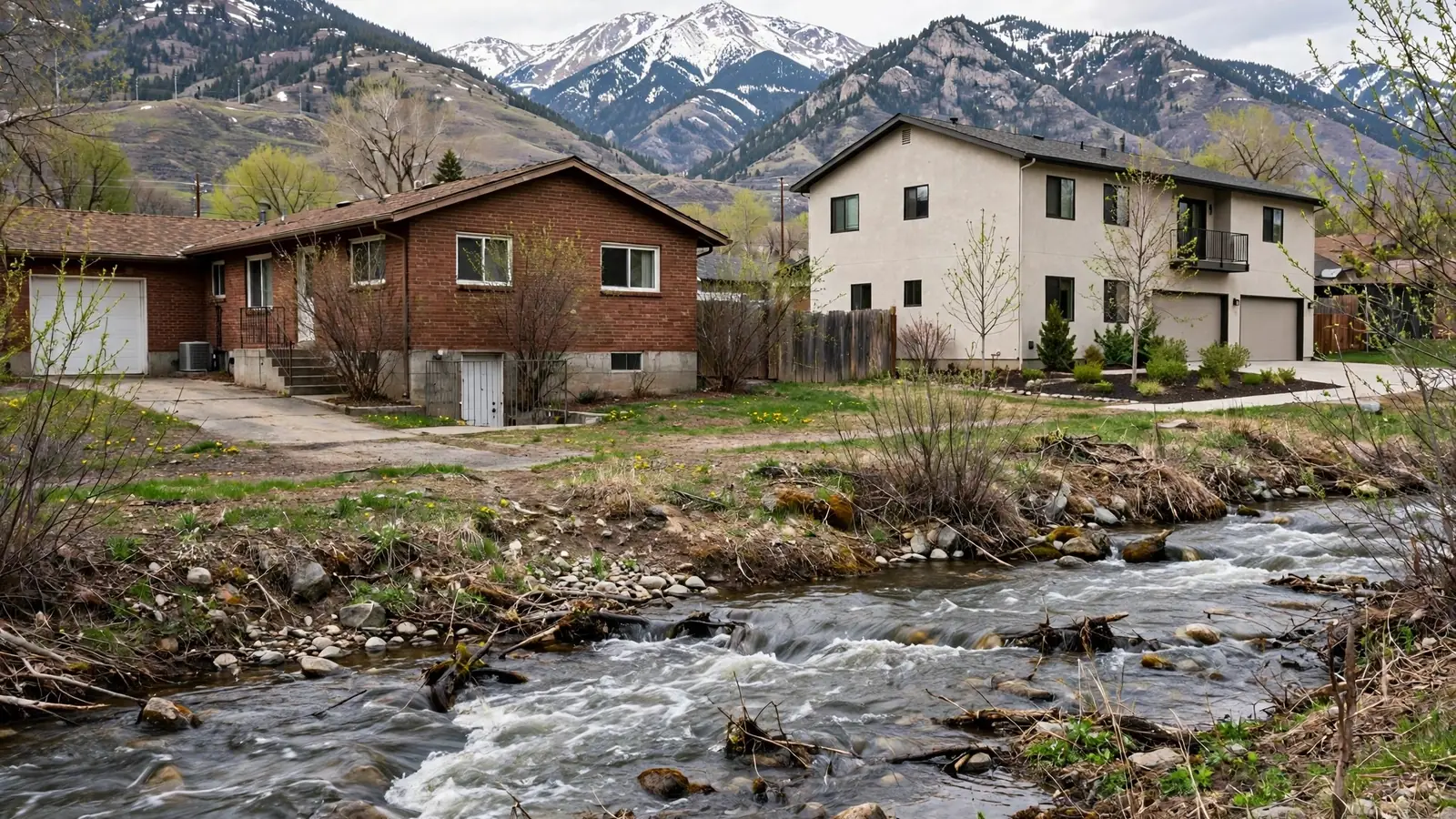
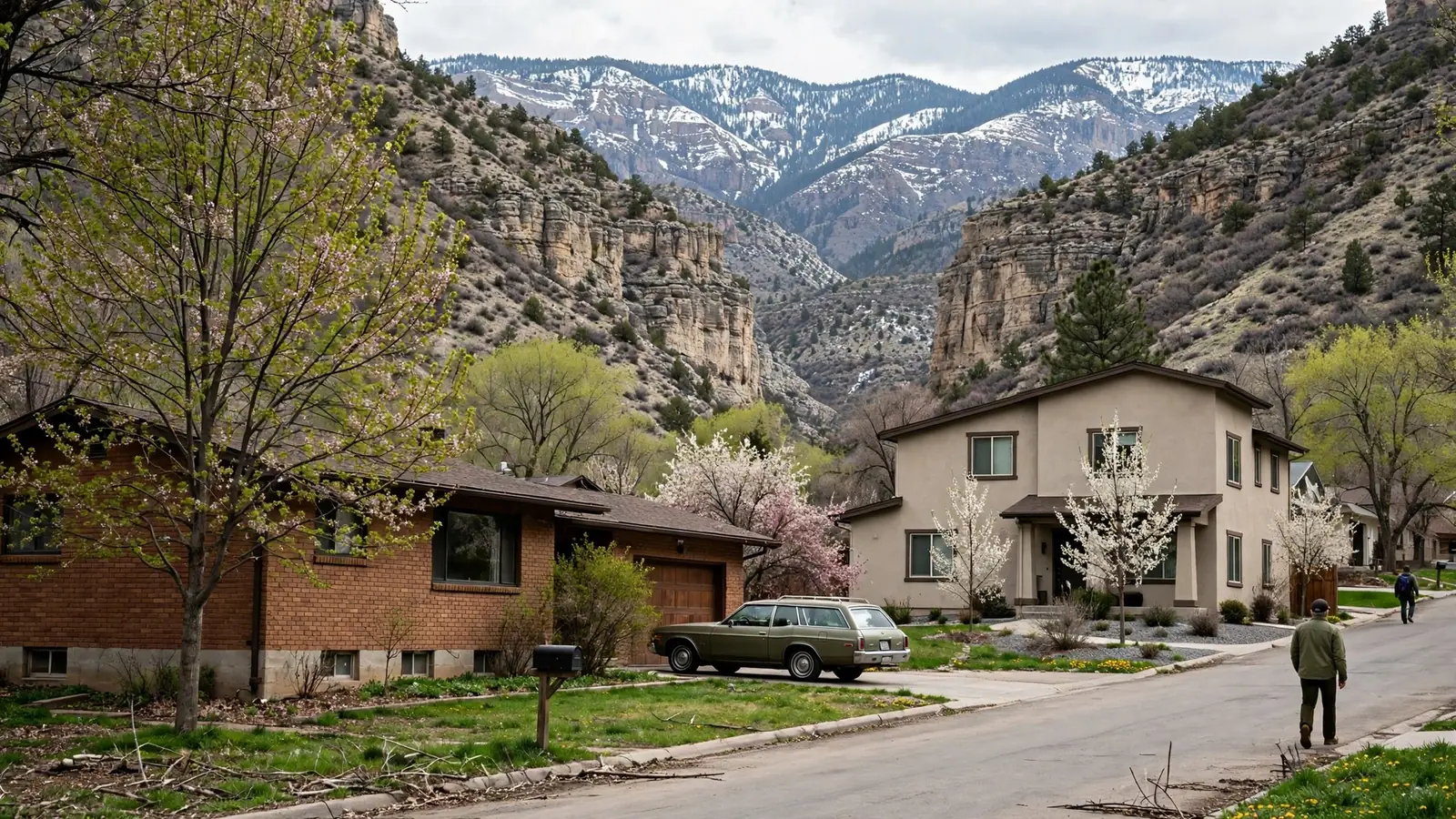
Hobble Creek Canyon opens east of Springville and climbs into the Wasatch Range. Canyon Road follows the creek past homes, cabins, the Hobble Creek golf course and picnic areas. The creek drains a large mountain watershed, and in spring it carries the melt from a winter's snowpack down through town.
Living along the creek is part of the appeal, and part of the risk. Springville Public Works monitors the creek and clears debris at bridges and diversion points so the channel can carry high water. [1] The city also asks residents along the stream to keep their own banks clear of debris and vegetation that can restrict flow.
Risks
Water risks specific to canyon homes
- Creek overflowHigh runoff or a debris jam can push water out of the channel toward homes.
- High groundwaterSaturated soil in spring seeps into basements and crawlspaces.
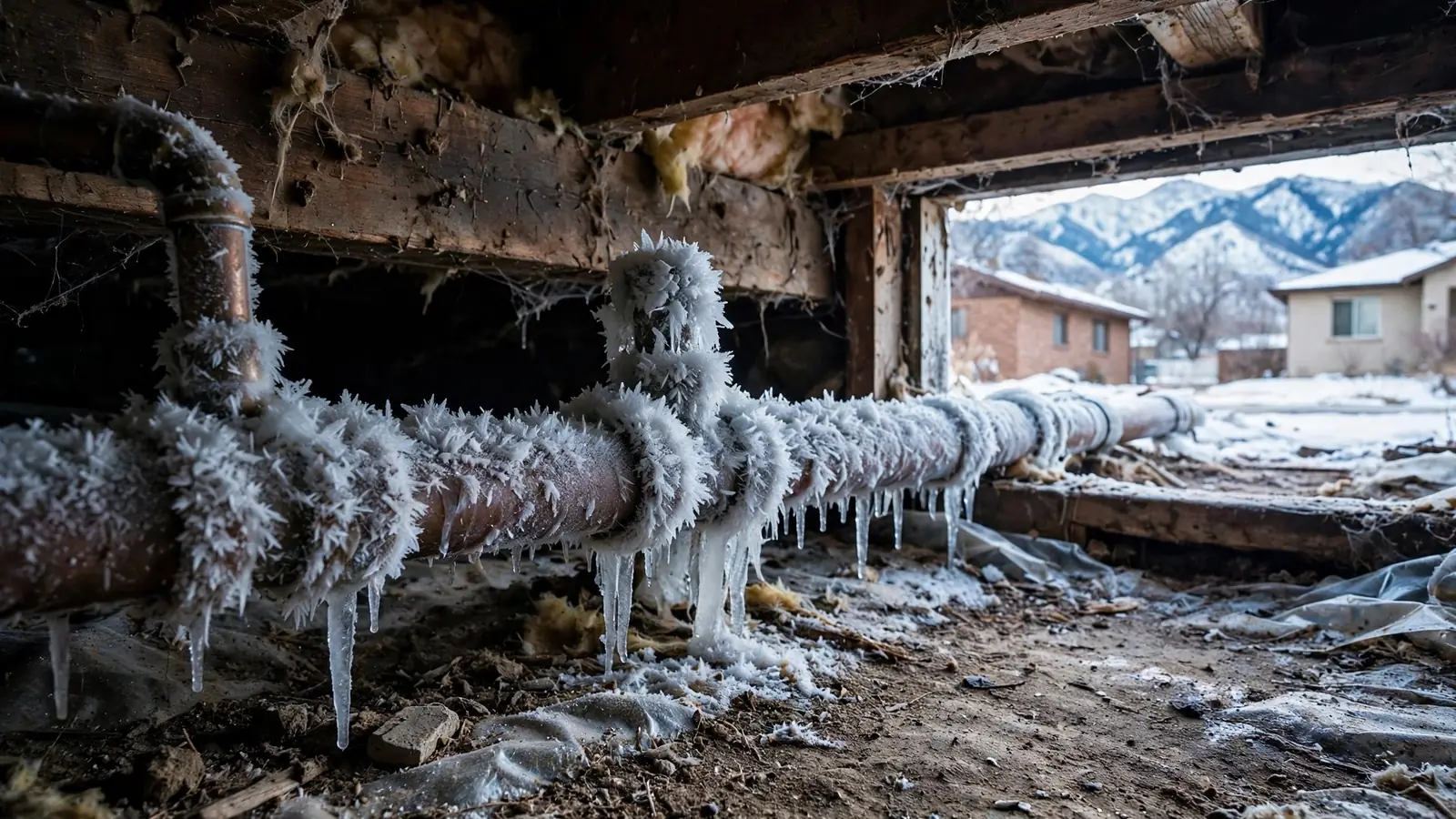
- Frozen pipesCanyon temperatures drop lower than the valley floor, and cabins may be heated only part of the time.
- Slope runoffSnowmelt and storms run down hillsides toward foundations.
- Roof ice damsHeavier snow loads and freeze-thaw cycles form ice dams at eaves.
- Well and septic systemsSome properties rely on private systems that flood or back up differently from city services.
Flood maps
Flood zones along the creek
FEMA flood maps for Utah County show special flood hazard areas along parts of Hobble Creek, including zones where a flood has a one percent chance of happening in any year. Being in a mapped zone affects mortgage requirements for flood insurance, and being outside one does not mean a home cannot flood.
You can look up your own property on the FEMA Flood Map Service Center. If you live near the creek and do not have flood insurance, it is worth asking your agent about it before runoff season. Policies from the National Flood Insurance Program generally take 30 days to start. [3]
Seasonal homes
Cabins and seasonal homes
Cabins and second homes up the canyon are often empty for days or weeks in winter. If the heat fails or is set too low, pipes can freeze and split, and nobody notices until the next visit. By then water may have run for days. Damage of that kind is far more extensive than a burst pipe caught within an hour.
Some homeowners policies limit or exclude freeze damage in a home that was vacant or unheated unless the water was shut off and lines drained. If you own a seasonal property, check the policy and consider shutting off and draining the water when you leave, or installing a remote temperature or leak alarm.
What to do
When water damage happens up the canyon
- 1
Stop the water
Close the main valve; for a private well, also switch off the well pump at its breaker.
- 2
Stay safe near the creek
Never enter fast-moving water. Follow city or county emergency instructions during high runoff.
- 3
Protect what you can
Move belongings up and out of the way; photograph the damage.
- 4
Call
Describe access conditions, such as snow on the road or a steep driveway, so the contractor can plan.
- 5
Plan for drying
Cold canyon homes take longer to dry; heating and dehumidification matter.
Comparison
Canyon vs valley water damage
| Factor | Canyon home | Valley home |
|---|---|---|
| Winter temperature | Colder, longer freezes | Milder |
| Occupancy | Often seasonal | Usually full time |
| Water source | Some private wells | City water |
| Sewer | Some septic systems | City sewer |
| Flood exposure | Closer to the creek | Generally further from it |
| Access | Snow and steep drives | Easier |
Drying
Drying cold buildings
Drying slows down when materials are cold. A cabin that has been sitting at a low thermostat setting needs to be heated as well as dehumidified. Desiccant dehumidifiers, which work better at low temperatures, are often used in these conditions. Contractors may also seal off the affected area so they can heat and dry a smaller space efficiently.
Private systems
Septic and wells
If a property is on septic, a flooded drain field or tank can back up into the house. Sewage cleanup rules then apply. If a property uses a private well, floodwater can contaminate it; public-health guidance is to have a flooded well inspected, disinfected and tested before drinking the water again.
Runoff
Runoff season, step by step
Runoff on Hobble Creek follows the snowpack. In a big snow year, flows climb through April and May as the high country warms. The city tracks creek flows and works to keep the channel clear at crossings. For homeowners along the creek, the most useful thing is to watch: the creek level, debris piling at bridges and culverts, and water appearing in places it does not usually go.
Before runoff, clear debris and dead vegetation from your own stretch of bank as the city asks, move valuables out of basements and crawlspaces that have taken water before, and check that sump pumps and drains work. During high flows, stay away from the banks, which can be undercut and unstable. If water enters the house, turn off power to affected areas only if you can do it safely.
Construction
Older cabins and newer homes
Canyon properties range from small older cabins on piers or shallow foundations to large newer homes with full basements. Older cabins may have plumbing in uninsulated crawlspaces or along exterior walls, which freezes easily. Newer homes are better insulated but have more finished space to damage.
Construction also affects drying. A cabin with wood floors over a crawlspace dries from below if the crawlspace is ventilated and dried. A newer home with a finished basement needs the same approach as any valley basement, with the added challenge of colder temperatures in winter.
Monitoring
Remote monitoring
For second homes and cabins, remote monitoring is one of the best protections. Simple devices can send an alert when the indoor temperature drops below a set point or when a leak sensor gets wet. Automatic shutoff valves can close the main supply when a leak is detected. These devices do not prevent every problem, but they turn a week-long leak into an hour-long one.
Cleanup
Debris and silt
Creek water carries sand, silt, leaves and woody debris. When it enters a basement or crawlspace, that debris comes with it and settles as the water drains. Cleanup involves removing it before drying, because silt holds moisture and odor. Floodwater from a creek is generally treated as contaminated, so porous materials it touched are usually removed.
Checklist
Canyon home checklist
| Task | When |
|---|---|
| Set thermostat to a safe minimum or drain water lines | Before leaving in winter |
| Install temperature and leak alerts | Any time |
| Clear creek bank debris on your property | Before spring runoff |
| Test sump pump | Before spring |
| Check flood insurance | At least 30 days before runoff |
Ask
Questions to ask on the call
- Can you reach the property in current road conditions?
- How will you dry a cold cabin?
- Will creek water require removing carpet and drywall?
- Can you work with a private well or septic system?
- Do you share daily readings?
- What licences and insurance do you carry?
Example
A typical canyon call
A common canyon call comes from an owner arriving at a cabin after a few weeks away in January. The heat has failed, a pipe in the crawlspace or an exterior wall has split, and once the cabin warmed slightly, water ran for days. Floors are wet throughout, ceilings below a bathroom are sagging and the smell of damp is strong.
The contractor shuts off the water and, if the property has a well, the well pump. They check ceilings for safety before entering rooms below. Because water ran for a long time, they expect it to have spread widely and to be treated as at least gray water. Large sections of drywall, insulation and flooring are typically removed. Heating is restored or provided, and drying uses dehumidifiers suited to cold conditions. The owner is advised to add temperature and leak alerts and to drain the water lines when the cabin will be empty.
Talk to a local contractor
Questions about hobble creek canyon?
One call connects you with an independent water damage restoration contractor who serves Springville.
Recreation
Golf course and recreation areas
The canyon is a popular recreation area, with the Hobble Creek golf course, campgrounds and picnic sites. Buildings at these sites face the same canyon conditions as homes: cold winters, spring runoff and seasonal use. Commercial and public buildings follow the approach described on our commercial restoration page, with attention to keeping facilities open where possible.
Access
Wildlife and access
Canyon properties sometimes have problems valley homes do not. Rodents chew through plastic water lines in crawlspaces. Animals block vents and drains. Long driveways and unplowed roads delay help in winter. When you call, describe how to reach the property and any access issues, so the contractor can arrive prepared.
Questions
More canyon questions answered in detail
How do I drain the water lines in a cabin?
Shut off the main valve or well pump, open all faucets starting at the highest point, drain the water heater if advised, and flush toilets to empty tanks. Some owners add non-toxic antifreeze to traps. A plumber can show you the steps for your system.
What temperature should I leave a cabin at in winter?
Many guides suggest no lower than about 55 degrees Fahrenheit, but cabins with plumbing in cold crawlspaces may need more, or lines drained. Remote temperature alerts tell you if the heat fails.
Is creek water in my basement treated as sewage?
It is generally treated as contaminated, category 3 water, because it has crossed the ground. That means porous materials it touched are usually removed.
Can the city stop the creek from flooding?
The city maintains the channel and crossings to reduce risk, but high runoff years can still bring flooding near the creek. Property owners share responsibility for their own banks.
Will my well water be safe after a flood?
Public-health guidance is to have a flooded well inspected, disinfected and tested before drinking from it again. Your county health department can advise.
Do I need a special contractor for septic backups?
Restoration contractors handle the sewage cleanup inside the house. A septic service handles the tank and drain field.
Through the year
A year in the canyon
Winter is the longest and hardest season. Cold lasts longer than in the valley, roads may be snowy and cabins may sit empty for weeks. Frozen pipes and failed heat are the main risks. Remote alerts and drained lines are the best defense.
Spring is runoff. The creek rises with snowmelt, groundwater climbs and properties close to the stream are at their highest risk. Watch creek levels, keep banks clear and stay away from undercut edges. Summer brings visitors, thunderstorms and the occasional flash of runoff from slopes. Autumn is the time to winterize cabins and check flood insurance before the next spring.
Differences
How cleanup in the canyon differs
Canyon jobs often involve longer exposure, because leaks in empty cabins run for days before discovery. That means water spreads further, is more likely to be treated as contaminated and requires more removal. Drying is slower in cold buildings, and contractors may need to bring heat as well as dehumidifiers.
Access and services matter too. Contractors may need to plan around road conditions, private wells and septic systems. Telling them about these on the call helps them arrive with the right equipment.
On the call
What to tell the contractor when you call
- Your address and accessStreet address, gate codes or a steep drive, and where a crew can park in Hobble Creek Canyon.
- Where the water came fromA frozen line, the creek, the well system, septic or the roof.
- How long it ranEspecially if you have just arrived at a cabin after time away.
- Your water and sewerWhether you are on city water, a private well, city sewer or septic.
- HeatWhether the building currently has working heat.
Scale
Why canyon losses grow so large
Most water damage in town is found within hours. Someone hears a hiss, sees a puddle or notices a stain. In a cabin that sits empty for a week, nobody hears anything. A split pipe can run continuously, filling the crawlspace, soaking the subfloor and saturating walls from bottom to top. By the time the owner arrives, the damage may involve every room on the lowest level and the framing beneath it.
Long-running leaks also change the water. Clean water that has run through dust, insulation and wood for days, at temperatures warm enough to grow microbes once the cabin warms, is generally no longer treated as clean. That means more material is removed and more cleaning is needed. It is the single strongest argument for remote alerts and for draining lines in a cabin that will be left alone in winter.
Owners who use their cabins year round, or who have neighbors who check on them, face much smaller risks. A simple arrangement with a neighbor to look in after cold snaps can make a large difference.
Ownership
Buying or owning in the canyon
Canyon properties are special, and so are their risks. Before buying, check the FEMA flood map, ask about past creek or freeze damage, look at how the plumbing is protected from cold and find out whether the property uses a private well or septic system. An inspection that covers the crawlspace, heating system and water supply is essential.
Owners can reduce risk with remote temperature and leak alerts, an automatic water shutoff, insulated plumbing, a reliable heat source with backup and flood insurance where appropriate. Keep a checklist for opening and closing the cabin each season, and share it with anyone who uses the property. A few minutes at the end of each visit can prevent weeks of drying later.
Other help
Who else may be involved
Canyon repairs often involve more people than valley jobs. A well service may need to inspect and disinfect a flooded well. A septic company may need to pump and check a tank after a backup. A heating contractor may need to repair the furnace or boiler that failed and let the pipes freeze. Snow removal may be needed before anyone can reach the property. And if the creek was involved, Springville City or Utah County emergency management may have information or instructions for residents along the stream. Coordinating all of these is easier with one written list of contacts kept at the cabin and at home.
Around the clock
Calling at any hour
Cabin owners often discover damage at the start of a weekend visit, and creekside residents may see water rising at night during runoff. Calls through this site are answered at any hour. Tell the contractor how to reach the property, whether the road is clear and what utilities you have, so they arrive with the right equipment, including heat and pumps if needed. Never enter fast-moving creek water to protect property; wait for it to recede and follow any instructions from the city or county.
Records
Keeping records for the next season
Canyon owners benefit more than most from keeping notes. Write down when the cabin was closed and opened, the thermostat setting, whether lines were drained and any problems found. Record the creek level and conditions during runoff if you live nearby. After any water event, keep the contractor's photos and drying log with those notes. Over a few seasons, that record shows what works, helps any future buyer and gives an insurer a clear picture if you ever need to claim.
Roof snow in the canyon
Snow loads in the canyon are heavier and last longer than in town. Deep snow on roofs creates ice dams at the eaves and puts strain on older structures. Meltwater backing up under shingles is a common source of attic and ceiling damage in cabins. Safely removing excess snow with a roof rake from the ground, keeping attic insulation in good condition and making sure vents are clear all reduce the risk.
Summary
The bottom line
Life in the canyon rewards preparation. A drained cabin, a working alarm, a clear creek bank and a policy that fits the property are the difference between a minor inconvenience and a major loss. If water does get in, call early: the first day of drying shapes everything that follows, and the line is answered at all hours.
Getting help
Help for Hobble Creek Canyon homeowners
Whether the water came from a pipe, an appliance, the ground or the sky, the steps are the same: stop it if you can, stay safe, photograph, protect belongings and call. An independent contractor familiar with Hobble Creek Canyon and the rest of Springville can tell you on the call what to expect and how quickly drying can begin.
Questions
Hobble Creek Canyon questions
Is my canyon home in a flood zone?
Check the FEMA Flood Map Service Center for your address.
Will insurance cover a burst pipe in my cabin?
Often, but some policies exclude freeze damage in vacant or unheated homes unless the water was shut off.
Can a contractor reach canyon homes in winter?
Access depends on road and weather conditions. Tell the contractor about your driveway and road when you call.