
Key facts: Hidden moisture
- Drywall wicks water upward, often well above the visible stain.
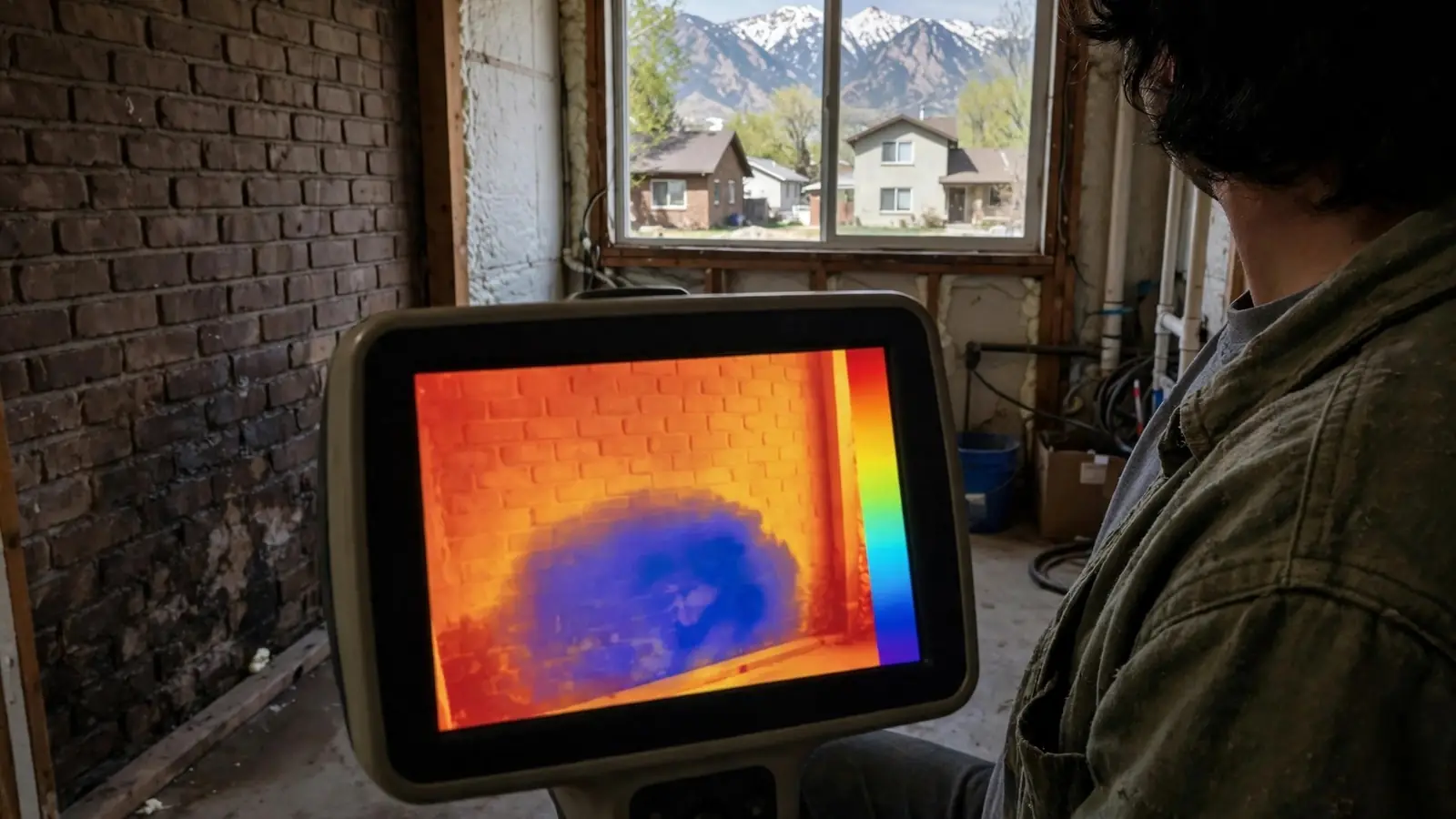
- Thermal cameras show temperature differences, not moisture; wet spots must be confirmed with a meter.
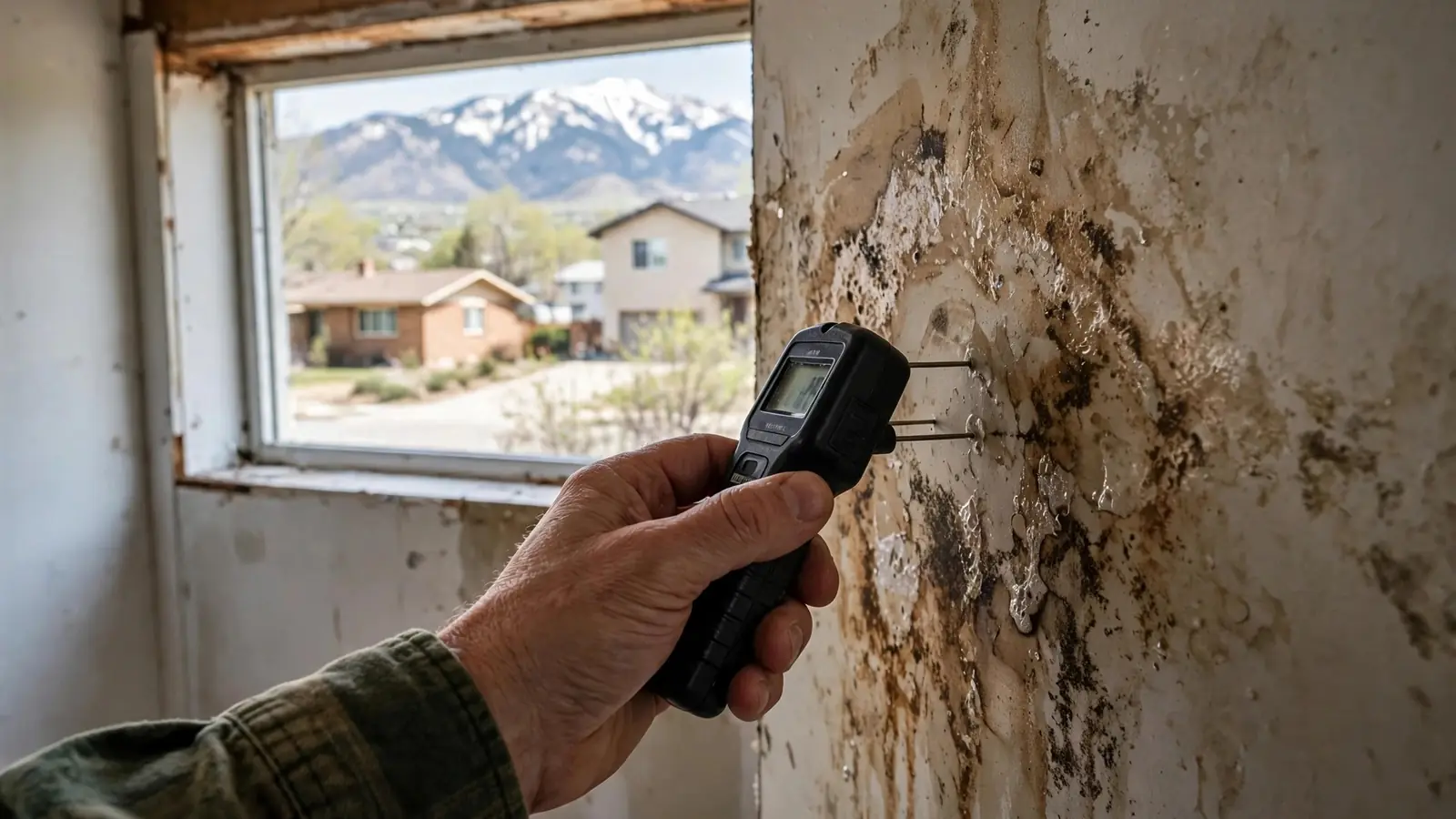
- Pin meters measure moisture inside materials; pinless meters scan beneath surfaces.
- Insulation and vapor barriers in basement walls slow drying of the wall cavity.
- Mold can begin growing on damp materials after 24 to 48 hours.
In this guide
- 1Where water hides
- 2Signs of hidden moisture
- 3How contractors find it
- 4Detection tools compared
- 5Why it matters
- 6Common hiding places in Springville homes
- 7When to open a wall
- 8After drying
- 9Hidden leaks you can check yourself
- 10Moisture and mold in walls
- 11Hidden moisture in ceilings
- 12One more tip
- 13Before you go
- 14Hidden moisture after the repair
- 15Hidden moisture questions
The problem
Where water hides
Water moves sideways and down, and some materials draw it upward. A leak in an upstairs bathroom can run along a joist and drip down an inside wall two rooms away. Water on a basement floor wicks into drywall and the wooden bottom plate of the wall. A dishwasher drip soaks into the cabinet base and spreads across the subfloor under the kitchen.
In Springville homes with finished basements, the most common hiding places are behind baseboards, inside the lower wall cavity, under carpet pad, inside the basement ceiling below bathrooms and laundries, and beneath the platform under a water heater or furnace.
Detection
How contractors find it
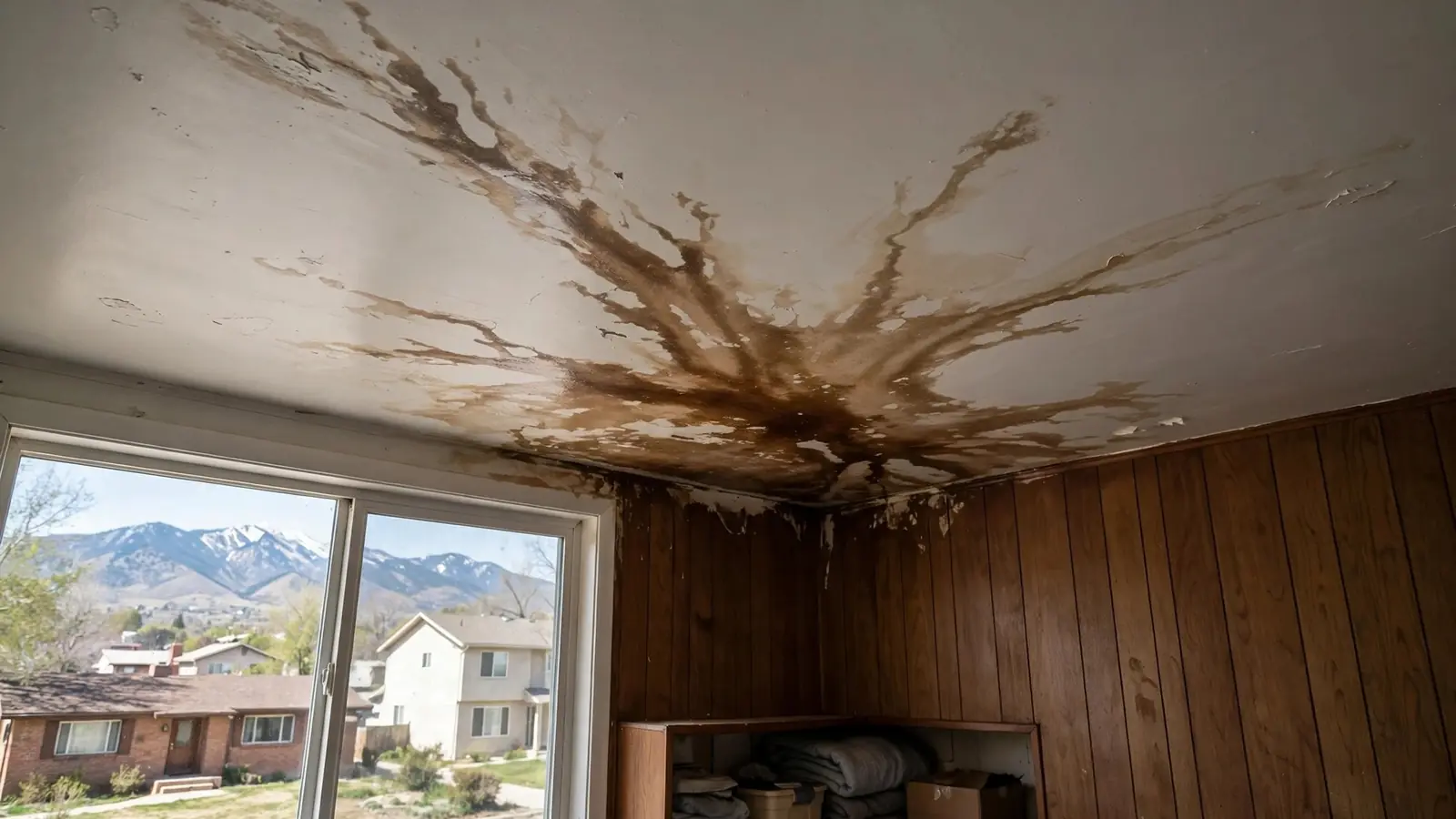
Professionals start with a walk-through and a moisture meter. Pin meters push two small pins into drywall or wood and read moisture inside the material. Pinless meters press against a surface and read beneath it without leaving holes. Readings are compared with the same material in a dry part of the house.
A thermal camera speeds up the search. Wet materials are usually cooler because water evaporating from them carries heat away, so they show as darker or cooler patches. But a cold spot can also be a missing patch of insulation or an air leak. Good contractors confirm every thermal finding with a meter before cutting anything.
Some situations need a look inside. A small inspection hole behind a baseboard, or removing a toe kick under a cabinet, can confirm what the meter suggests without major demolition.
Tools
Detection tools compared
| Tool | Shows | Limits |
|---|---|---|
| Pin meter | Moisture inside wood or drywall at the pin depth | Leaves small holes; reads one spot at a time |
| Pinless meter | Moisture below the surface over an area | Affected by metal and dense materials |
| Thermal camera | Surface temperature differences | Does not measure moisture; needs confirmation |
| Hygrometer | Air humidity and temperature | Tracks drying conditions, not materials |
Consequences
Why it matters
Moisture left inside a wall does not stay put. It keeps feeding mold, softens drywall, rusts fasteners and, over time, rots wood framing. Painting over a stain without drying the wall behind it only hides the problem. Insurers may also question a claim for damage that was visible but not addressed.
Drying a closed wall is possible when the water was clean and the exposure was short, using air movers and sometimes small holes to push air into the cavity. When insulation is soaked or the water was contaminated, the lower wall is usually opened.
Where to look
Common hiding places in Springville homes
Basement walls finished against foundations are the top hiding place: insulation and drywall can hold water for weeks behind a dry-looking surface. Bathroom walls hide slow leaks from shower valves and tub drains. Kitchen cabinets hide dishwasher and ice-maker line leaks. Ceilings below upstairs laundries and bathrooms hide water above the drywall until it stains. Exterior walls hide frozen-pipe leaks. Knowing where to look makes it far easier to catch water early.
Decisions
When to open a wall
Opening a wall is a judgment call. If readings stay high after a day or two of drying, if the wall contains wet insulation, if contaminated water was involved or if there are signs of mold, it usually makes sense to open it. If the water was clean, exposure short and readings are dropping steadily, drying in place may work. A good contractor shows you the readings and explains the decision.
Call about this problem
Questions about hidden moisture?
One call connects you with an independent water damage restoration contractor who serves Springville.
Afterwards
After drying
Once readings show walls are dry, it is worth a final check before repainting or closing anything up. Some contractors leave a small inspection opening behind a baseboard so you can check that area again after the next wet season. Keep the drying log in case the issue returns.
Mold
Moisture and mold in walls
Mold inside a wall often shows first as a smell, then as faint staining at the bottom of the drywall or on baseboards. If you suspect mold behind a wall, avoid opening it yourself and disturbing spores. A contractor can contain the area before investigating. The EPA's homeowner guidance suggests professionals for larger or hidden mold problems.
Tip
One more tip
Many homeowners keep a basic moisture meter in the toolbox after a water event. It is a useful habit for checking the bottom of basement walls each spring, as long as readings are compared with a dry area of the same material.
Last word
Before you go
Moisture that keeps coming back in the same spot almost always has an ongoing source: a slow plumbing leak, a gap in exterior flashing or groundwater. Drying treats the symptom; finding the source ends the problem. Ask the contractor to note any suspected source in their report so a plumber, roofer or drainage contractor can follow up.