
Key facts: Sewage Cleanup
- Sewage is category 3 (black) water and can carry bacteria, viruses and parasites.
- Porous materials soaked by sewage, such as carpet, pad and drywall, are generally removed.
- Basement floor drains are often the lowest opening to the sewer and the first place backups appear.
- Many homeowners policies cover sewer backup only with a separate endorsement.
- The homeowner usually owns the sewer lateral from the house to the city main.
In this page
- 1Why sewage is different
- 2How sewage gets into Springville homes
- 3First steps after a backup
- 4How sewage cleanup proceeds
- 5What usually stays and what usually goes
- 6Health and safety
- 7Clearing the line
- 8Older homes and sewer laterals
- 9Sewer backup prevention
- 10Insurance and sewer backup
- 11Questions to ask the contractor
- 12The first visit
- 13Bathrooms and toilets
- 14Heating and air ducts
- 15How long it takes
- 16Children, pets and vulnerable people
- 17After the cleanup
- 18What not to do
- 19Disinfection explained
- 20Basement fixtures below the sewer line
- 21Records and claims
- 22Utah County resources
- 23A typical Springville sewage call
- 24Gray water versus black water
- 25Septic systems
- 26Smell and air quality
- 27Wells, sinks and food after a backup
- 28Clothing and textiles
- 29Rental properties
- 30Repeated backups
- 31Seasonal patterns
- 32Choosing a sewage cleanup contractor
- 33How to talk to your family about it
- 34Long-term peace of mind
- 35Quick note
- 36Sewage cleanup questions
The difference
Why sewage is different
Most water damage starts clean. Sewage starts contaminated. Waste water from toilets, sinks, showers and laundry contains human waste, food, soap and whatever else goes down the drains, and once it comes back up into a house it brings bacteria and viruses with it. Public-health agencies treat contact with sewage as a real infection risk, especially for young children, older adults and anyone with a weakened immune system.
That changes the whole approach. With a clean-water leak, the goal is to dry as much as possible in place. With sewage, the goal is to remove contaminated porous materials, clean and disinfect everything that stays, and then dry. Protective equipment, containment and careful disposal are part of the job from the start.
Sources
How sewage gets into Springville homes
- Basement floor drainOften the lowest opening to the sewer. When the line downstream is blocked, sewage rises here first.
- Basement toilet or showerFixtures below the level of the main line overflow when it backs up.
- Main line blockageRoots, grease, wipes or a sagging section of the lateral block flow from the house.
- Collapsed or broken lateralOlder clay or cast-iron pipes in established neighborhoods can crack or collapse.
- City main backupLess common; a blockage or surcharge in the public main pushes sewage back up laterals.
- Overflowing fixture upstairsA clogged toilet that keeps running sends gray or black water through floors below.
Right away
First steps after a backup
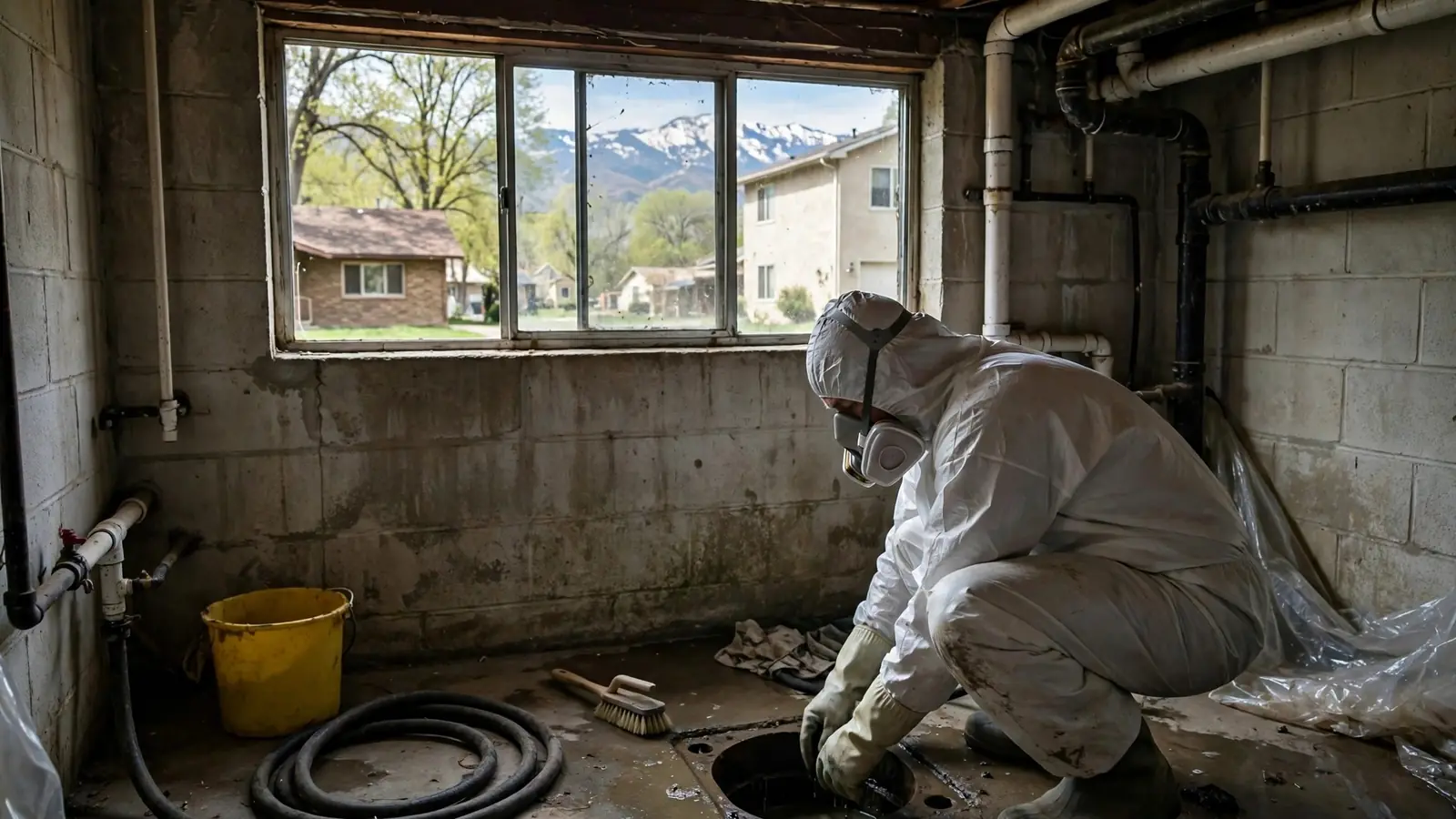
Stop using water. Every flush, shower and load of laundry adds to what is coming up the drain. Keep everyone, especially children and pets, out of the affected area. If sewage is near outlets or appliances, do not enter; shut the power from a dry location if you can.
Do not try to clean it with a household mop, vacuum or carpet cleaner. Those tools spread contamination and end up contaminated themselves. Open windows in the affected area if it is safe to do so, close interior doors to the rest of the house, and call.
Note what you saw: which drain or fixture overflowed, roughly how high the water rose and how long it sat. That helps the contractor and, later, the plumber who clears the line.
The process
How sewage cleanup proceeds
- 1
Protect people
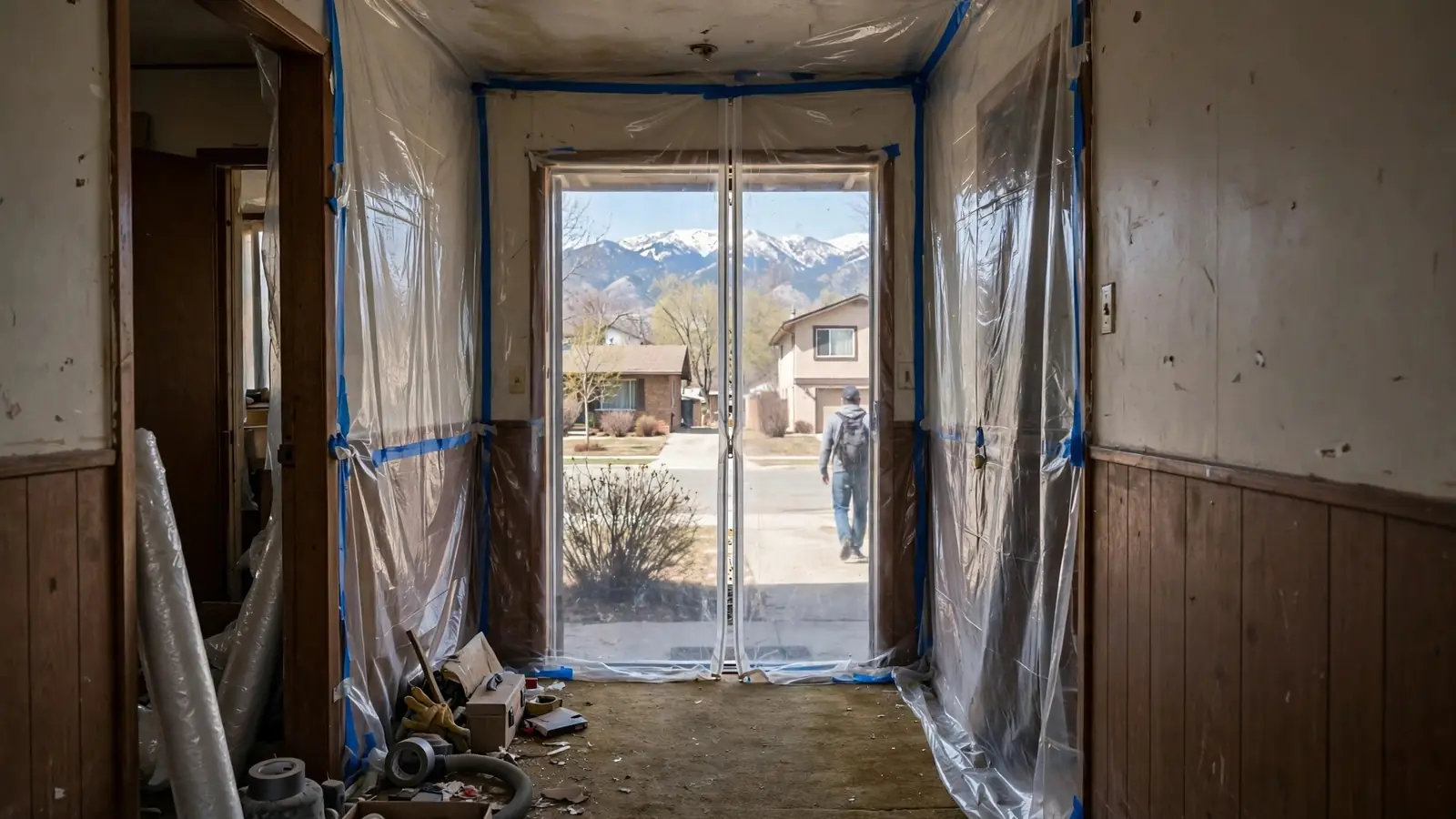
Technicians wear protective suits, gloves, boots and respirators. The area is closed off from the rest of the house.
- 2
Contain
Plastic sheeting and negative air pressure keep contaminated air and dust in the work area.
- 3
Remove the water
Sewage water and solids are pumped and extracted into containers for proper disposal.
- 4
Remove porous materials
Carpet, pad, drywall, insulation and other porous items touched by sewage are cut out, bagged and removed.
- 5
Clean
Hard surfaces, concrete and framing are scrubbed to remove residue.
- 6
Disinfect
Cleaned surfaces are treated with a disinfectant suitable for sewage contamination.
- 7
Dry
Air movers and dehumidifiers dry the structure, with readings recorded daily.
- 8
Verify
The area is checked visually and with moisture readings before rebuilding.
Materials
What usually stays and what usually goes
| Material | Usual outcome | Why |
|---|---|---|
| Carpet and pad | Removed | Cannot be reliably disinfected |
| Drywall touched by sewage | Removed above the contact line | Paper and gypsum absorb contamination |
| Insulation | Removed | Holds contaminated water |
| Concrete floor | Cleaned and disinfected | Hard and cleanable |
| Wood framing | Cleaned, disinfected and dried | Structural wood is usually kept unless damaged |
| Upholstered furniture | Usually discarded | Padding absorbs contamination |
| Hard plastic and metal items | Cleaned and disinfected | Non-porous surfaces can be sanitised |
| Clothing and textiles | Case by case | Some can be laundered hot; heavily soiled items are discarded |
Health
Health and safety
Exposure to sewage can cause stomach and intestinal illness, skin infections and other problems. The CDC advises avoiding contact with sewage-contaminated water, washing hands thoroughly after any contact and keeping cuts and wounds covered or away from it. People with weakened immune systems should stay away from the cleanup entirely.
Contaminated air is a concern during tear-out, when drywall and carpet are disturbed. Containment and air filtration protect the rest of the house. Ask the contractor how they will keep contamination out of living areas, particularly the heating ducts, which can carry odors and particles through the home.
The cause
Clearing the line
Cleanup deals with the damage, but the sewer line still needs fixing. A plumber or drain contractor clears the blockage, often with a cable machine or water jetting, and may run a camera down the line to find the cause. Roots growing into joints, a sag where waste settles or a broken section are common findings in older laterals.
In most cities, including Springville, the homeowner is responsible for the sewer lateral from the house to the connection with the city main. If you think the backup came from the city main, because neighbors are affected at the same time or a city crew is working nearby, contact Springville City Public Works.
Local factors
Older homes and sewer laterals
Springville's older neighborhoods, particularly around the historic center, have sewer laterals that may be decades old. Clay and cast-iron pipes are prone to root intrusion and cracking. Newer subdivisions on the west side use plastic pipe, which resists roots, but they can still back up from grease, wipes or construction debris.
A backwater valve, installed on the lateral, can stop sewage flowing back into a basement when the line downstream is blocked or surcharged. It is a plumbing upgrade worth asking about if your basement has a floor drain and you have had a backup before.
Prevention
Sewer backup prevention
| Step | Purpose |
|---|---|
| Do not flush wipes, even 'flushable' ones | Wipes do not break down and snag in lines |
| Keep grease out of drains | Grease hardens and narrows the pipe |
| Camera-inspect older laterals | Finds roots, sags and cracks early |
| Install a backwater valve | Stops reverse flow into the basement |
| Keep the floor drain trap filled | Stops sewer gas, though not backups |
Coverage
Insurance and sewer backup
Many standard homeowners policies exclude water that backs up through sewers or drains unless the policy has a sewer and drain backup endorsement. Flood policies also generally exclude backups unless they are caused directly by flooding. Check your policy for the endorsement and its limit, and report the loss promptly with photos.
The cleanup is necessary regardless of coverage, because sewage left in a house becomes a health hazard and destroys materials. A contractor can document the work so that, if coverage applies, the claim is supported.
Ask
Questions to ask the contractor
- What protective equipment will your crew use?
- How will you keep contamination out of the rest of the house and the ducts?
- Which materials will you remove, and how will they be disposed of?
- What disinfectant do you use?
- How will you confirm the area is clean and dry?
- What licences, certifications and insurance do you carry?
First visit
The first visit
When a contractor arrives at a sewage backup, they assess safety before anything else: electrical hazards, slip hazards, the extent of contamination and whether anyone in the house is especially vulnerable. They set up containment to keep contaminated air and dust in the work area and may run an air scrubber, a machine that filters fine particles from the air.
They then remove the water and solids, usually into sealed containers, and begin taking out porous materials. Everything removed is bagged and handled as contaminated waste. Only after the area is cleared do they begin cleaning, disinfecting and drying.
Bathrooms
Bathrooms and toilets
Not every sewage problem starts at a floor drain. A clogged toilet that overflows repeatedly, or a toilet that backs up when the washing machine drains, can spread contaminated water across a bathroom floor and through to the ceiling below. Tile floors over plywood can trap water underneath; the subfloor may need to be checked and dried. Vanity cabinets made of particleboard usually need replacing if they soak up contaminated water.
HVAC
Heating and air ducts
If sewage reaches a basement with a furnace, the ductwork can pull odors and particles through the house. Contractors often seal return vents in the affected area and may recommend turning off the system until containment is in place. If ducts at floor level were contaminated, they may need cleaning or replacement. A furnace or water heater that was submerged should be inspected by a qualified technician before it is used again.
Timeline
How long it takes
A small backup on bare concrete may be cleaned, disinfected and dried within a day or two. A backup into a finished basement, with carpet, walls and furniture affected, usually takes several days: removal and cleaning first, then drying with daily readings. Rebuilding afterwards is a separate phase.
Health
Children, pets and vulnerable people
Keep young children, pets, pregnant women, older adults and anyone with a weakened immune system or respiratory condition away from the affected area until cleanup is complete. If someone touched sewage, wash the skin thoroughly with soap and clean water and watch for signs of infection. Contact a doctor if anyone becomes ill.
Afterwards
After the cleanup
Once the area is disinfected and dry, and the sewer line is clear, the space can be rebuilt. If backups have happened before, consider a backwater valve, a camera inspection of the lateral and changes in what goes down the drains. Keep the contractor's documentation in case of future claims or questions when selling the house.
Avoid
What not to do
Do not run fans in a sewage-contaminated area before cleanup, because they spread contaminated particles. Do not use bleach on porous materials and expect them to be safe; bleach does not penetrate carpet or drywall. Do not mix cleaning chemicals. Do not put contaminated items out with ordinary trash without bagging them. And do not let anyone enter the area without boots and gloves.
Talk to a local contractor
Questions about sewage cleanup?
One call connects you with an independent water damage restoration contractor who serves Springville.
Disinfecting
Disinfection explained
Disinfection kills or inactivates germs on surfaces. It only works on clean surfaces, which is why contractors scrub first and disinfect second. The product should be registered for the purpose and used as the label directs, including contact time, the period it must stay wet on the surface to work. Ask the contractor what they use and how they apply it.
Fixtures
Basement fixtures below the sewer line
Basement bathrooms, showers and laundry drains sit below the main sewer line in many homes. When the line backs up, these are the first fixtures to overflow. Some homes have an ejector pump that lifts basement waste up to the main line; if it fails, sewage collects in its basin and can overflow. Checking that the ejector alarm works and having the pump serviced periodically can prevent a backup.
Records
Records and claims
Keep photos of the backup, the plumber's report on the cause, the contractor's list of removed materials and their cleaning and drying records. These support any claim under a sewer backup endorsement and help if the city's main was at fault.
Local help
Utah County resources
For questions about public health after a sewage backup, Utah County Health Department is the local agency. For city sewer main problems, contact Springville City Public Works. In an emergency involving electrical danger or gas, call 911 and your utility.
Example
A typical Springville sewage call
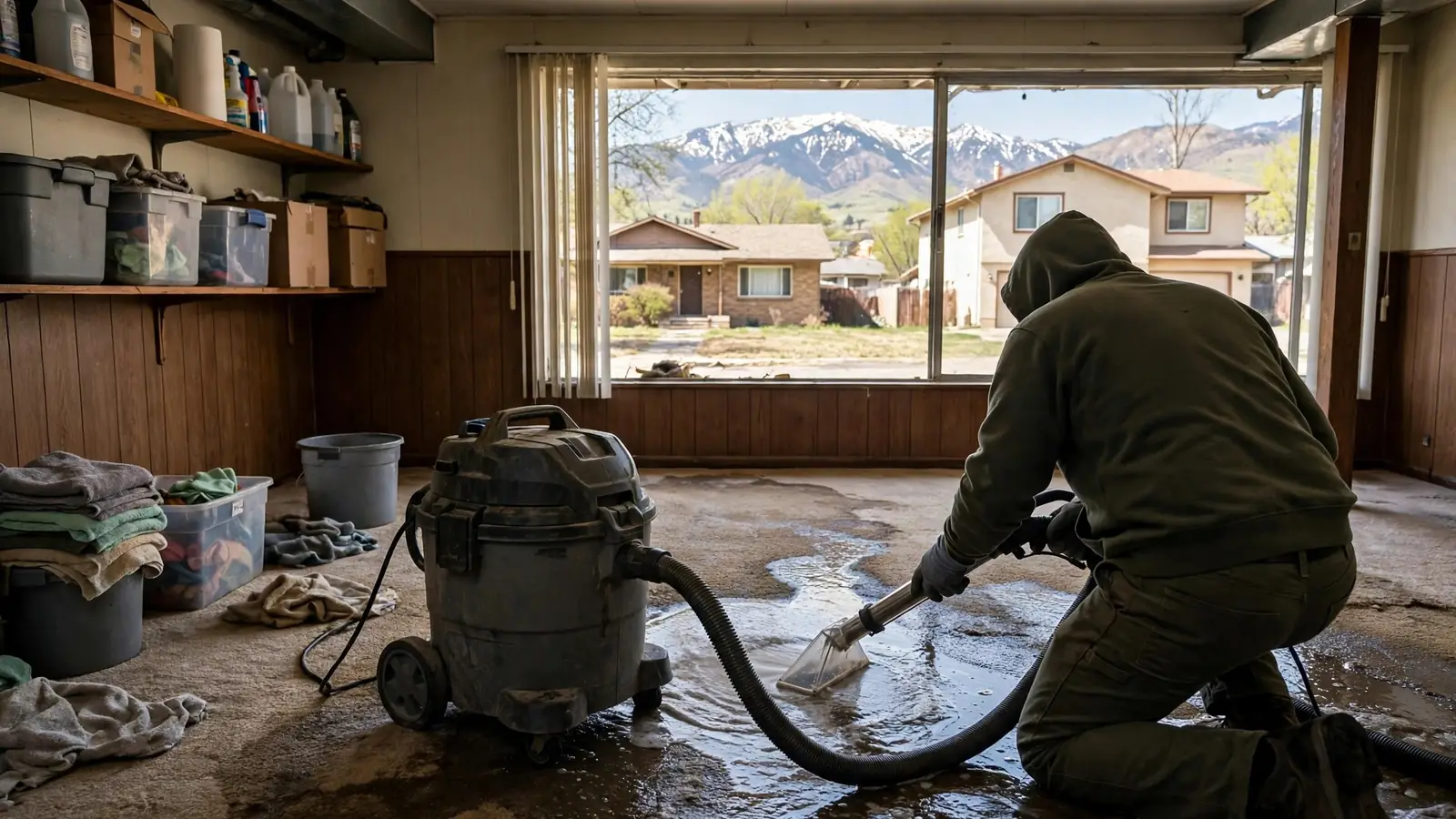
A common call comes on a weekend morning. Someone does a load of laundry, and dirty water starts coming up through the basement floor drain. By the time the washer finishes, there is an inch of gray-brown water across the laundry room and into the next room's carpet. The household stops using water, keeps the kids upstairs and calls.
The contractor arrives in protective gear, sets containment and removes the water. Carpet and pad in the affected rooms are cut out and bagged, and drywall is removed above where the water touched. Concrete is scrubbed and disinfected, framing is cleaned and treated, and drying equipment is set. A plumber is called to clear the line and finds roots in an old clay lateral. The family is advised to have the lateral repaired or relined and to consider a backwater valve.
Categories
Gray water versus black water
Not every backup is the same. Water from a washing machine or a sink, before it has mixed with toilet waste, is gray water: contaminated but less hazardous. Once it has mixed with sewage, or sat for long enough, it is treated as black water. In practice, water that comes up a basement floor drain from a blocked main line is usually treated as black water, because it carries everything from the house's drains. The contractor will explain how they classify your situation and what that means for removal.
Septic
Septic systems
Homes on septic, mostly in outlying and canyon areas, can back up when a tank is full or a drain field is saturated, particularly during spring runoff. The inside cleanup is the same as a city sewer backup. The septic system itself needs pumping and inspection by a septic contractor before the house uses water normally again.
Odor
Smell and air quality
Sewage odor comes from gases and from residue on surfaces. Removing contaminated materials and cleaning surfaces removes the source. Air scrubbers during the work and good ventilation afterwards clear the remaining odor. If smell persists after cleanup, something was missed, and it should be checked.
Kitchen safety
Wells, sinks and food after a backup
Wash dishes and utensils that may have been exposed in hot soapy water and sanitise them. Discard food, medicines and cosmetics that came into contact with sewage. If you are on a private well and sewage or floodwater reached the wellhead, have the well inspected and the water tested before drinking it.
Laundry
Clothing and textiles
Clothes and linens soiled by sewage may be salvageable if washed promptly in hot water with detergent, following label instructions. Heavily soiled items, and anything that cannot be washed hot, are usually discarded. Wash contaminated items separately from other laundry.
Renters
Rental properties
In rentals, landlords usually arrange and pay for sewage cleanup of the building. Tenants should report backups immediately, stop using water and keep away from the area. Renter's insurance may cover damaged belongings, depending on the policy.
Recurring
Repeated backups
If backups keep happening, the line has a lasting problem: roots, a sag, a break or an undersized pipe. Repeated cleanups without fixing the line only repeat the damage. A camera inspection and a plumber's recommendation for repair, relining or replacement is the way out.
Seasonal patterns
Sewage backups in Springville can happen at any time, but some patterns recur. Holidays bring more cooking grease and more people using drains. Spring runoff and heavy storms can surcharge older sewer systems and saturate septic drain fields. Autumn leaf fall can clog outdoor drains connected to sewer lines in older properties. Tree roots grow most actively in warm months, slowly narrowing older laterals until a blockage forms.
Knowing these patterns helps with prevention: keep grease out of drains, have older laterals inspected and make sure outdoor drains are not connected to the sanitary sewer.
Choosing a sewage cleanup contractor
Look for experience with category 3 water, proper protective equipment, containment practices, a clear disposal process and willingness to explain what they remove and why. Ask about licensing, certifications and insurance.
How to talk to your family about it
A sewage backup is unpleasant and can be upsetting, especially for children. Explain simply that the drains backed up, that professionals will clean and disinfect the area, and that everyone should stay out until it is finished. Keep routines as normal as possible in the rest of the house. Once the area is clean and dry, it is safe to use again.
Long-term peace of mind
After a backup, many families add a backwater valve, a water backup insurance endorsement and a habit of watching what goes down the drains. Together these make a repeat far less likely and far less disruptive if it does happen.
Quick note
If you smell sewage but see no water, check floor drain traps; a dry trap lets sewer gas into the house. Pour water into rarely used drains every few weeks to keep traps sealed. If the smell continues, have a plumber check vents and the line.
Questions
Sewage cleanup questions
Can I clean a small sewage backup myself?
A very small backup on bare concrete can be cleaned with protective gear and disinfectant. Anything on carpet, drywall or a finished basement should be handled by professionals.
Will the smell go away?
Once contaminated materials are removed, surfaces are disinfected and the area is dried, odor normally goes with it.
Can I stay in the house?
Often yes, if the affected area is sealed off and you have working bathrooms elsewhere. Ask the contractor.
Is a backup at night an emergency?
Yes. Stop using water and call; the line is answered 24 hours a day.