
Key facts: Commercial Restoration
- Commercial losses often involve several parties: owner, tenants, property manager and insurers.
- Phased drying and containment can let unaffected areas stay open during work.
- Commercial buildings often have sprinkler systems, roof drains and larger water lines that release water quickly.
- Business interruption coverage, where held, may depend on documented downtime.
- Fast drying, ideally within one to two days according to EPA guidance, limits mold in commercial buildings as well as homes.
In this page
- 1What makes commercial losses different
- 2Common commercial water sources
- 3How a commercial job is usually run
- 4Keeping the doors open
- 5Business types and typical concerns
- 6Records, stock and equipment
- 7Multi-unit and rental properties
- 8Larger drying setups
- 9Who usually handles what
- 10Insurance for businesses
- 11Questions for a commercial contractor
- 12Restaurants and food businesses
- 13Churches and meetinghouses
- 14Schools and offices
- 15Storefronts downtown
- 16Large sprinkler discharges
- 17Keeping records for the business
- 18Planning ahead
- 19Health and safety for staff
- 20Multi-tenant communication
- 21Inventory and stock
- 22Elevators, electrical rooms and IT
- 23Reopening
- 24Choosing a commercial contractor
- 25Common mistakes
- 26Rental units and habitability
- 27A typical commercial call in Springville
- 28Older commercial buildings
- 29Industrial and warehouse spaces
- 30Communication with customers
- 31Property managers and HOAs
- 32Moisture in commercial roofs
- 33Contents pack-out for businesses
- 34Seasonal risks for Springville businesses
- 35Working with insurers on commercial losses
- 36After the job
- 37Quick note
- 38Commercial restoration questions
The difference
What makes commercial losses different
The physics of drying a building does not change between a home and a business. What changes is everything around it. A business has people who need to keep working, customers who need a safe way in, records and stock that cannot be replaced easily, and often several parties with a stake in the outcome: the owner, tenants, a property manager, an HOA board and more than one insurer.
Springville's commercial buildings range from older brick storefronts downtown to newer retail along the main corridors, offices, churches and meetinghouses, schools, light industrial units and multi-family rentals. Each brings its own complications. A downtown storefront may share walls with its neighbors. A church may need its main hall ready by Sunday. A rental fourplex has tenants who need somewhere to live.
Sources
Common commercial water sources
- Fire sprinkler dischargeFrozen or damaged heads release large volumes quickly, often across several rooms.
- Roof drains and flat roofsSnowmelt and ice dams on flat or low-slope roofs push water into ceilings.
- Burst lines in unheated areasLoading docks, stairwells and mechanical rooms freeze during cold snaps.
- Water heaters and boilersLarge tanks and boilers release more water than residential units.
- Restroom overflowsPublic restrooms see heavy use and occasional deliberate blockages.
- Tenant-to-tenant leaksA leak in one unit travels into neighboring units and floors below.
The process
How a commercial job is usually run
- 1
Stop and secure
The source is shut off, electrical hazards are addressed and wet areas are marked off for safety.
- 2
Assess and map
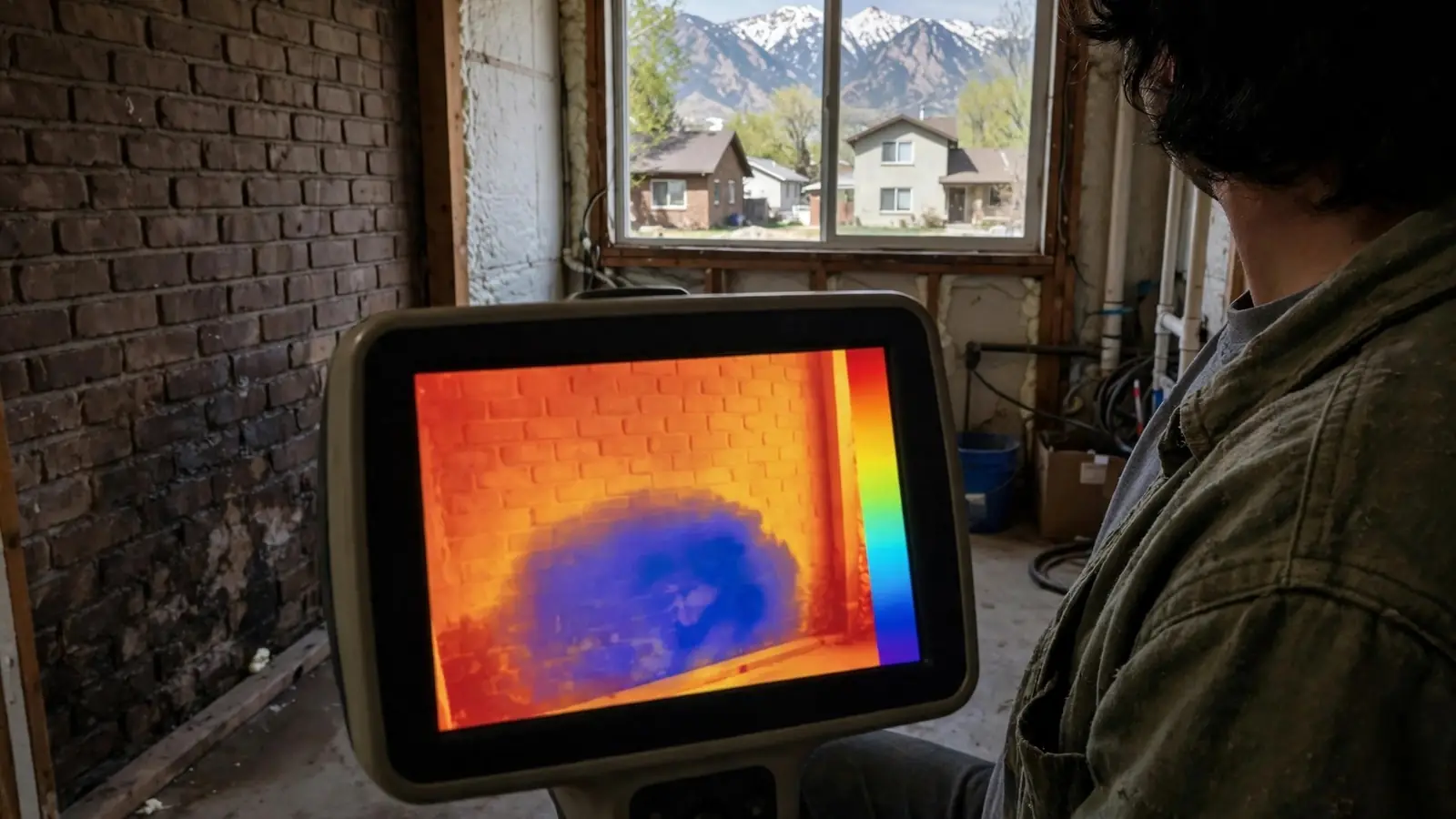
Moisture readings map the affected area across rooms, floors and tenant spaces.
- 3
Plan with the owner
The contractor and owner agree which areas must stay open, which can close and in what order work will happen.
- 4
Contain
Plastic barriers and air filtration separate work areas from occupied spaces.
- 5
Extract and remove
Water is extracted and materials that cannot be dried are removed.
- 6
Dry in phases
Drying equipment is set area by area, often with larger dehumidifiers sized for the building.
- 7
Document
Readings, photos, removed-material lists and time records are kept for the owner and insurers.
- 8
Hand over
Dry areas are released for repairs and reopening.
Downtime
Keeping the doors open
For most businesses the biggest impact of water damage is not the drywall but the downtime. A good commercial restoration plan looks for ways to keep trading. That might mean drying the back office while the sales floor stays open, working overnight in a restaurant dining room, or sealing off one wing of a building with containment so the rest can be used.
Noise, power draw and trip hazards from equipment all need managing in occupied buildings. Contractors may run cords overhead, use quieter equipment during business hours, or schedule removal work outside opening times. These details should be agreed at the start.
By business
Business types and typical concerns
| Type | Main concerns |
|---|---|
| Retail storefront | Inventory, customer safety, shared walls with neighbors |
| Office | Electronics, records, carpet tiles, employee access |
| Restaurant | Health code, food safety, kitchen equipment, short closures |
| Church or meetinghouse | Large halls, scheduled events, volunteer coordination |
| Multi-unit rental | Tenant relocation, access to units, owner-tenant responsibilities |
| Warehouse or light industrial | Stock on pallets, concrete floors, high ceilings |
Contents
Records, stock and equipment
Paper records soaked by clean water can often be saved if they are frozen quickly and dried by specialists. Records soaked by sewage or floodwater are harder. Electronics should be unplugged and moved, not switched on to test them. Inventory sitting on the floor should be moved or photographed and listed before it is moved, because it may be part of the claim.
A contractor can usually arrange contents pack-out, moving undamaged and salvageable items to storage while the building dries. Ask whether they handle this or work with a partner.
Rentals
Multi-unit and rental properties
Water does not respect property lines inside a building. A supply line failure in an upstairs apartment reaches the unit below; a roof leak above a hallway reaches several doors. Each affected unit may have its own tenant, its own belongings and, sometimes, its own renter's insurance.
Owners and managers usually coordinate access, notify tenants and decide whether units are habitable. The contractor documents each unit separately, which helps sort out which policy covers what. In general, building insurance covers the structure, while tenants' renter's policies cover their belongings.
Equipment
Larger drying setups
Commercial spaces often need bigger equipment. Large-capacity dehumidifiers, sometimes desiccant units in cold weather, are used to dry big volumes of air. Open-plan offices with carpet tiles may be dried tile by tile or have tiles lifted in sections. Tall ceilings and concrete floors change how air movers are placed.
Monitoring is the same principle as in a house: readings at fixed points, compared with dry reference materials, logged daily. In a commercial job the log is often shared with several parties, so it needs to be clear and consistent.
Roles
Who usually handles what
| Party | Typical role |
|---|---|
| Building owner | Structure, building systems, building insurance claim |
| Tenant | Their stock, fixtures and business interruption claim |
| Property manager | Access, communication, coordinating trades |
| HOA | Common areas and shared structure, as set out in the governing documents |
| Restoration contractor | Mitigation, drying, documentation, often repairs |
Coverage
Insurance for businesses
Commercial property policies vary widely. Some include business interruption coverage that pays for lost income during a covered closure, often with a waiting period. Documenting when the business closed, what areas were unusable and when they reopened matters for those claims.
As with homes, policies commonly treat sudden discharges differently from long-term leaks and surface flooding, and sewer backup may need an endorsement. Talk to your agent early and keep the contractor's records.
Ask
Questions for a commercial contractor
- Have you handled losses in buildings like ours?
- How will you keep unaffected areas open?
- Can you work outside business hours?
- How will you document each tenant space separately?
- Do you handle contents pack-out and storage?
- What licences, certifications and insurance do you carry?
Food service
Restaurants and food businesses
Food businesses face the strictest rules after water damage. Health regulations require that food contact surfaces, storage and preparation areas be cleaned and sanitised, and food exposed to contaminated water be discarded. Utah County Health Department is the local authority for food establishment questions. Restoration in a kitchen often means short, intense work outside service hours, with drying equipment moved before opening each day.
Places of worship
Churches and meetinghouses
Springville has many churches and meetinghouses, large buildings with big open halls, classrooms, kitchens and often basements. They are used intensively on certain days and lightly on others. A water loss mid-week may need to be dried and made usable by the weekend. Facilities managers usually coordinate with the contractor to schedule work around services and events, and to keep volunteers and members out of drying areas.
Offices
Schools and offices
Offices and schools have carpet tiles, suspended ceilings, desks and electronics. Carpet tiles can sometimes be lifted, dried and relaid. Ceiling tiles that got wet are usually replaced. Computers and equipment should be unplugged and moved, not tested. Records should be moved to dry areas or frozen if soaked, until they can be dried by a specialist.
Main Street
Storefronts downtown
Older storefronts on Main Street often share walls with their neighbors and have basements used for stock. Water from a roof, a burst pipe in one building or a backup can cross into the next. Coordinating with neighbors, landlords and insurers is part of the job. Drying a shared wall from one side only is slow, so access to both sides helps.
Sprinklers
Large sprinkler discharges
A fire sprinkler head that freezes or is struck can release a large amount of water quickly until the system is shut down. Know where your building's sprinkler shutoff is and who is authorised to close it. After a discharge, the sprinkler contractor restores the system, and the restoration contractor deals with the water. The fire marshal may need to be informed if the system is out of service.
Records
Keeping records for the business
Business owners should keep a log of when the loss happened, which areas were closed and for how long, what stock and equipment were damaged, and what extra expenses were incurred. Photos with timestamps help. These records support property and business interruption claims and help with any lease questions about who is responsible for what.
Preparedness
Planning ahead
Many businesses create a simple emergency plan: where the main water and sprinkler shutoffs are, who to call, which areas hold critical records or stock, and how to reach staff. Having that plan, and a restoration contractor's number, ready before a loss shortens the response when it happens.
Talk to a local contractor
Questions about commercial restoration?
One call connects you with an independent water damage restoration contractor who serves Springville.
Staff safety
Health and safety for staff
Employers should keep staff out of areas with standing water near electrical equipment, sewage contamination or unstable ceilings. Slip hazards from wet floors and cords from drying equipment need managing. Workers handling cleanup need suitable protective equipment. Federal workplace safety guidance from OSHA covers flood and water cleanup hazards.
Communication
Multi-tenant communication
In a building with several tenants, clear communication prevents confusion. Owners or managers usually tell tenants what happened, which areas are affected, when work will happen and how long it will take. The restoration contractor can provide updates on drying progress. Tenants should report any new leaks or damage promptly.
Stock
Inventory and stock
Stock on the floor or lower shelves is often the first casualty. Move what you can, photograph what is damaged, and keep damaged items until your insurer agrees they can be disposed of, unless they pose a hazard. For food, pharmaceuticals and cosmetics, follow regulatory guidance on disposal.
Critical systems
Elevators, electrical rooms and IT
Water reaching elevator pits, electrical rooms or server areas needs specialist attention. Shut equipment down safely, keep people out and call the relevant service companies alongside the restoration contractor. Do not restart equipment that got wet until it has been inspected.
Reopening
Reopening
Before reopening an area, it should be dry, clean, safe and, where relevant, cleared by inspectors. The contractor's final readings and photos help show the area is ready. Repairs to finishes may continue after reopening if they do not affect safety.
Selection
Choosing a commercial contractor
Look for experience with buildings like yours, capacity to bring enough equipment for a large space, clear documentation practices, appropriate licensing and insurance, and a willingness to work around your hours. Ask for a written scope and schedule.
Pitfalls
Common mistakes
Waiting to see if it dries, running business as usual in wet areas, testing wet electronics, throwing out stock before documenting it and failing to notify insurers promptly are all common mistakes that make commercial losses worse.
Habitability
Rental units and habitability
In rental housing, water damage can make a unit unfit to live in. Owners should arrange restoration quickly, communicate with tenants about timelines and follow Utah landlord-tenant rules on habitability. Tenants should report leaks promptly and allow access for drying and repairs.
Example
A typical commercial call in Springville
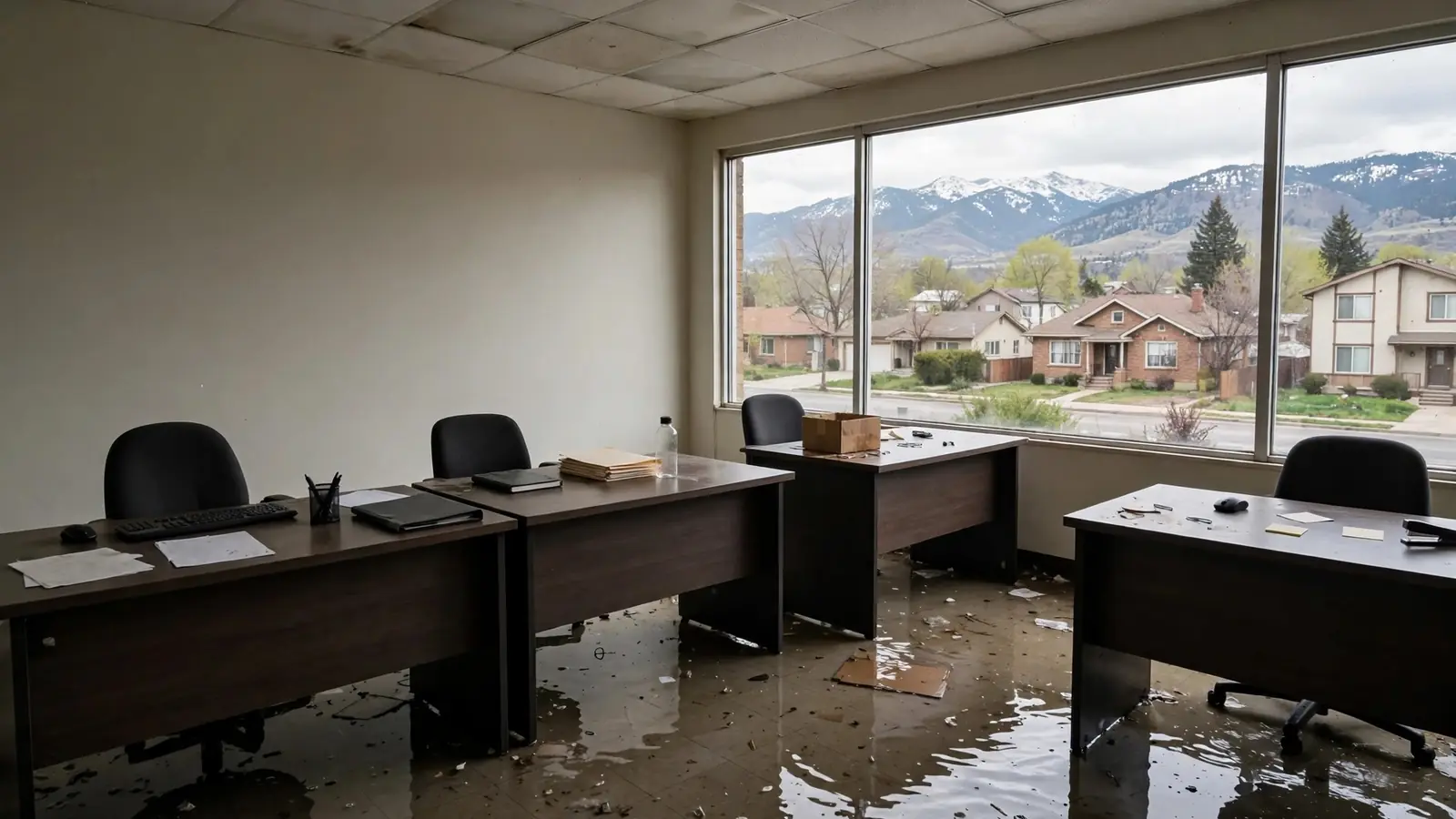
A common commercial call comes on a Monday morning after a cold weekend. A sprinkler line in an unheated stairwell or a supply line above a suspended ceiling froze and split on Saturday night, and water ran until staff arrived. Carpet tiles across an office are soaked, ceiling tiles have collapsed onto desks and water has run down an elevator shaft or into a lower floor. The owner needs the building safe, the water out and a plan to reopen.
The contractor works with the building manager to shut off and isolate the line, makes electrical areas safe and begins extraction. Ceiling tiles are removed, carpet tiles are lifted, and drywall at the base of affected walls is assessed. Large dehumidifiers and many air movers are set across the floor. Areas not affected are sealed off so staff can work. Daily readings track progress, and a written report goes to the owner, tenants and insurers.
Other common calls include a restroom overflow in a retail building, a roof drain blockage during a storm that sends water into a store, a water heater failure in a restaurant kitchen and a burst line in a rental fourplex. Each follows the same core process, adapted to the building and the people who use it.
Older buildings
Older commercial buildings
Springville's older downtown buildings were built long before modern codes. They may have plaster walls, wood floors over basements, cast-iron plumbing and roofs that have been patched many times. Drying them takes the same care as drying an older home, with the added complexity of tenants and business schedules. Hazardous materials such as asbestos may be present in older commercial buildings, and their presence affects how tear-out is done.
Warehouses
Industrial and warehouse spaces
Light industrial units and warehouses typically have concrete floors, high ceilings, metal framing and stock on racks or pallets. Water spreads quickly across large slabs and soaks the bottom pallet layer. Drying focuses on getting stock off the floor, extracting the slab and running large dehumidifiers. Office areas within warehouses are handled like any office.
Customers
Communication with customers
If part of a business stays open, customers need to know where they can go and where they cannot. Clear barriers, simple signage provided by the business and staff ready to explain keep people safe and reduce disruption. Many businesses also post a short update online or at the entrance.
Associations
Property managers and HOAs
Property managers and HOA boards often handle water losses on behalf of owners. Their governing documents usually define which parts of a building are common property and which belong to individual owners. A leak from a unit's water heater into a common hallway, for example, may involve the unit owner's policy, the association's master policy and the restoration contractor all at once. Managers who keep a contact list of owners, shutoff locations and a preferred restoration contact can respond within minutes rather than hours.
Board members should also know the master policy's deductible and how it is allocated. Many associations pass the deductible on to the owner whose unit caused the loss, which affects how quickly mitigation gets authorised. Clear written procedures help avoid delays while water is still spreading.
Roofs
Moisture in commercial roofs
Flat and low-slope commercial roofs collect snow and meltwater. Clogged roof drains and scuppers cause ponding, and water finds its way through seams into the insulation below the membrane. Wet roof insulation may not be visible from inside until ceiling tiles stain. A roofer with moisture-scanning equipment can locate wet insulation; the restoration contractor dries and repairs the interior damage.
Pack-out
Contents pack-out for businesses
When a business needs to clear a space for drying, contents pack-out can move furniture, files and equipment to secure storage. Items are inventoried, photographed and labelled, cleaned or dried if needed and returned when the space is ready. This lets drying proceed quickly and protects belongings from further damage.
Seasonal risks for Springville businesses
Winter brings frozen sprinkler and supply lines in unheated stairwells, loading docks and vestibules, and ice dams on older roofs downtown. Spring brings runoff and roof drain overloads as snow melts quickly. Summer brings thunderstorms that test roof drains and parking lot drainage, plus heavy air-conditioning use that can overflow condensate pans above ceilings. Autumn is the time to clear roof drains of leaves, check heat tracing on exposed lines and confirm that sprinkler systems in unheated areas are dry-pipe or protected.
A facilities checklist tied to these seasons, and a quick walk-through after each cold snap or storm, catches many problems while they are still small. Tenants should know who to call if they see water, and where the shutoffs are.
Working with insurers on commercial losses
Commercial claims often involve an adjuster who visits early and stays involved. Share the contractor's moisture maps and drying logs as the job progresses. If the loss is large, the insurer may appoint its own consultants. Agree on scope in writing before major removal where possible, while not delaying urgent mitigation.
After the job
Once repairs are done, review what happened and update your emergency plan. Note where water came from, how quickly it was found and what slowed the response. Small changes, such as a leak sensor in a mechanical room or labels on shutoff valves, make the next response faster.
Quick note
Keep the contractor's number with your building's emergency contacts so whoever finds the water can call straight away, even out of hours.
Questions
Commercial restoration questions
Can my business stay open during drying?
Often parts of it can, with containment and phased work. It depends on where the water went and safety.
Do you work nights and weekends?
Calls are answered 24 hours a day. Many contractors schedule work around business hours.
Who pays for damage in a rental unit?
It depends on the cause, the lease and the policies. Building insurance usually covers the structure; tenants' policies cover their belongings.