
Key facts: East Hobble Creek
- East Hobble Creek includes Springville High School and Brookside Elementary within its area, according to listing data.
- Many homes date from the 1970s to 1990s and have finished basements.
- Tank water heaters commonly last around 8 to 12 years before failure risk rises.
- Rubber washing machine hoses are a frequent source of sudden indoor floods.
- Polybutylene supply pipe, used in some homes built from the late 1970s to mid-1990s, is prone to failure.
In this page
- 1The neighborhood
- 2Common causes of water damage here
- 3Water heaters
- 4Polybutylene plumbing
- 5Protecting a finished basement
- 6Common basement leak sources and signs
- 7When a leak happens
- 8Split-levels and multi-level water paths
- 9Aging fixtures
- 10Basement bedrooms and safety
- 11Living through the drying
- 12Typical drying times
- 13Questions to ask on the call
- 14A typical East Hobble Creek call
- 15Living near the creek
- 16Trees, roots and sewer lines
- 17Insurance for common leaks
- 18More East Hobble Creek questions answered in detail
- 19A year in an established neighborhood
- 20How cleanup in older finished basements differs
- 21What to tell the contractor when you call
- 22Neighbourhood patterns
- 23Small habits that prevent big losses
- 24Selling or buying an established home
- 25Who else may be involved
- 26Calling at any hour
- 27Garages and laundry rooms
- 28The bottom line
- 29Help for East Hobble Creek homeowners
- 30East Hobble Creek questions
About the area
The neighborhood
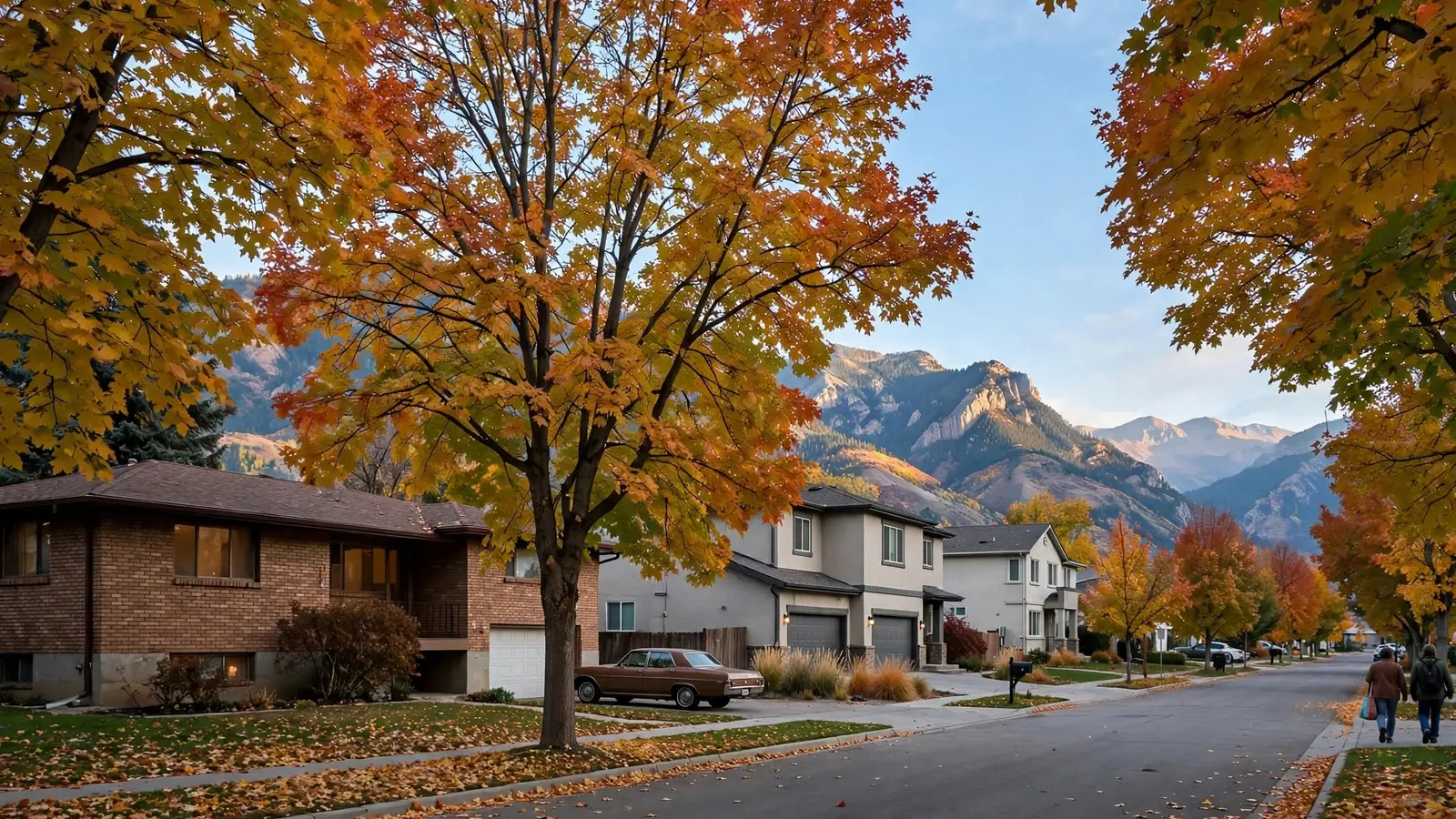
East Hobble Creek sits on the east side of town, near Springville High School and Brookside Elementary, with Hobble Creek running nearby. The streets are lined with established trees and family homes, most built from the 1970s onward, with ramblers, split-levels and two-story houses. Almost all have basements, and most of those basements have been finished into family rooms and bedrooms.
That layout is comfortable and practical, but it puts the plumbing, the water heater and often the laundry directly above or beside carpeted living space. When something fails, it fails onto finished rooms.
Causes
Common causes of water damage here
- Water heater failureTanks near the end of their life leak at the base or rupture, often in a basement utility room.
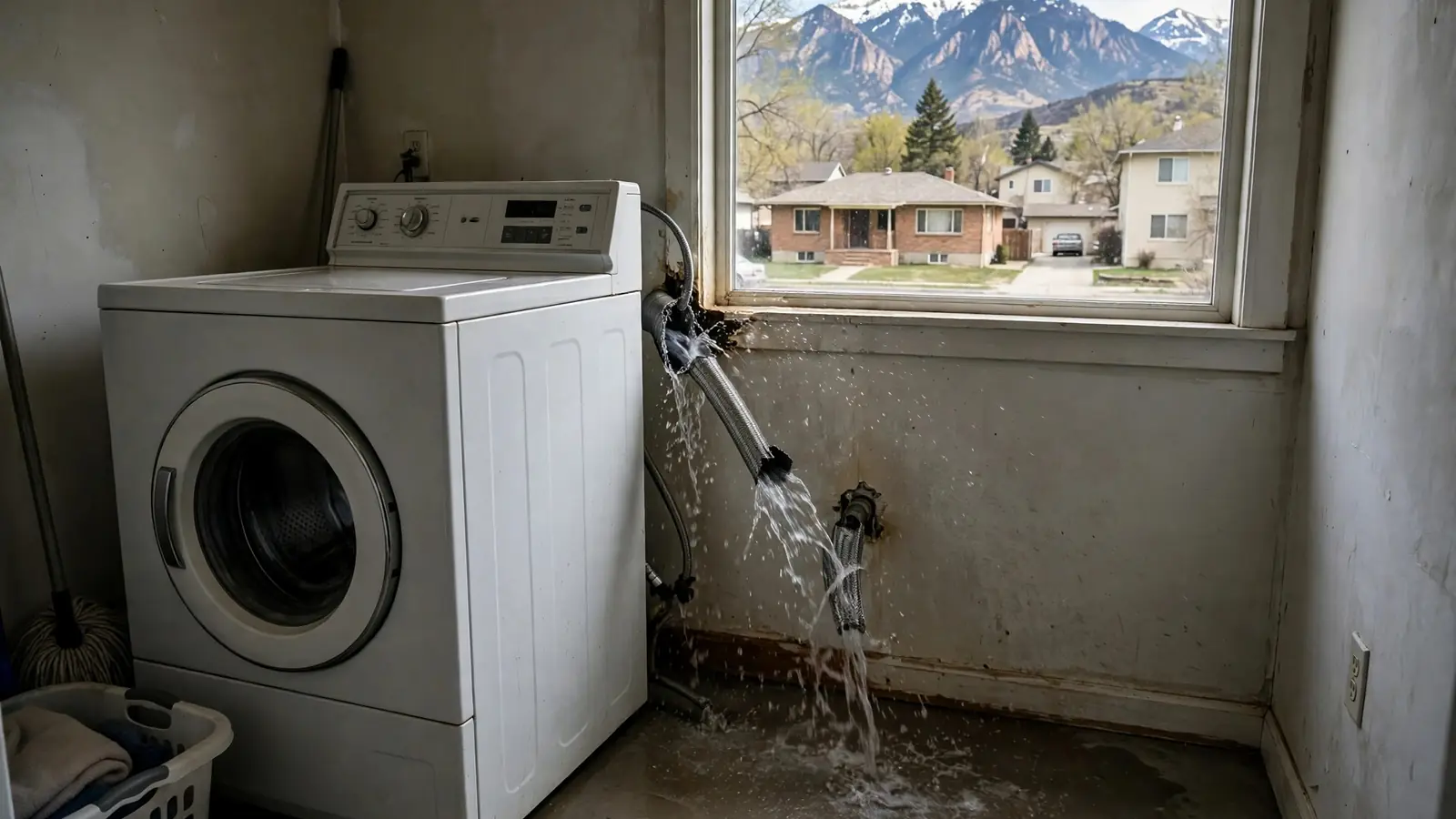
- Washing machine hosesRubber hoses burst under pressure and can flood a laundry room quickly.
- Supply line fittingsCompression fittings under sinks and toilets loosen or crack with age.
- Polybutylene pipeSome homes from the late 1970s to mid-1990s were plumbed with grey polybutylene, which is prone to failure.
- Frozen pipesLines in exterior walls and garages freeze in cold snaps.
- Bathroom leaksFailed shower pans and wax rings leak into the ceiling below.
Water heaters
Water heaters
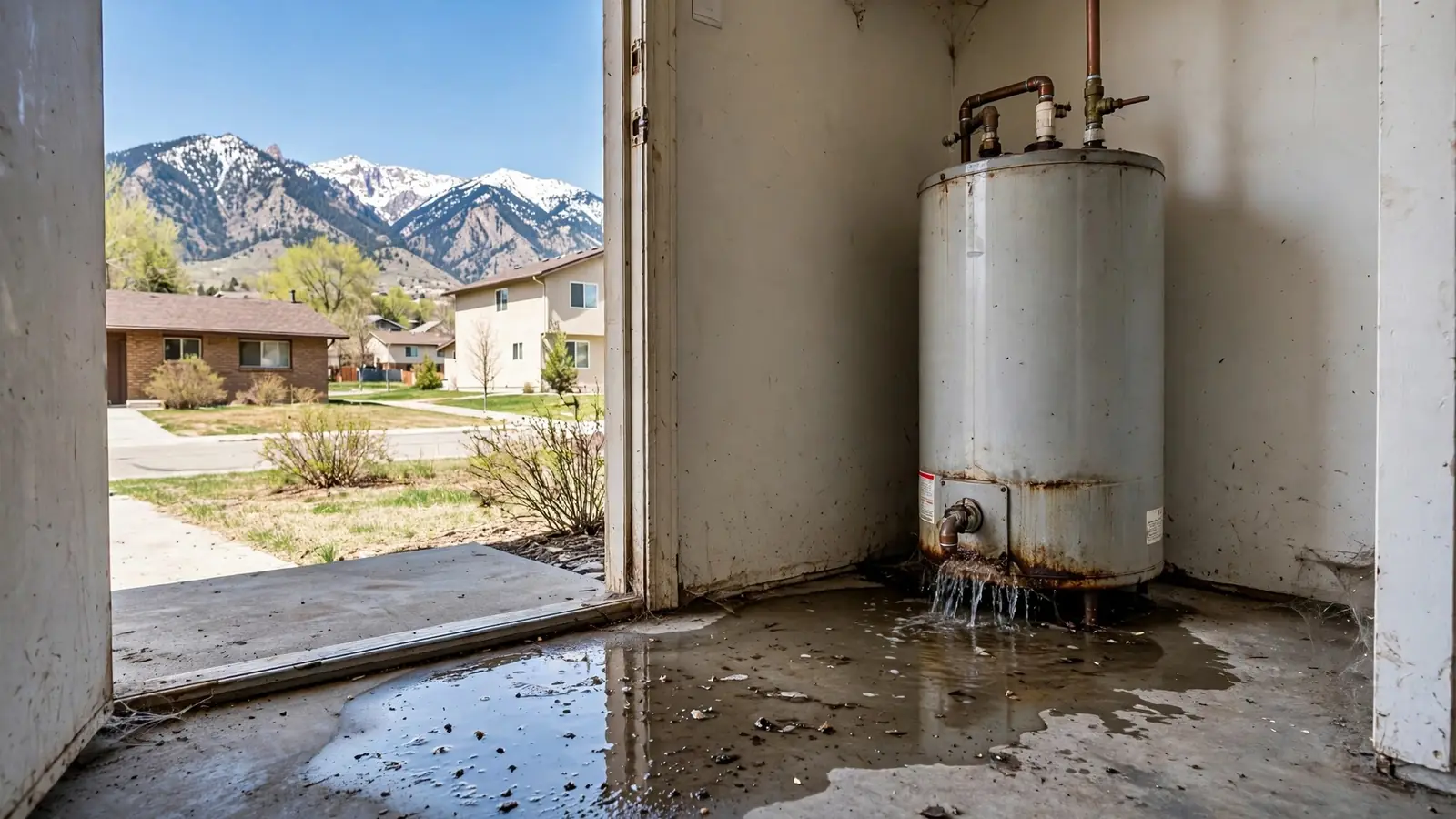
The water heater in a typical East Hobble Creek home sits in a basement utility room, often next to the furnace and close to a finished family room. When a tank rusts through, it may leak slowly, or the base may give way and empty the tank. Water spreads under the wall into carpet on the other side.
Signs a tank is near the end include rust-colored water, rumbling noises, moisture at the base and age. Many tanks show their manufacture date on the label. A drain pan with a line to a floor drain, and a leak alarm, can limit damage.
Older plumbing
Polybutylene plumbing
Polybutylene was a grey plastic supply pipe installed in many American homes from the late 1970s until the mid-1990s. It was later linked to failures, particularly at fittings, and many homes have since been re-plumbed. If your home dates from that era and you see grey plastic supply lines, ask a plumber about it. A leak from polybutylene can appear without warning.
Prevention
Protecting a finished basement
- 1
Drain pan and alarm under the water heater
Catches small leaks and warns you early.
- 2
Braided steel washer hoses
Replace rubber hoses and turn off valves when away.
- 3
Know the main shutoff
Make sure everyone in the house can find and turn it.
- 4
Insulate exposed pipes
Especially in garages and exterior walls.
- 5
Check under sinks
Look for drips at fittings once or twice a year.
Warning signs
Common basement leak sources and signs
| Source | Early sign |
|---|---|
| Water heater | Rust or moisture at the base |
| Washer hose | Bulging or cracked rubber |
| Sink supply | Drip marks in the cabinet |
| Shower above | Stain on the basement ceiling |
| Exterior wall pipe | Damp drywall after a cold snap |
Response
When a leak happens
Shut off the water at the fixture or the main. For a water heater, close its cold supply and turn off the gas control or the electric breaker. Move furniture off wet carpet, photograph everything and call. Clean water from a supply line or tank gives the best chance of drying carpet and walls in place if extraction starts quickly.
Layouts
Split-levels and multi-level water paths
Many homes in East Hobble Creek are split-levels or have stairs down to a half-buried lower level. Water on an upper floor in a split-level can drop a half story into a family room, then continue to the basement below. Kitchens often sit above a lower-level family room, so a dishwasher or sink leak shows up first as a stain on that room's ceiling.
Contractors tracing water in these homes check each level in turn. The ceiling below a leak may need a small inspection opening to let water drain and air in, and insulation in the ceiling cavity may need removing if it is soaked.
Fixtures
Aging fixtures
Homes built thirty to fifty years ago have had time for many parts to wear. Toilet supply lines, faucet cartridges, shower valves, tub drains and wax rings all fail with age. Many have been replaced once already, sometimes by owners rather than plumbers, and the quality of those repairs varies.
A slow leak from any of these can run for months before it shows. The first sign is often a soft floor around a toilet, a stain on the ceiling below a shower or a musty smell in a bathroom. Those slow leaks may be treated differently by insurers than sudden ones, so it is worth checking fixtures before small drips become long-term damage.
Bedrooms
Basement bedrooms and safety
Basement bedrooms in older homes were sometimes added without full egress windows, or with wells that are small and lack covers. After a flood, a bedroom with wet carpet, wet drywall and limited airflow is a poor place to sleep until it is dried. Children and anyone with respiratory issues should sleep elsewhere until the room is dry and any odors are gone.
During the job
Living through the drying
Most families stay in the house while a basement is dried. The equipment is loud, warm and runs around the clock, usually for several days. Contractors will place it to keep walkways open where possible. Keep children and pets away from cords and hoses, and do not move equipment without asking, because placement matters.
If a bathroom or laundry is out of action, plan around it. If the water heater failed, you may be without hot water until it is replaced, which is a plumbing job separate from the drying.
Timing
Typical drying times
| Situation | Typical duration |
|---|---|
| Clean water, caught quickly, carpet dried in place | About 3 to 4 days |
| Clean water, walls opened | About 3 to 5 days |
| Gray water, pad and lower walls removed | About 3 to 5 days |
| Cold basement in winter | Often longer |
Ask
Questions to ask on the call
- Do you think the carpet can be saved?
- Will you open the ceiling below the leak?
- How will you dry the bottom plates of finished walls?
- Can my family stay in the house during drying?
- Do you share daily readings?
- What licences and insurance do you carry?
Example
A typical East Hobble Creek call
A common call here starts with a sound: a hiss behind the basement utility room door, or the drip of water in a ceiling. A family returning from a weekend away finds the water heater has failed and soaked the carpet in the family room next to the utility room. Or a supply line under an upstairs bathroom sink has cracked, and water has come through the ceiling below.
The contractor extracts standing water, pulls back carpet and removes the pad, and maps moisture through the walls on both sides of the utility room. Because the water is clean, they may be able to dry the carpet and much of the drywall in place if it has not sat too long. The water heater is replaced by a plumber, and the drying runs for several days with daily readings.
The creek
Living near the creek
Hobble Creek runs close to parts of East Hobble Creek. Most homes here are not directly on the creek, but those nearest it can see higher groundwater in spring, and lower lots may take runoff during storms. The city clears debris at crossings to keep the creek flowing. Homeowners near the stream should check whether their property is in a mapped flood zone and keep window wells and drains clear before runoff season.
Talk to a local contractor
Questions about east hobble creek?
One call connects you with an independent water damage restoration contractor who serves Springville.
Sewer lines
Trees, roots and sewer lines
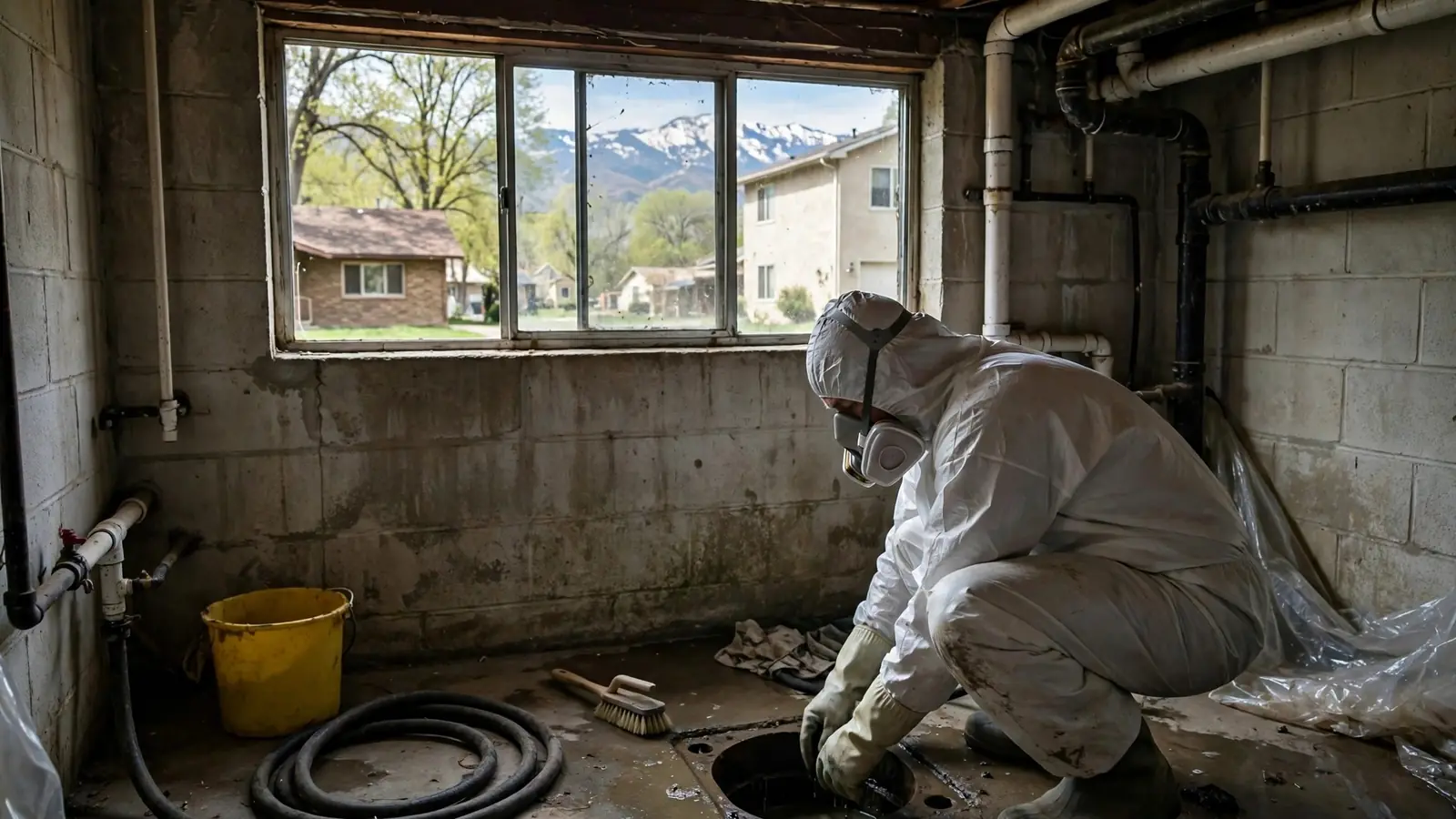
Mature trees line many streets in this neighborhood. Their roots look for water, and older sewer laterals with joints and small cracks are an easy target. A gradual slowdown of drains, gurgling from the basement floor drain or a sewer smell can be early signs. A backup through the floor drain is sewage, and it should be handled with the precautions on our sewage cleanup page.
A plumber can camera-inspect the lateral to see if roots are present and clear them. Repeated root problems may need a repair or relining of the line.
Coverage
Insurance for common leaks
Sudden failures, such as a burst supply line or a ruptured water heater, are commonly covered by homeowners policies, subject to deductible and terms. The failed appliance itself may not be covered, only the damage it caused. Slow leaks that went unnoticed for a long time may be excluded as gradual or maintenance issues. Sewer backups often need a specific endorsement. Keep photos, the failed part and the contractor's records for your claim.
Questions
More East Hobble Creek questions answered in detail
My water heater is 12 years old but works fine. Should I replace it?
Many tanks fail between 8 and 12 years, often without warning. If yours is near or past that age and sits next to finished space, replacing it before it fails is reasonable. At minimum, add a drain pan and a leak alarm.
How do I know if I have polybutylene pipe?
Look at supply lines where they enter the water heater, under sinks or at the main shutoff. Polybutylene is usually grey plastic, sometimes stamped PB2110. A plumber can confirm and advise on replacement.
Can a ceiling stain from an upstairs bathroom be dried without opening it?
Sometimes, if the leak was small and recent and readings show the ceiling drying. Larger leaks often need a small opening to drain water and dry insulation and joists.
We are going on vacation. What should we turn off?
Turn off the main water supply, or at least the washer valves and the supply to the water heater. Set the heat to a safe minimum in winter. Leak sensors with phone alerts are useful too.
What does a drying log look like?
A record of moisture readings at fixed points, taken daily, compared with dry reference points, plus air temperature and humidity. It shows the progress of drying and proves when the house is dry.
Do you replace the carpet as well?
The contractor you reach may offer rebuild services, including flooring, or may provide a scope for another company. Ask on the call.
Through the year
A year in an established neighborhood
Winter is the season for frozen pipes in exterior walls and garages, and for water heaters working hardest. Cold snaps are when old fittings crack and old tanks give up. Keep garage doors closed, open cabinet doors on outside walls during deep freezes and know where the main shutoff is.
Spring brings higher groundwater near the creek and window wells filling with snowmelt. Homes nearest Hobble Creek should keep wells clear and watch basements after warm spells.
Summer and autumn are quieter for water damage, but they are the right time for maintenance: replace rubber washer hoses, check under sinks, flush or inspect the water heater and have older sewer laterals camera-inspected if drains have been slow.
Differences
How cleanup in older finished basements differs
Basements finished decades ago were often built without vapor control, with paneling or drywall directly against foundation walls and carpet straight onto the slab. When water gets in, it soaks into materials that were never meant to get wet. Contractors often find older insulation, wood strapping against concrete and multiple layers of flooring, all of which hold moisture.
Expect more removal in these basements than in newer ones, and expect the contractor to recommend water-tolerant materials when the basement is rebuilt.
On the call
What to tell the contractor when you call
- Your address and accessStreet address, gate codes or a steep drive, and where a crew can park in East Hobble Creek.
- Where the water came fromThe water heater, washer, a sink or toilet line, or a frozen pipe.
- Which appliance or fixtureWater heater, washer, dishwasher, toilet or sink.
- Which rooms are finishedCarpet, drywall and furniture in the affected area.
- When you noticed itAnd whether it may have run while you were away.
Patterns
Neighbourhood patterns
Neighbourhoods built in the same era tend to share the same weak points. Houses put up within a few years of each other often have water heaters of a similar age, similar plumbing materials and similar basement finishing. When one house on a street has a problem, others are often close behind. If a neighbour's water heater has just failed, it is a good moment to check the date on yours.
The same goes for sewer laterals under streets with mature trees, and for supply lines installed during one builder's phase. Talking with neighbours about what has failed in their homes is a surprisingly useful early warning system.
Habits
Small habits that prevent big losses
Most water damage in established homes comes from a short list of sources: water heaters, washer hoses, toilet and sink supply lines, and frozen pipes. A few habits cover nearly all of them. Look at the base of the water heater when you change the furnace filter. Run your hand along the washer hoses once a season. Glance under sinks when you put cleaning supplies away. Keep the garage door closed in cold weather.
None of this takes long, and catching a drip early turns a restoration job into a small plumbing repair.
Real estate
Selling or buying an established home
Water damage history comes up in almost every sale of an older home. Sellers in Utah disclose known past water problems, and buyers look closely at basement ceilings, the area around the water heater and the bottom of finished walls. A clear record of what happened, how it was dried and what was repaired helps both sides.
Buyers should check the age of the water heater, look for grey polybutylene supply lines, ask about past sewer backups and consider a sewer lateral camera inspection on a street with mature trees. Sellers can head off concerns by replacing an old water heater and documenting past repairs. A house that had a leak handled properly is not a problem. A house that had a leak painted over is.
Other trades
Who else may be involved
Restoration is often only one part of the repair in an established home. A plumber replaces the failed water heater, hose or fitting, and may recommend replacing older supply lines. An appliance technician may look at a leaking dishwasher or washer. If a sewer backup was the cause, a drain cleaning company clears the lateral and may camera-inspect it. Once the house is dry, a drywall and flooring crew handles repairs, whether that is the restoration company or a separate contractor. Agree early who is doing what, so nothing is closed up before it has been checked.
Around the clock
Calling at any hour
Water heaters and washer hoses have a habit of failing at inconvenient times: late at night, early on a Sunday, on the morning of a holiday. Calls through this site are answered at all hours and connected to an independent contractor serving Springville. Shut off the water first, then call. The contractor can talk you through protecting the finished rooms nearest the leak and arrange to start extraction as soon as possible, which is what gives carpet and drywall the best chance of being dried rather than replaced.
Garages and laundry rooms
Many homes here have attached garages with plumbing in a shared wall, and laundries on the main floor or in the basement next to the utility room. Garage walls get colder than the rest of the house, and the supply lines inside them can freeze when the big door is left open on a cold day. Main-floor laundries put a washer above the basement family room; basement laundries put it right next to finished space. Either way, the washer and its hoses deserve an annual look, and a pan with a drain under the machine is a sensible addition.
Summary
The bottom line
Most water damage in East Hobble Creek is preventable with a little routine attention. Knowing the age of your water heater, the type of your supply lines and the location of your main shutoff covers most of what matters. If water does get in, call early: the first day of drying shapes everything that follows, and the line is answered at all hours.
Getting help
Help for East Hobble Creek homeowners
Whether the water came from a pipe, an appliance, the ground or the sky, the steps are the same: stop it if you can, stay safe, photograph, protect belongings and call. An independent contractor familiar with East Hobble Creek and the rest of Springville can tell you on the call what to expect and how quickly drying can begin.
Questions
East Hobble Creek questions
How old is too old for a water heater?
Many tanks start failing after about 8 to 12 years. Check the label for the date.
Can wet basement carpet be saved?
Often, if the water was clean and extraction starts quickly. The pad is usually replaced.
What is polybutylene?
A grey plastic supply pipe used from the late 1970s to mid-1990s that is prone to failure.