
Key facts: The first hour
- Shutting off the main valve stops a supply-line leak at the source.
- Electricity and standing water are the most immediate danger after a leak.
- The EPA advises drying wet materials within 24 to 48 hours to limit mold.
- Photos taken before cleanup are central to most insurance claims.
- Most policies expect homeowners to take reasonable steps to prevent further damage.
In this guide
- 1Step one: stop the water
- 2Step two: make it safe
- 3Step three: document everything
- 4Step four: protect what you can
- 5Step five: call for help
- 6What not to do in the first hour
- 7If you rent
- 8If you are away
- 9A short checklist to keep
- 10Pets and children
- 11One more tip
- 12Before you go
- 13Calm and order
- 14First-hour questions
First
Step one: stop the water
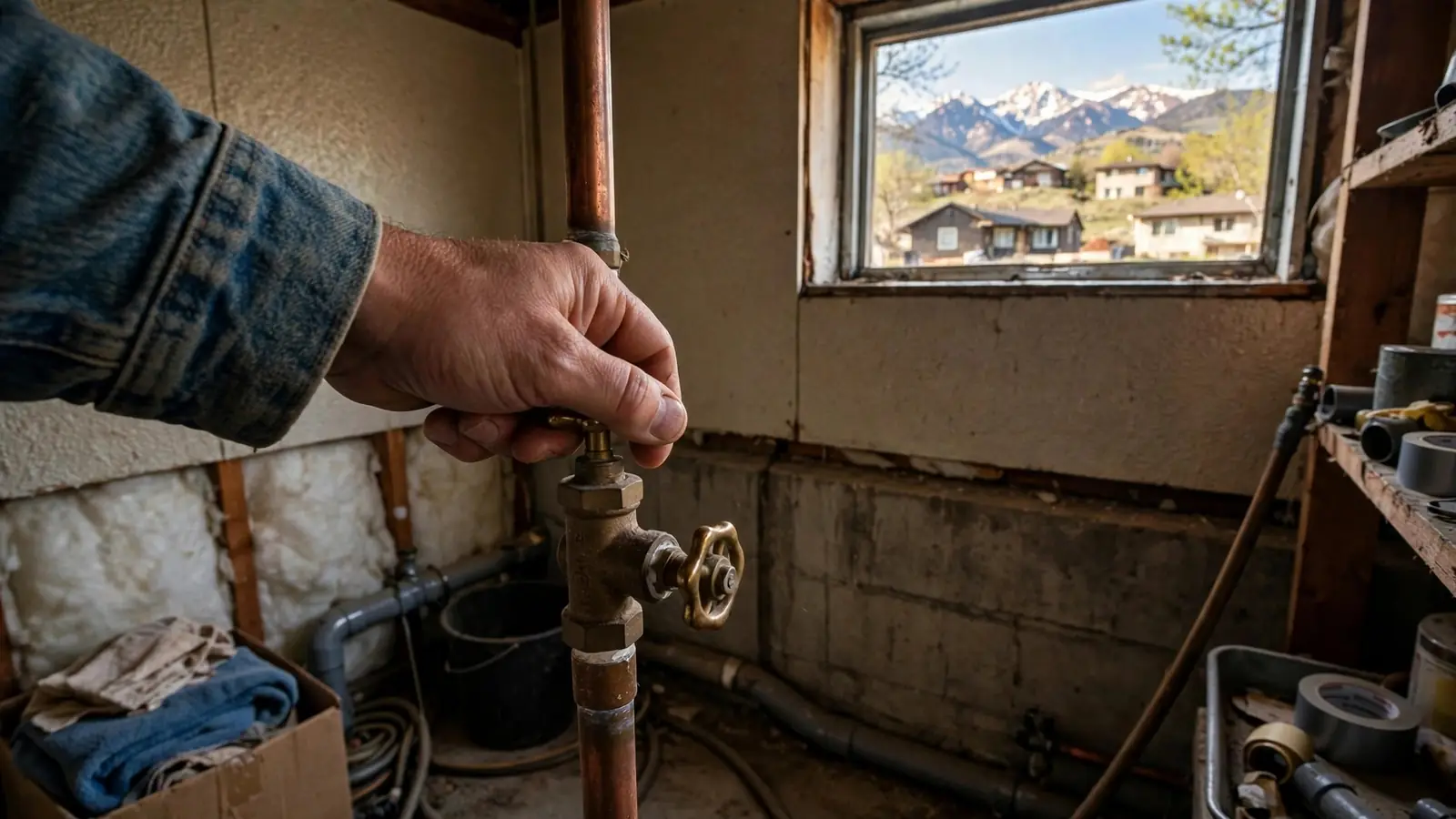
If the water is coming from a pipe, appliance or fixture, shut it off. Most fixtures have their own valve: under the sink, behind the toilet, behind the washing machine. If you cannot find it, or the leak is in a wall, close the main valve. In Springville homes with basements, the main is usually in the basement or utility room on the wall where the water line comes in from the street, often near the water heater. Turn the handle clockwise until it stops, or turn a lever a quarter turn so it sits across the pipe.
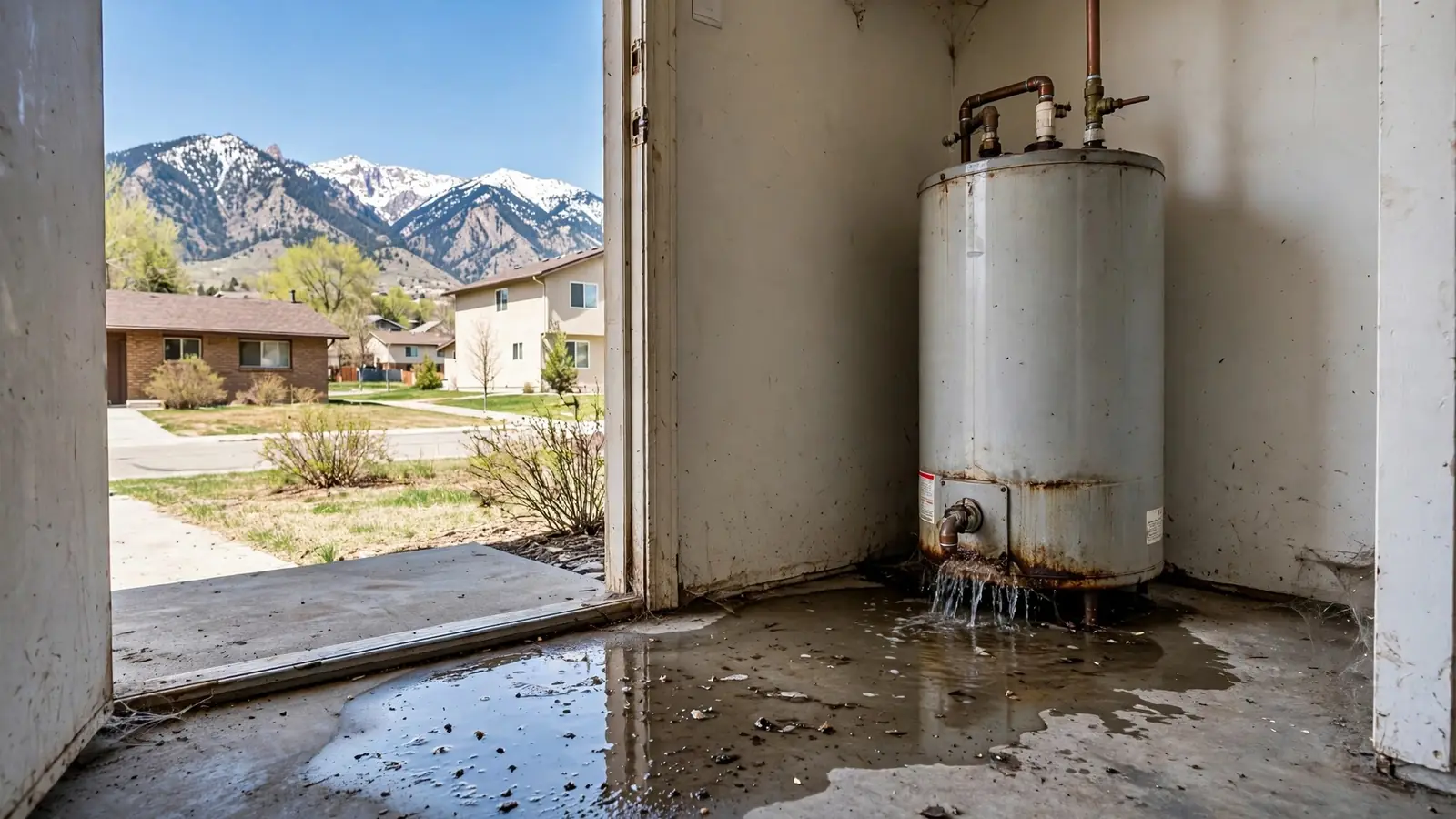
If the leak is from a water heater, close the cold supply valve on top of the tank and turn the heater off: the gas control to 'pilot' or 'off', or the breaker for an electric unit. If water is coming in from outside through a window well or a crack, you cannot shut it off, so move on to safety and protecting contents.
Safety
Step two: make it safe
Water and electricity are a dangerous pair. If water has reached outlets, power strips, extension cords or appliances, do not walk through it. If you can reach the electrical panel from a dry spot, switch off the breakers for the affected area. If you cannot, or if the panel itself is wet, leave it and call the power company or an electrician.
Watch the ceiling. A bulging, sagging ceiling below a bathroom or laundry can hold a surprising amount of water. Keep people out from under it. Sewage from a backed-up drain or toilet carries germs, so keep children and pets away from it and do not try to clean it with household tools.
Record
Step three: document everything
Before you move or throw anything away, take photos and short videos. Capture each wet room from the doorway, then close-ups of floors, walls, ceilings and damaged belongings. Photograph the source: the split pipe, the burst hose, the overflowing well. If a part failed, keep it. Insurers often want to see it.
Note the time you discovered the water and anything you know about when it started. This matters both for the insurer and for the contractor, because the longer water sits, the more likely it is to have spread and the more likely it is to be treated as contaminated.
Protect
Step four: protect what you can
- 1
Lift furniture
Put foil, plastic lids or wood blocks under furniture legs on wet carpet to stop staining and wicking.
- 2
Rescue rugs and fabrics
Pull area rugs, curtains and bedding off wet floors and hang them where they can drip.
- 3
Open boxes
Cardboard collapses and wicks water into its contents. Move boxes to a dry area and open them.
- 4
Protect electronics and papers
Move them to a dry room first, since they are hard to replace and easy to save.
- 5
Open interior doors
Let air move through the house. Avoid opening windows in freezing weather.
Call
Step five: call for help
A contractor can tell you on the phone what to do until they arrive and how urgent the situation is. Water that reached carpet pad, drywall or a basement ceiling usually needs extraction, moisture readings and dehumidifiers within the first day or two. The EPA recommends drying wet building materials within 24 to 48 hours to limit mold growth. [1]
Call your insurance company or agent too, but you do not need to wait for an adjuster before starting to dry the house. Most policies expect you to prevent further damage.
Avoid
What not to do in the first hour
| Mistake | Why to avoid it |
|---|---|
| Using a household vacuum on water | It can shock you and destroy the vacuum |
| Turning on ceiling lights under a wet ceiling | Water can be inside the fixture |
| Running a furnace or water heater that was submerged | Gas controls and burners must be inspected first |
| Throwing damaged items away before photos | Insurers may need to see them |
| Waiting to see if it dries on its own | Hidden moisture keeps spreading and can lead to mold |
Renters
If you rent
Tenants should still stop the water and protect their belongings, then notify the landlord or property manager immediately. The landlord is usually responsible for the building and for arranging restoration; your renter's insurance, if you have it, covers your belongings. Photograph your possessions before anything is moved.
Call about this problem
Questions about the first hour?
One call connects you with an independent water damage restoration contractor who serves Springville.
Away from home
If you are away
If a neighbor or alarm tells you about water while you are away, ask someone you trust to close the main valve if they can do so safely. Then call so the drying can start before you get home. Every hour matters.
Keep handy
A short checklist to keep
Print or save this: main shutoff location, electrical panel location, insurance policy number, a list of what is stored in the basement and the number to call. Keeping it in one place means less searching in a stressful moment.
Safety at home
Pets and children
Keep children and pets away from wet areas, cords, equipment and anything contaminated. Wet floors are slippery, sagging ceilings can fall and floodwater or sewage carries germs.
Tip
One more tip
After the first hour, the next priorities are drying and documentation. Keep a notebook of who you spoke to and when, and keep receipts for anything you buy. Within a day or two, the contractor should have mapped moisture, removed what will not dry and set equipment. Within a few days, readings should be steadily dropping.
Last word
Before you go
If the water came from a neighbor's unit, in a townhome or condo, tell the neighbor and the HOA or property manager right away so the source can be shut off. Document the damage in your unit and note the time you reported it.
Calm and order
Panic is natural, but a short list in the right order works better: water off, power safe, photos, belongings up, call. Everything else can wait an hour.
Questions
First-hour questions
How do I find my main shutoff?
Follow the water line where it enters the house, usually in the basement or utility room. In some homes there is also a valve near the meter at the street, which may need a special key.
Should I call my insurer before a contractor?
You can call both. Starting drying does not usually need to wait for an adjuster, but notify your insurer promptly.
Is this an emergency at night?
If water is still spreading or reaching walls and ceilings, yes. Calls are answered 24 hours a day.