
Water damage restoration in Springville, UT 84663
Water Damage Restoration in Springvillestop the water, dry the structure, document the loss
Water does most of its harm in the first day and a half. It wicks up drywall, soaks into carpet pad, creeps under cabinets and settles into a finished basement long before a stain shows. One call connects you with an independent Springville-area restoration contractor who talks with you about extraction and drying on that same call, day or night.
this page: call-in only, 24/7. You talk directly with an independent contractor.
- Water extraction and structural drying
- Basement and snowmelt flood cleanup
- Sewage backup cleanup
- Moisture mapping and insurance photos
- Answered around the clockCalls are taken 24 hours a day, every day, and routed to an independent contractor serving Springville.
- Independent local contractorsWe do not do the work ourselves. Your call reaches a restoration company that works in Utah County.
- One call, no formsThere is nothing to fill in. You speak with the contractor directly on the call you place.
Key facts: Water Damage Restoration in Springville
- Wet building materials should be dried within 24 to 48 hours to limit mold growth, according to the U.S. EPA.
- Restoration work is commonly sorted into three water categories: clean water, gray water and black water, which includes sewage.
- Springville sits at the mouth of Hobble Creek Canyon, and parts of the Hobble Creek corridor are mapped by FEMA as a high-risk flood zone.
- Many Springville homes have finished basements, where water from window wells, supply lines and water heaters collects at the lowest point.
- Standard homeowners policies generally exclude flood from surface water; flood cover comes from a separate policy such as the NFIP.
What drying looks like
From wet basement to dry structure
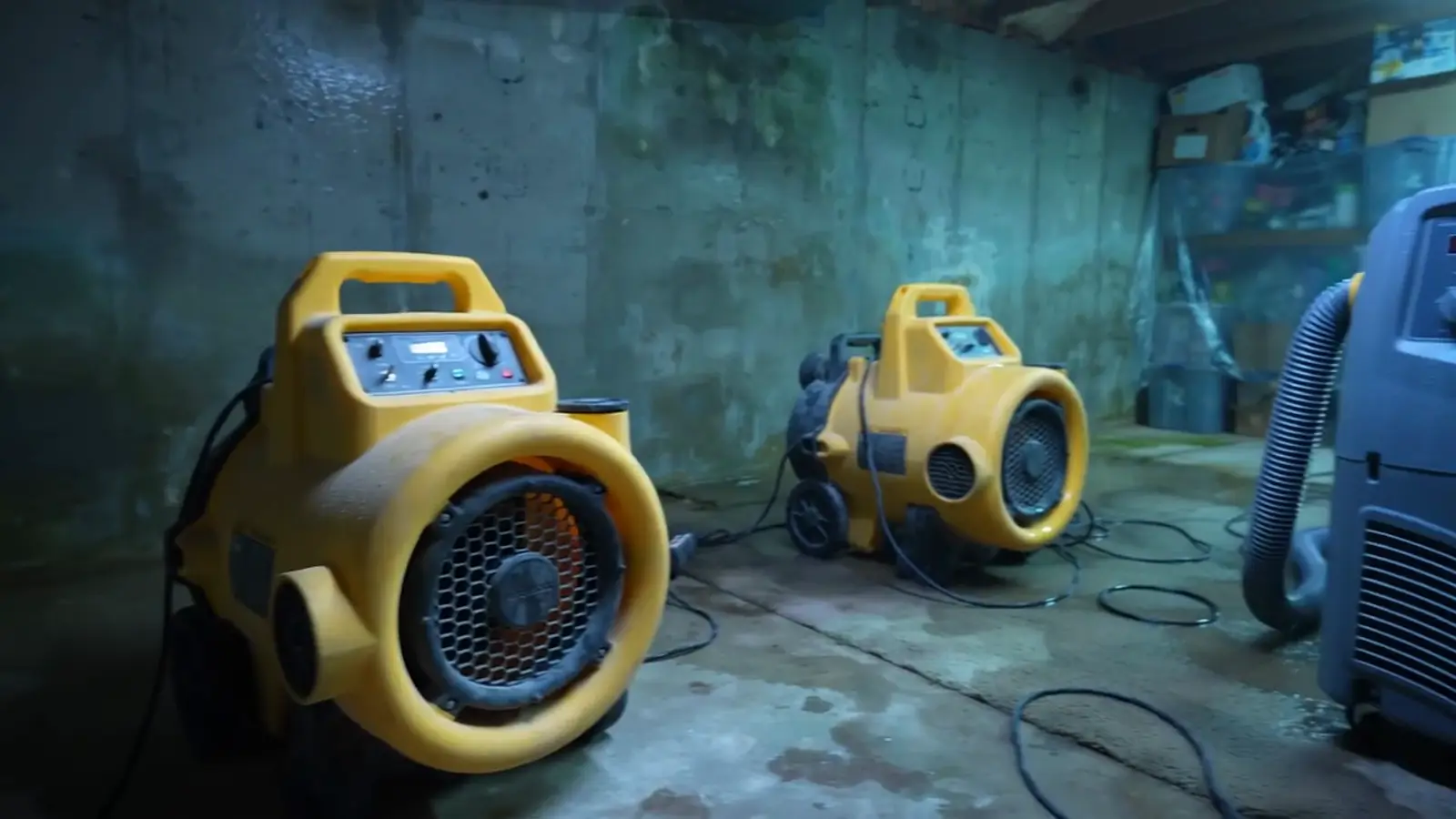
Restoration is mostly about drying the building, not just the surfaces.
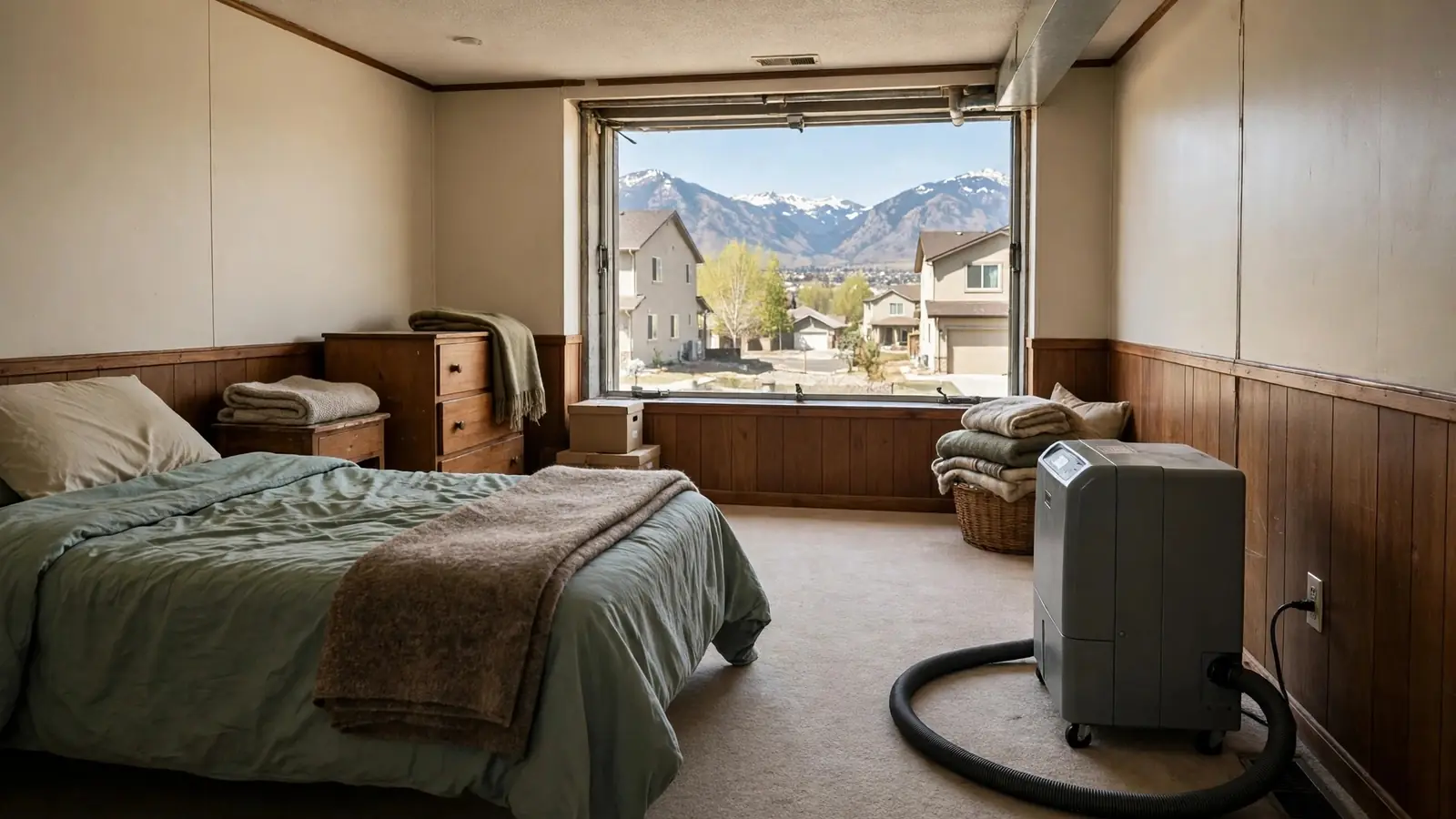 WetDrying
The process
How a typical water damage job unfolds
- 1
The call
You describe what happened, where the water came from and which rooms are affected. The contractor tells you what to do until they arrive.
- 2
Inspection and moisture mapping
Meters and often a thermal camera trace how far water spread into walls, floors and cabinets, and the water category is identified.
- 3
Extraction
Truck-mounted or portable extractors remove standing water and as much as possible from carpet and pad.
- 4
Removal of what cannot be saved
Soaked pad, swollen particleboard and drywall below the wet line are cut out so the cavity behind can dry.
- 5
Structural drying
Air movers and dehumidifiers are set and readings are logged each day until materials reach dry goals.
- 6
Documentation and repairs
Photos, readings and a scope of work support the insurance claim, followed by rebuild work if you choose.
Around Springville
Springville neighborhoods covered
Area pages explain how water damage differs from the canyon to the west-side subdivisions.
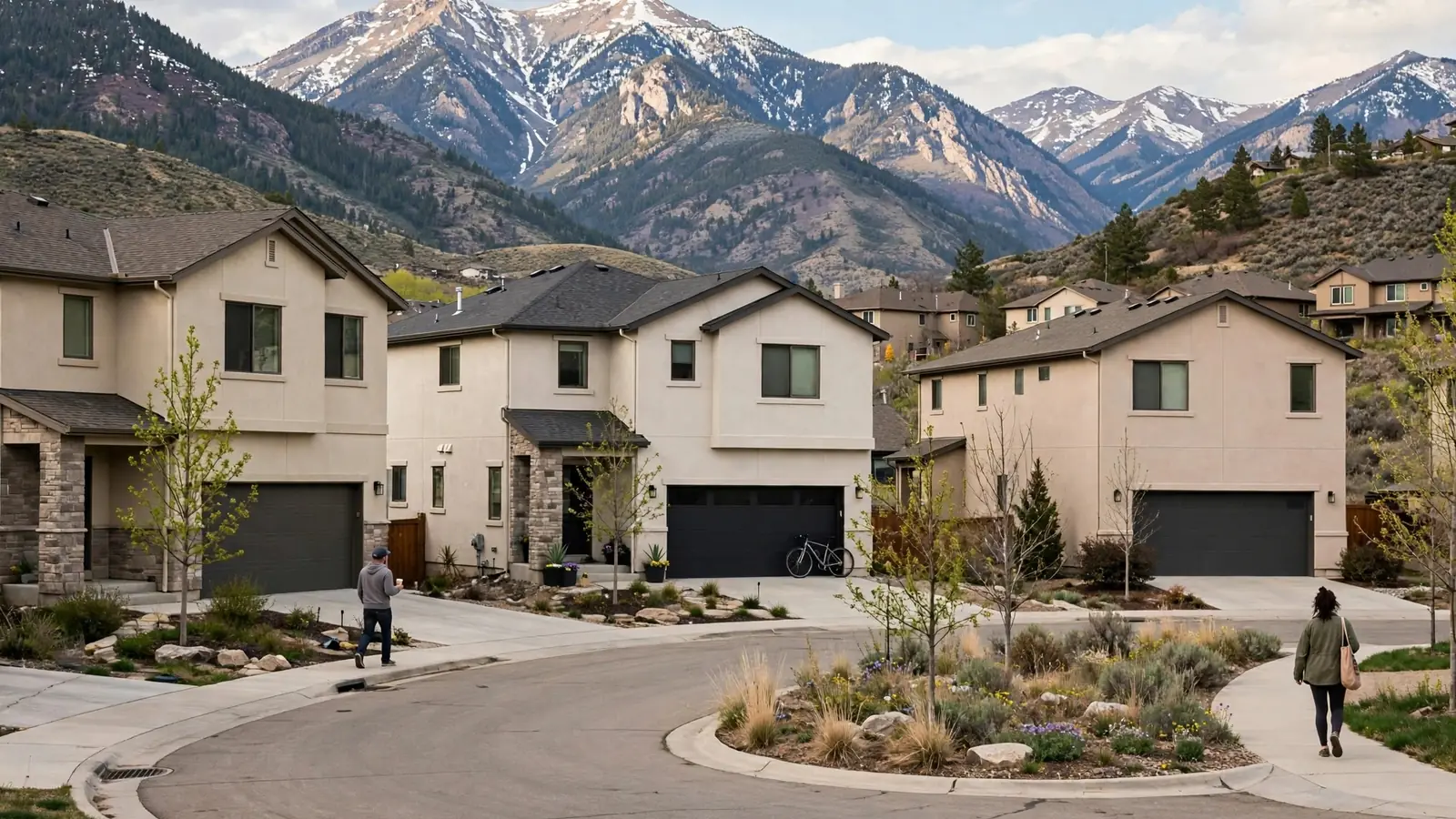 Service area
East Bench
Sloped lots above 1300 East where snowmelt and irrigation runoff head for the foundation.
Learn more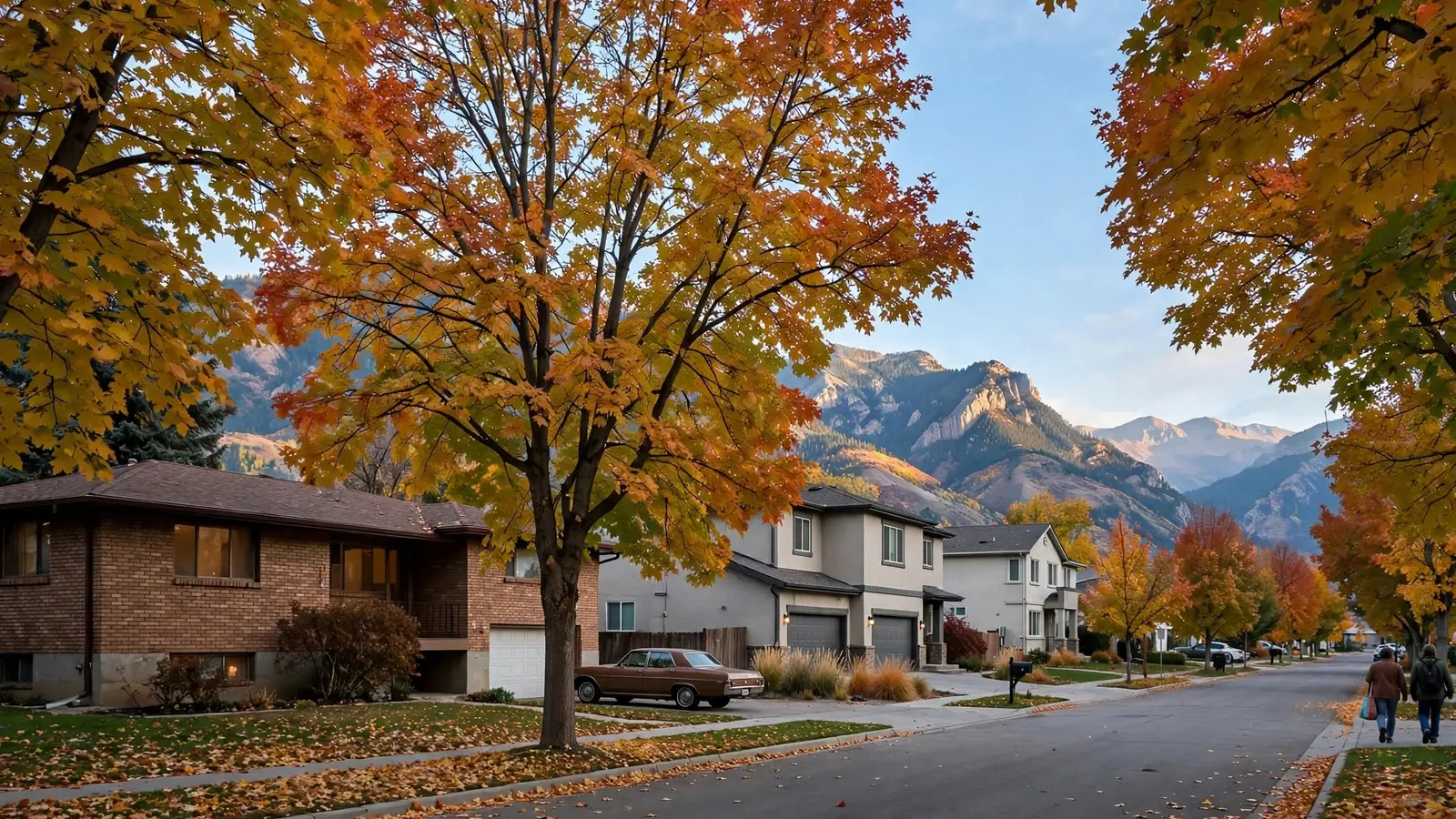 Service area
East Hobble Creek
Established streets near Springville High with 1970s–90s homes, finished basements and aging plumbing.
Learn more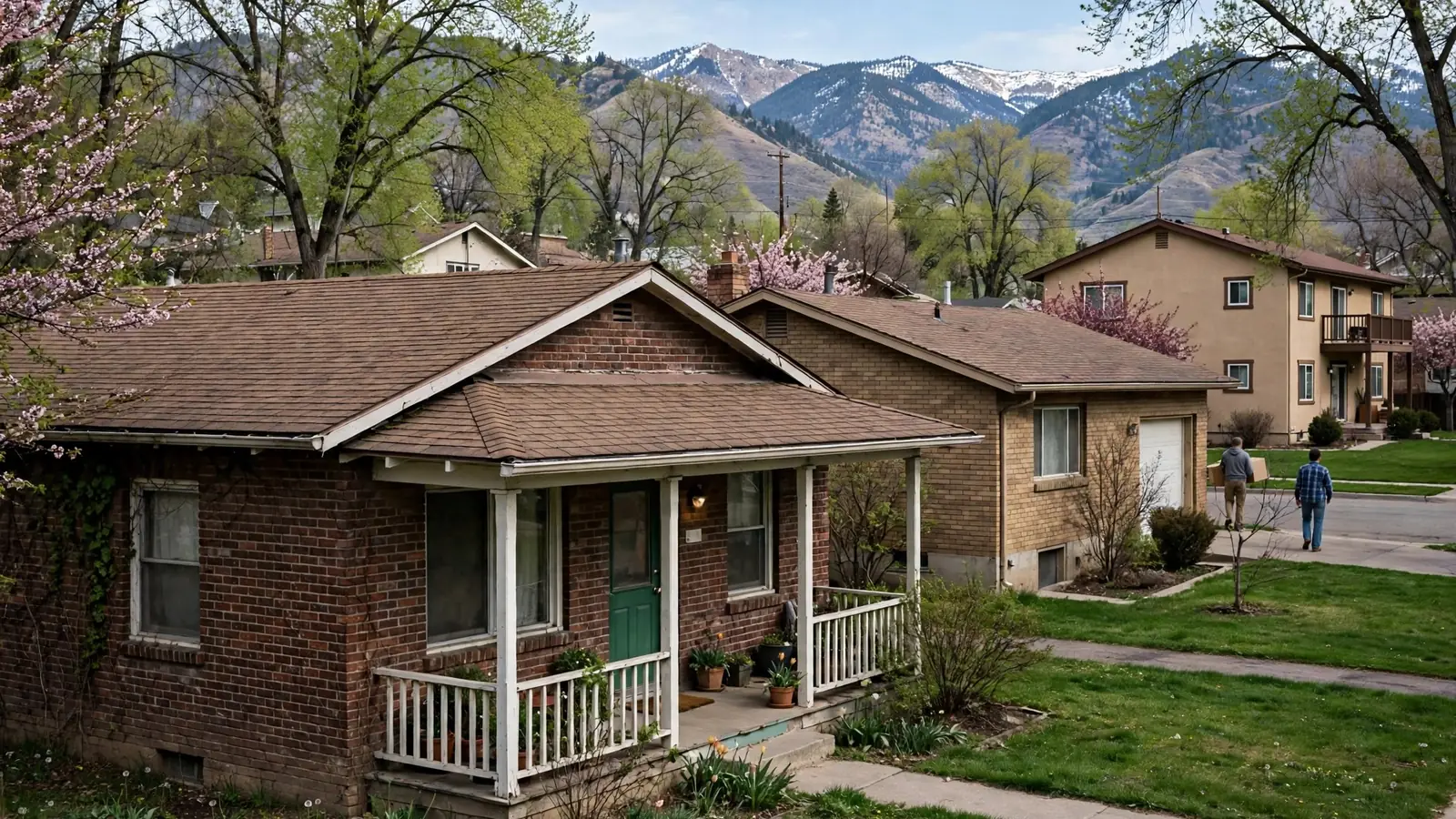 Service area
Historic Center
Older brick homes near Main Street, with aging plumbing and basements never meant to be finished.
Learn more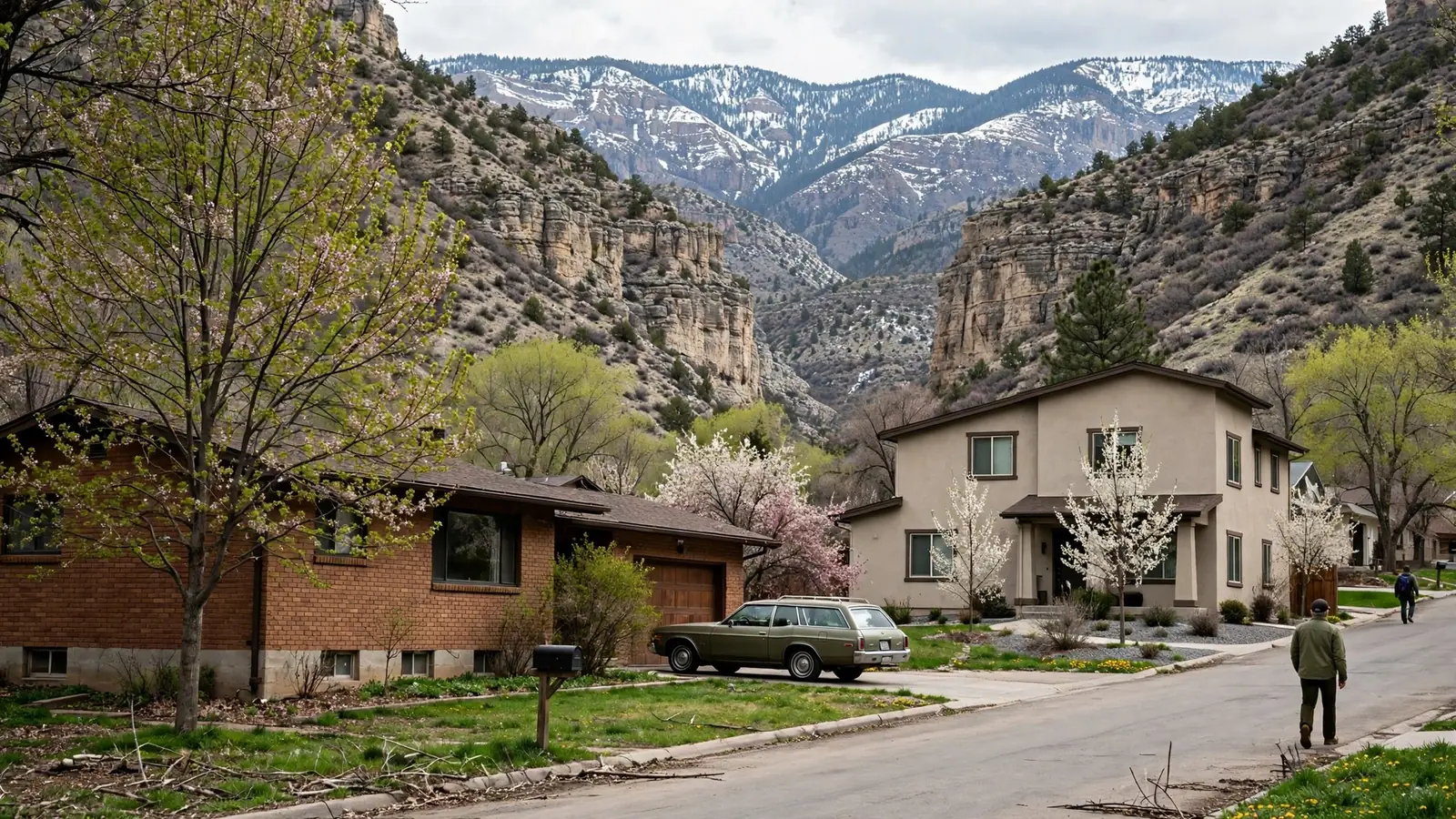 Service area
Hobble Creek Canyon
Homes and cabins along Canyon Road: creek runoff, colder winters and frozen pipes in seasonal homes.
Learn more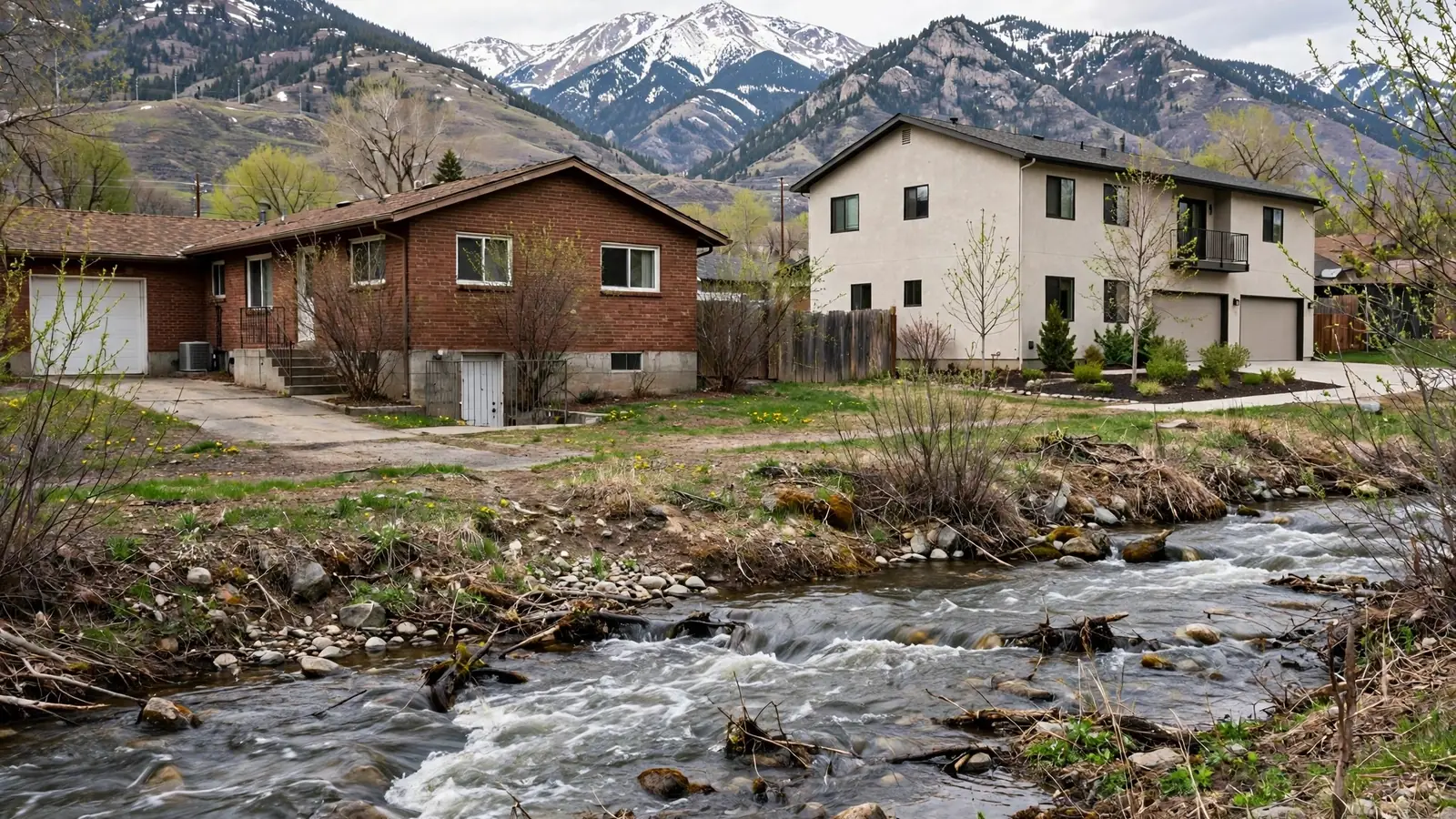 Service area
Spring Creek
Homes along the Spring Creek drainage with low-lying lots and seasonal groundwater.
Learn more- Service area
Westfields
Newer west-side subdivisions toward Utah Lake: higher groundwater, sump pumps and new-build plumbing.
Learn more
Water categories
Clean, gray and black water compared
| Category | Typical Springville source | What it usually means |
|---|---|---|
| Category 1, clean | Burst supply line, ice-maker line, water heater | Most materials can often be dried in place if work starts quickly |
| Category 2, gray | Washing machine or dishwasher overflow, sump overflow | More cleaning and antimicrobial treatment; carpet pad is usually removed |
| Category 3, black | Sewer backup, floodwater from outside, creek water | Porous materials that were touched are generally removed and disposed of |
Clean water can become gray or black if it sits or travels through contaminated materials.
About this service
How calls through this site work
Water Damage Restoration Springville is a call-in referral service. When you call the number on this site, your call is connected to an independent restoration contractor who serves Springville and nearby Utah County. You speak with that contractor on the same call. We do not inspect, dry or repair homes ourselves, and we do not collect forms, emails or text messages.
The contractor you reach is a separate business. Ask them directly about their licensing, certifications, insurance and how they work with your insurer. A reputable company will explain what it found, what it plans to remove and why, and how it will prove the structure is dry before anything is closed up.
Navigate
Finding your way around
The service pages explain each kind of job in depth, the area pages cover how water behaves in different parts of Springville, and the guides walk through what to do yourself. For quick answers to common questions, start with the FAQ.
Guides
Read before and after the water stops
Plain answers to what Springville homeowners ask most.
 Guide
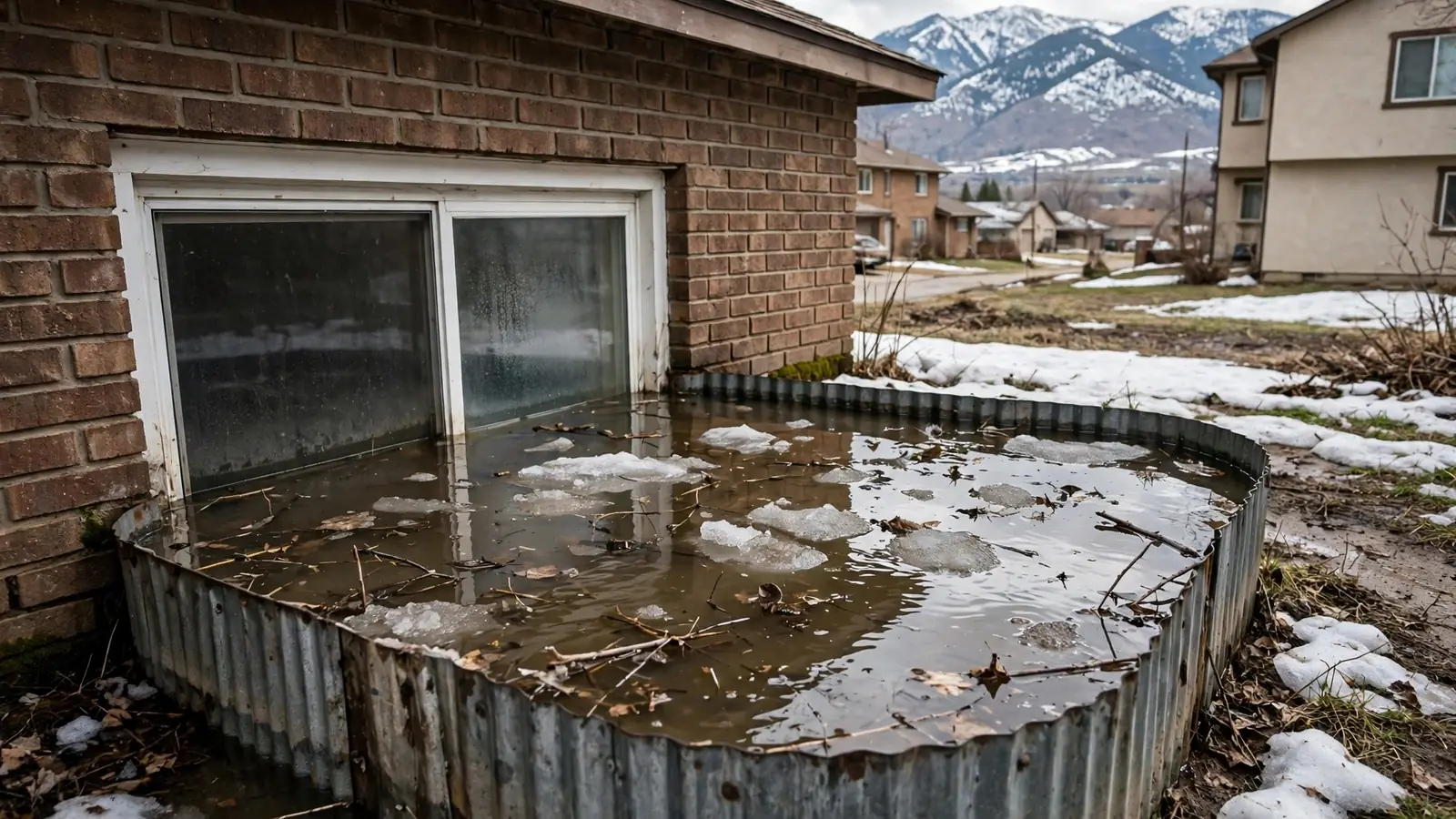
Snowmelt basement flooding
How spring snowmelt fills window wells and foundation soil, and how to stop it.
Read the guide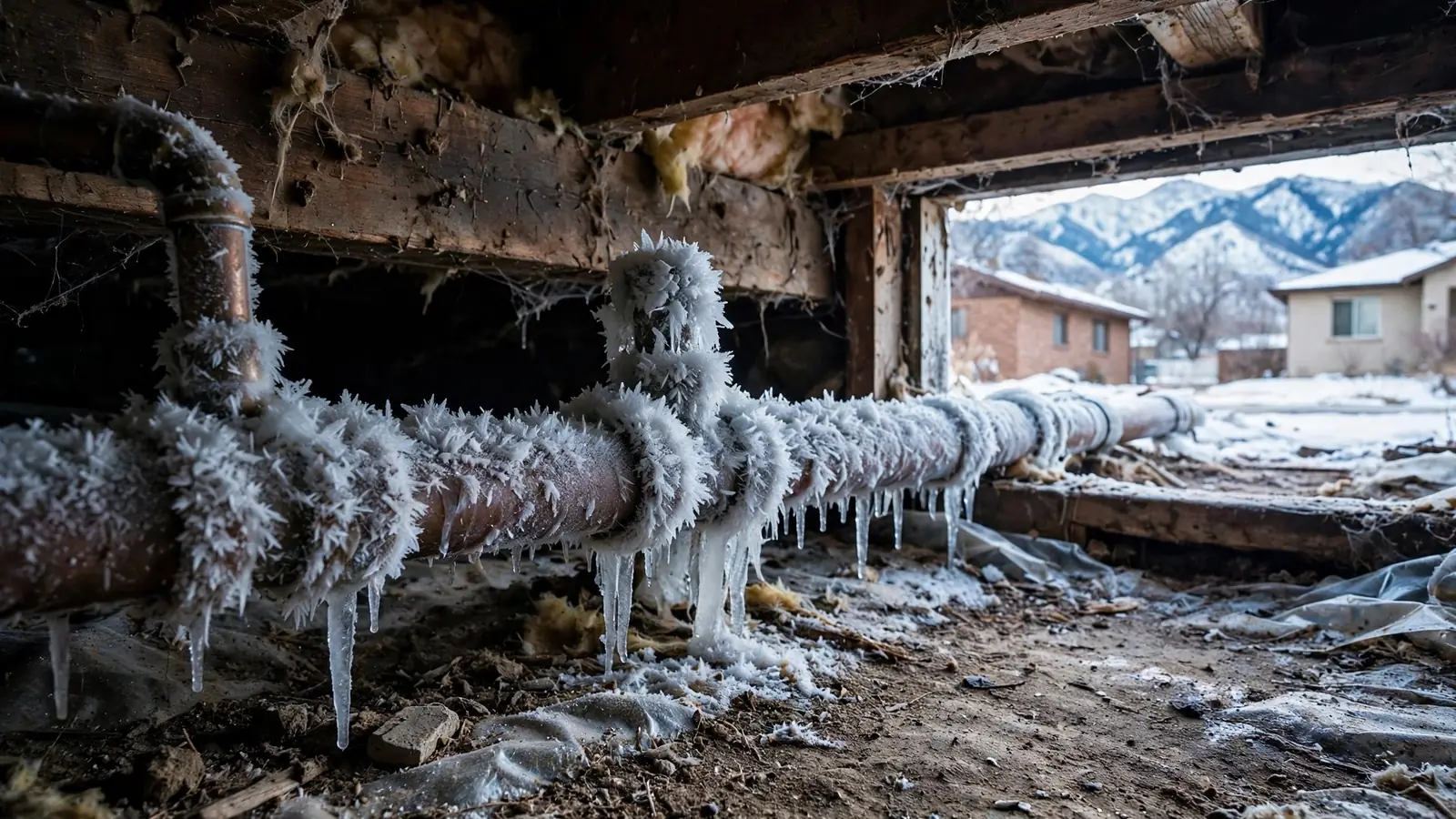 Guide
Frozen pipes
Why pipes freeze in Springville cold snaps, how to spot a split line and what to do when it thaws.
Read the guide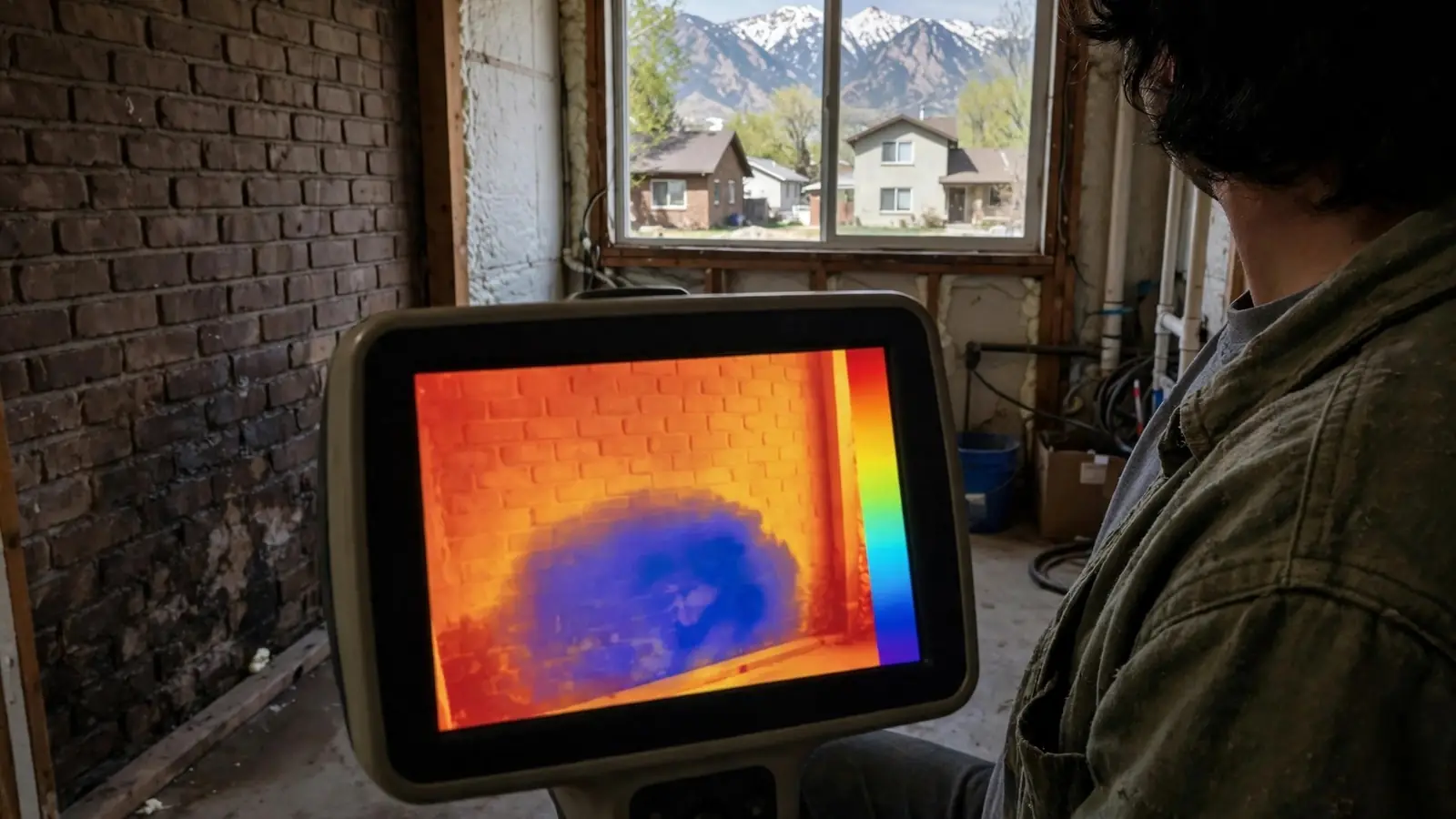 Guide
Hidden moisture
How water hides in walls, under floors and in basement ceilings, and how it is found.
Read the guide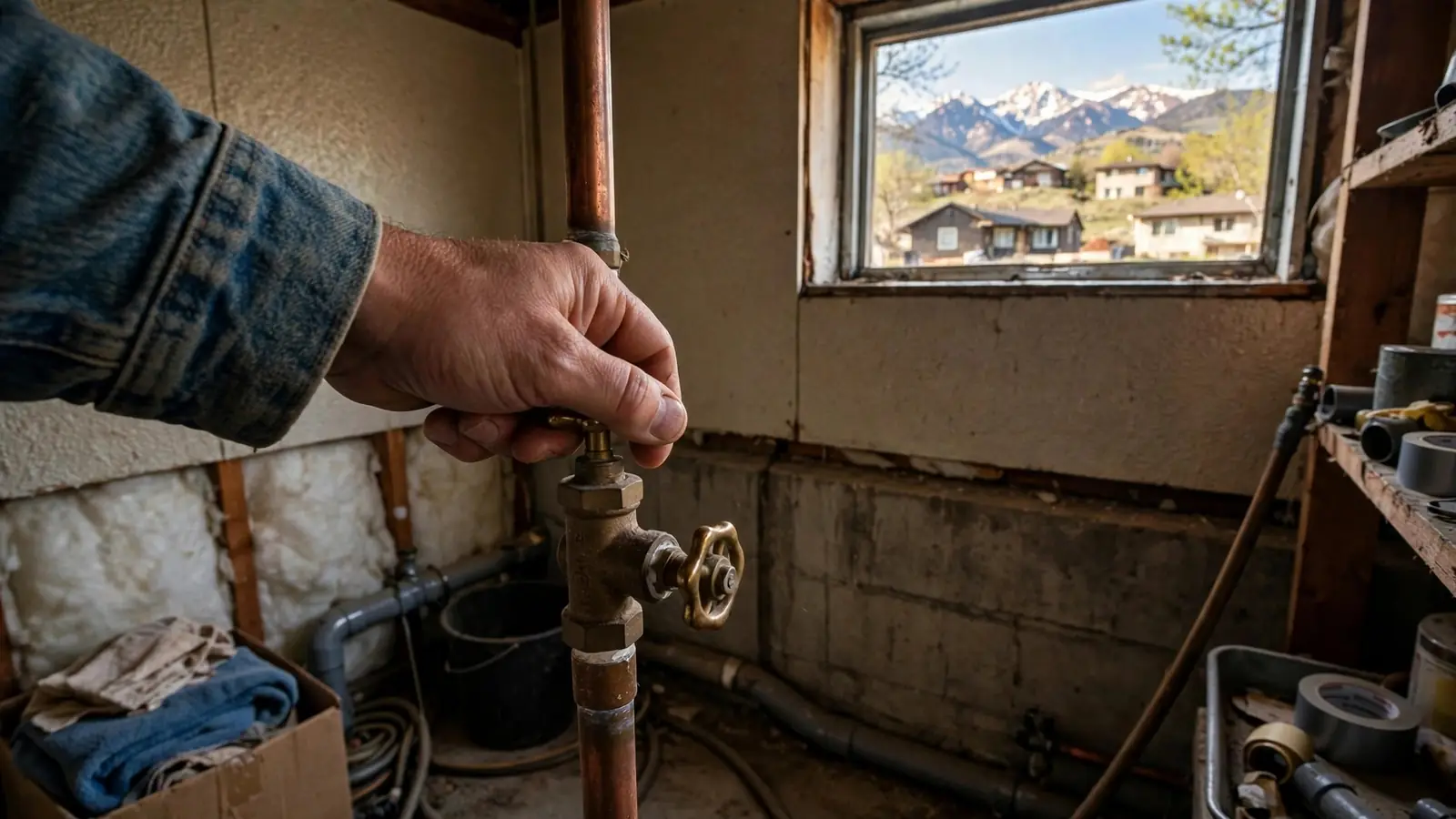 Guide
The first hour
Shut-off, safety, photos and what to move first when water is on the floor.
Read the guide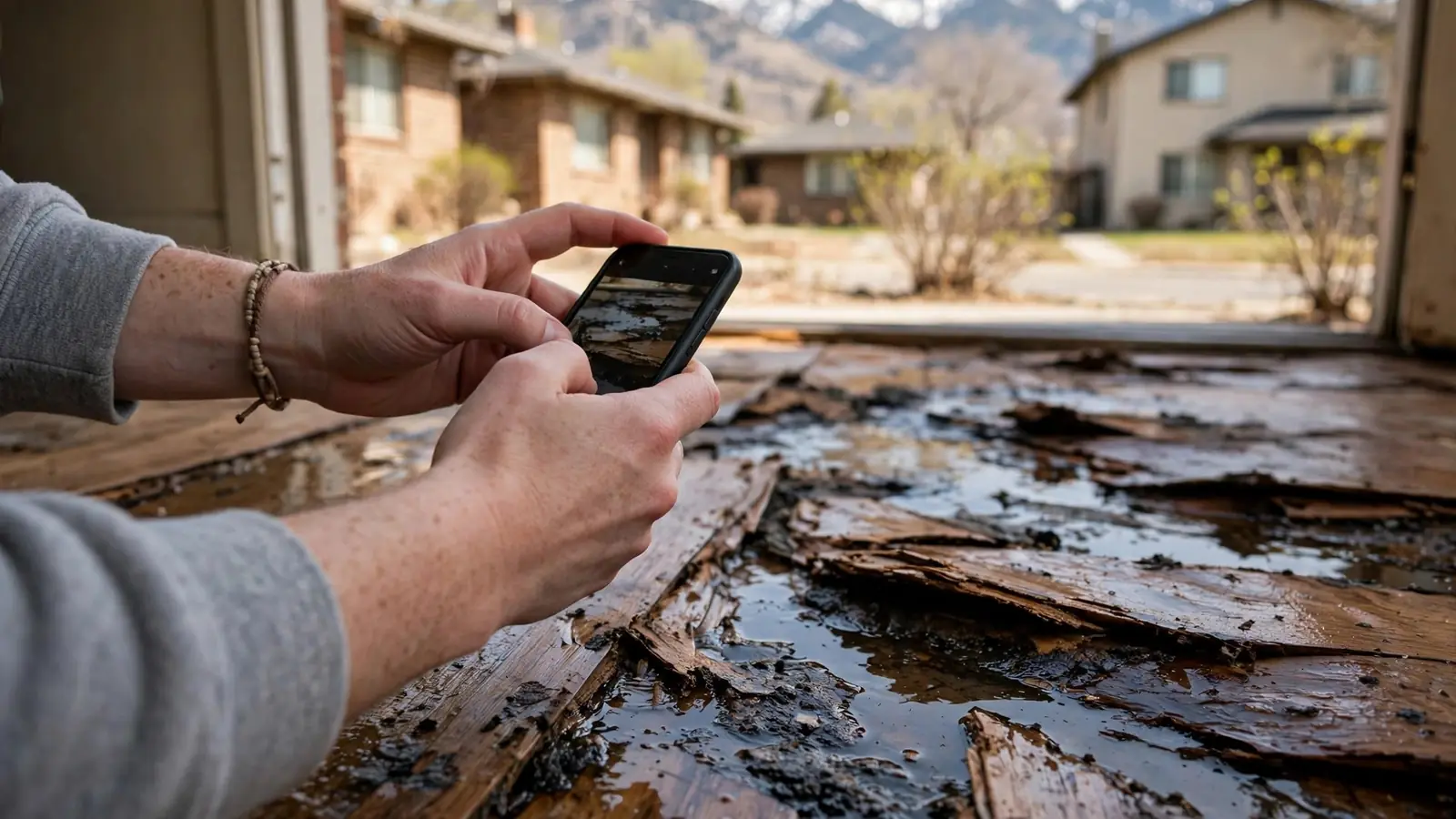 Guide
Insurance adjuster
Reporting the claim, what the adjuster looks for and how to keep good records.
Read the guide
Is it water damage?
Warning signs worth a call in a Springville home
Some water announces itself. Most does not. These are the clues that usually come first.
Carpet that squishes near a basement wall
Snowmelt and irrigation water often enter through window wells or foundation cracks and spread under the pad before the surface looks wet.
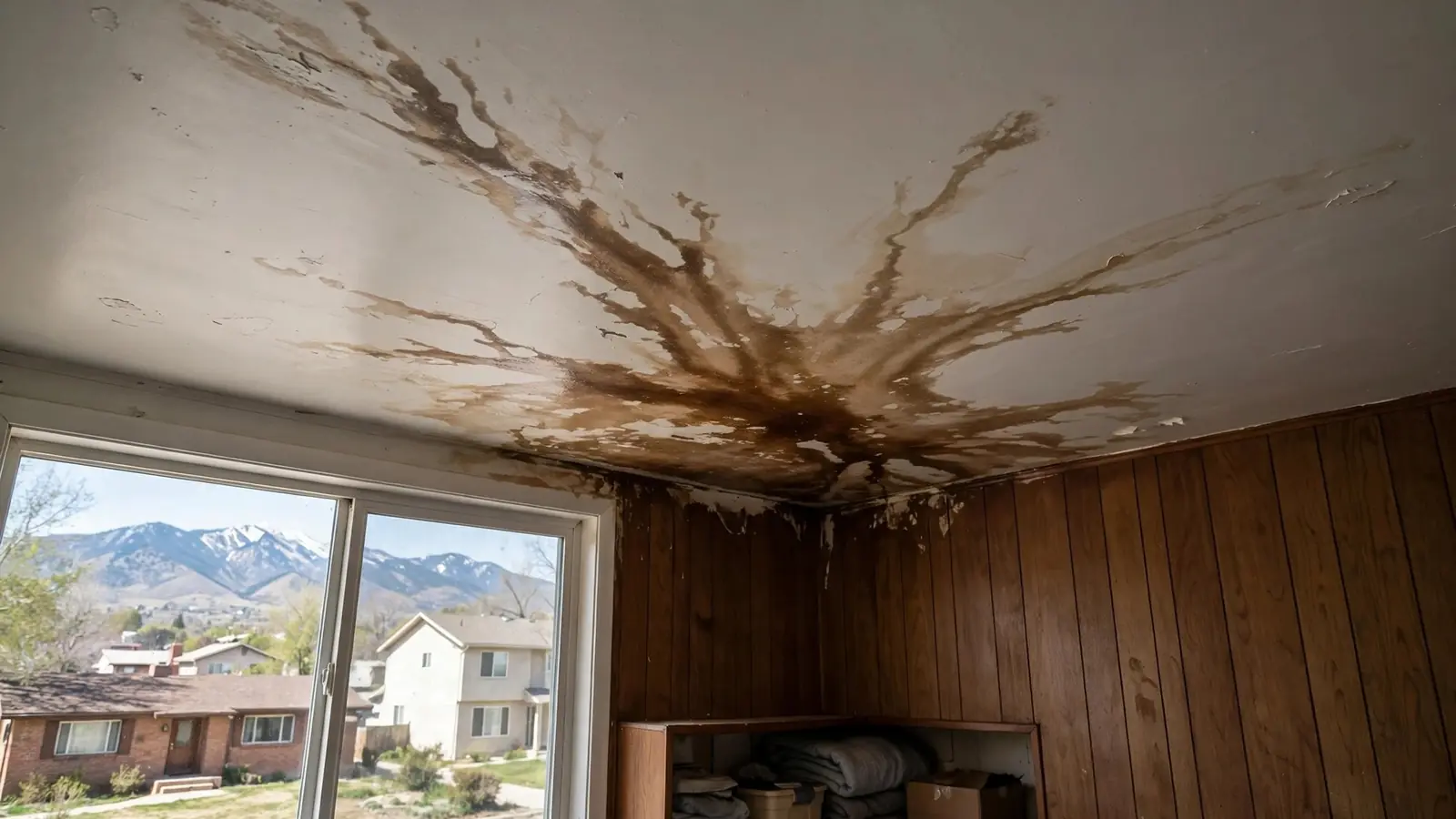
A brown ring on the ceiling
A stain below a bathroom or along an exterior wall usually means a slow supply leak, a failed wax ring or an ice dam pushing water under shingles.
Baseboards pulling away
Swollen, soft or separating baseboard and door casing show that drywall behind them has been wicking water.
A musty basement smell
A damp odor that returns after airing out points to moisture trapped in carpet pad, framing or insulation.
Water around the water heater
Even a small puddle at the base of a tank can be the start of a tank failure that releases its whole contents.
A jump in the water bill
If usage rises with no change at home, a hidden leak inside a wall, slab or yard line is a likely cause.
Services
Water damage services callers ask about
Each service has its own page explaining what the work involves in a Springville home.
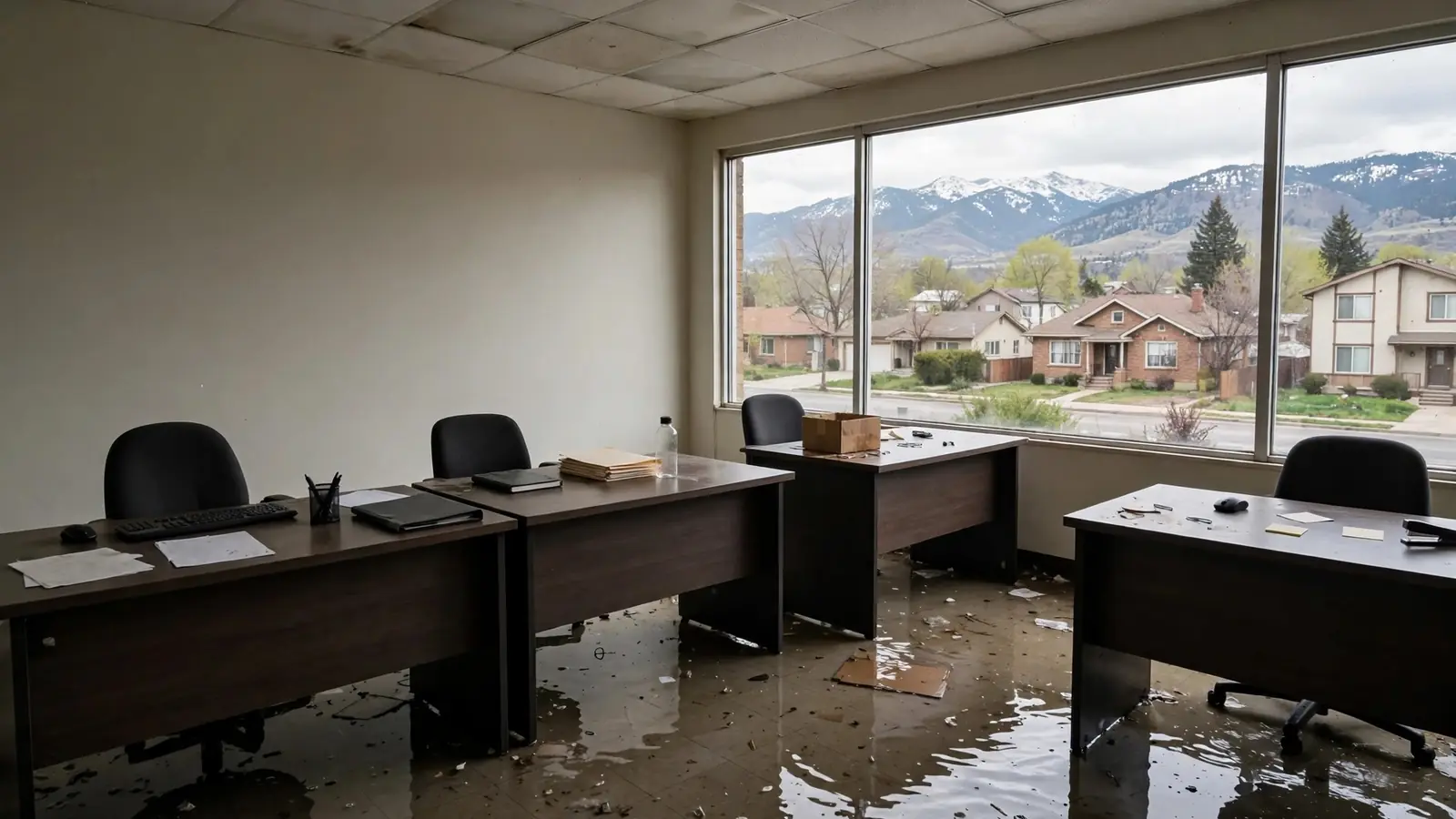
Commercial Restoration
Offices, shops, churches and rentals: drying fast while keeping the doors open where possible.
Explore serviceFlood Cleanup
Snowmelt, window-well and creek flooding in Springville basements: removal, sanitising and drying.
Explore service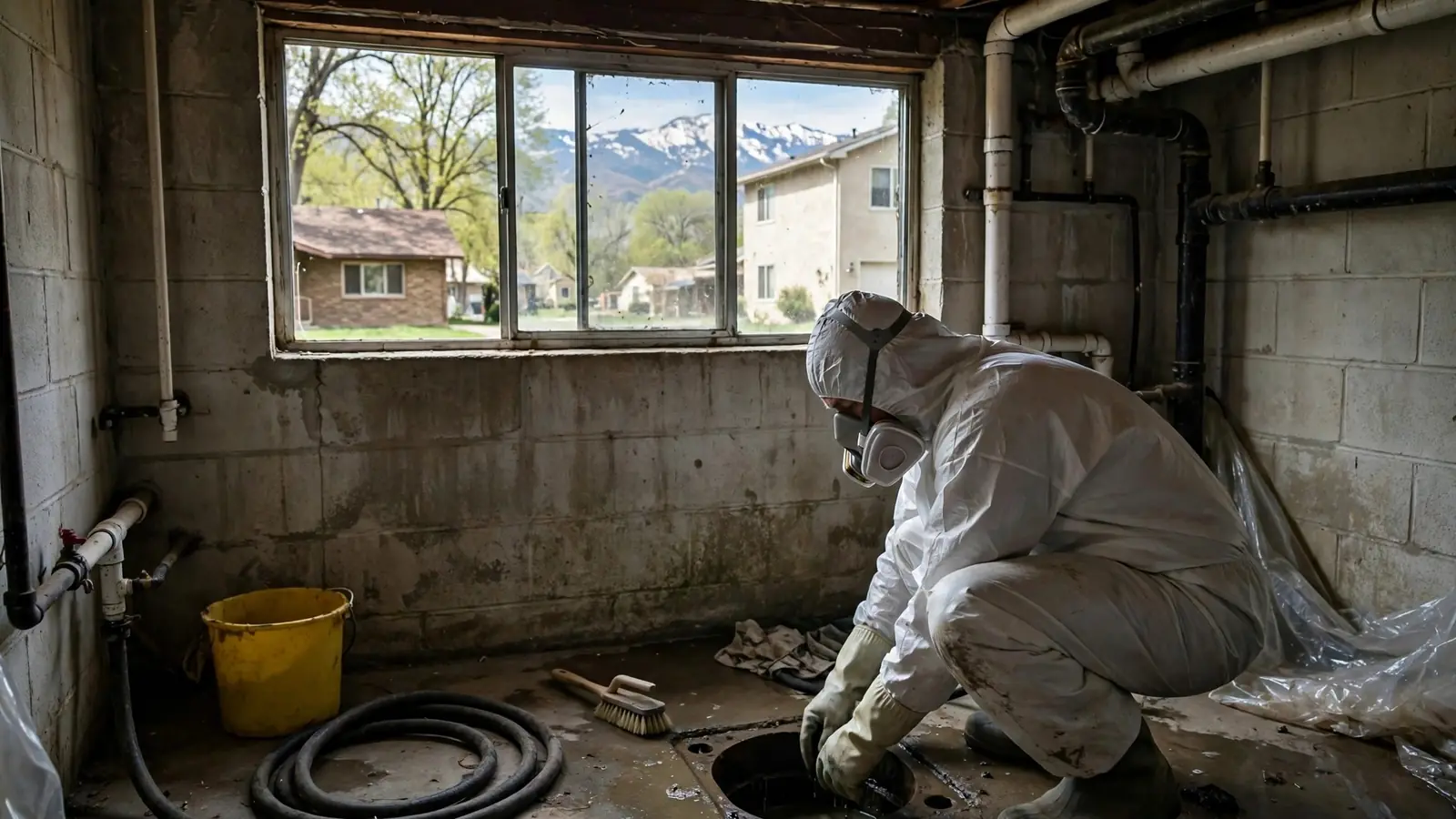
Sewage Cleanup
Basement floor-drain and toilet backups: safe removal, disinfection and drying.
Explore service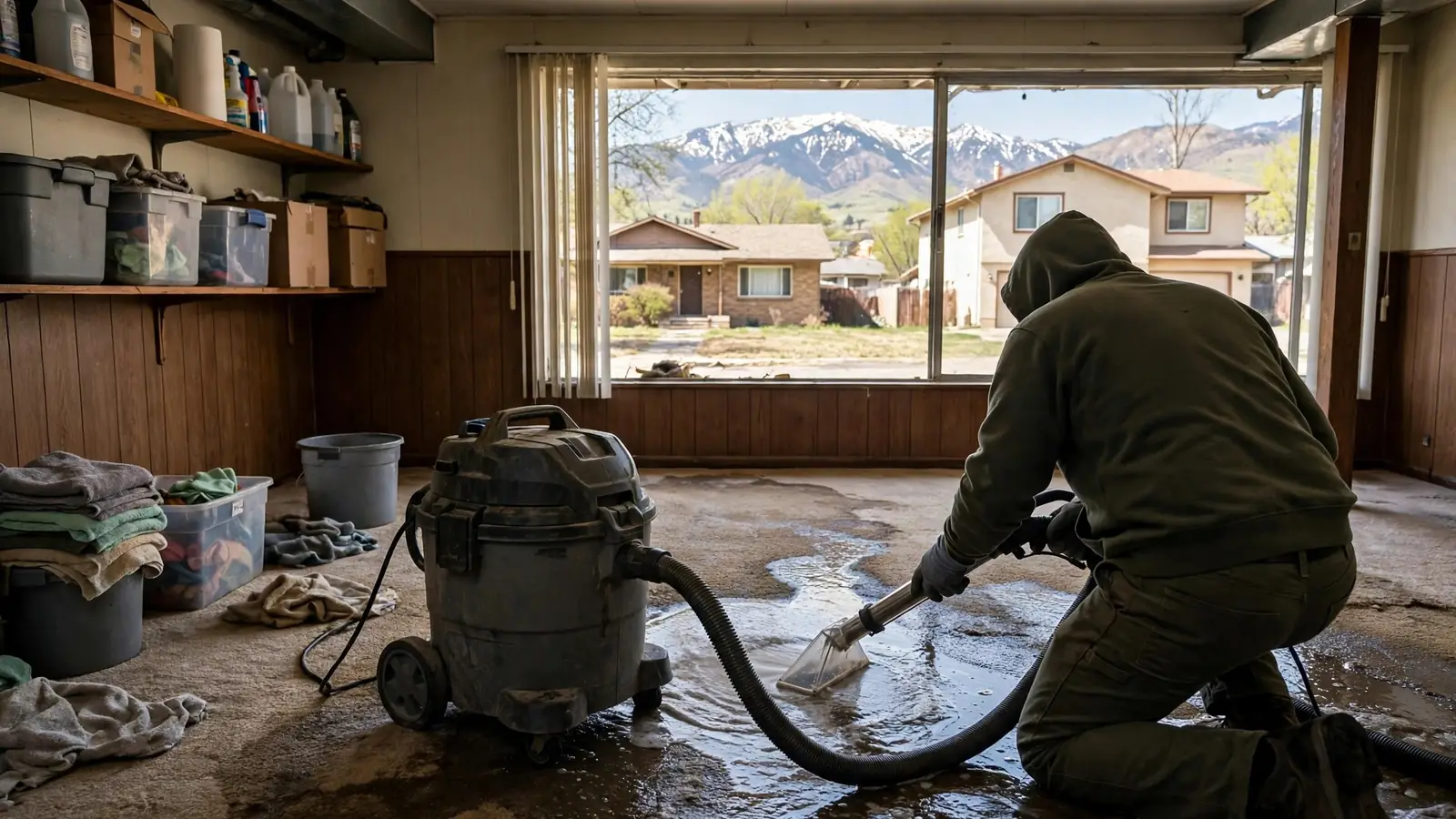
Water Damage Cleanup
Extraction, tear-out and drying after a burst pipe, appliance leak or overflow in a Springville home.
Explore serviceMitigation and Drying
Stopping the spread, removing water and drying the structure to a measured standard.
Explore service
Water is still coming in right now?
Shut off the water first if you can do it safely. The main valve in most Springville homes is in the basement or utility room, on the line where water enters the house. Stay out of standing water if outlets, cords or appliances are in it, and turn off power at the panel only if you can reach it while standing somewhere dry.
- Close the main water valve
- Keep away from wet electrical items
- Move rugs and valuables up and out
- Take photos before anything is thrown out
Why the clock matters
What the first 48 hours decide
Clean water from a supply line is the easiest kind to recover from, but only for a short time. Drywall draws water upward like a wick, wood floors start to cup, and particleboard in cabinets and stairs swells and does not shrink back. Federal guidance from the EPA is to dry wet materials within 24 to 48 hours, because mold can begin to grow after that. [1]
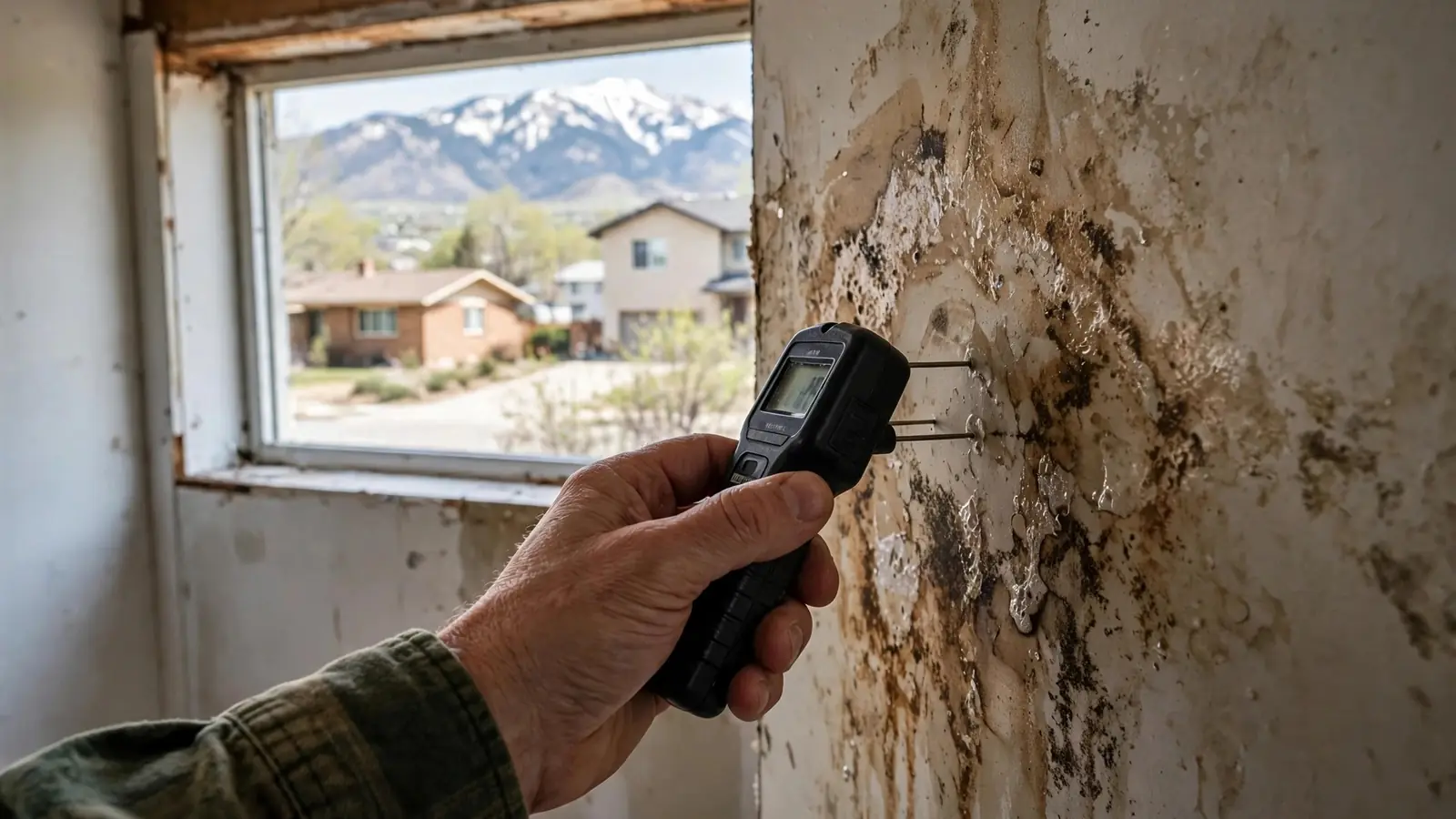
Fast drying is not just a fan in the doorway. A contractor removes standing water with extraction equipment, takes readings to find where the moisture has travelled, decides what can be dried in place and what has to be cut out, then sets air movers and dehumidifiers and checks readings each day until materials reach a normal dry level.
- Extraction removes far more water than drying ever can
- Moisture readings show water you cannot see
- Daily checks prove when drying is actually done
Local conditions
Springville houses and where water gets in
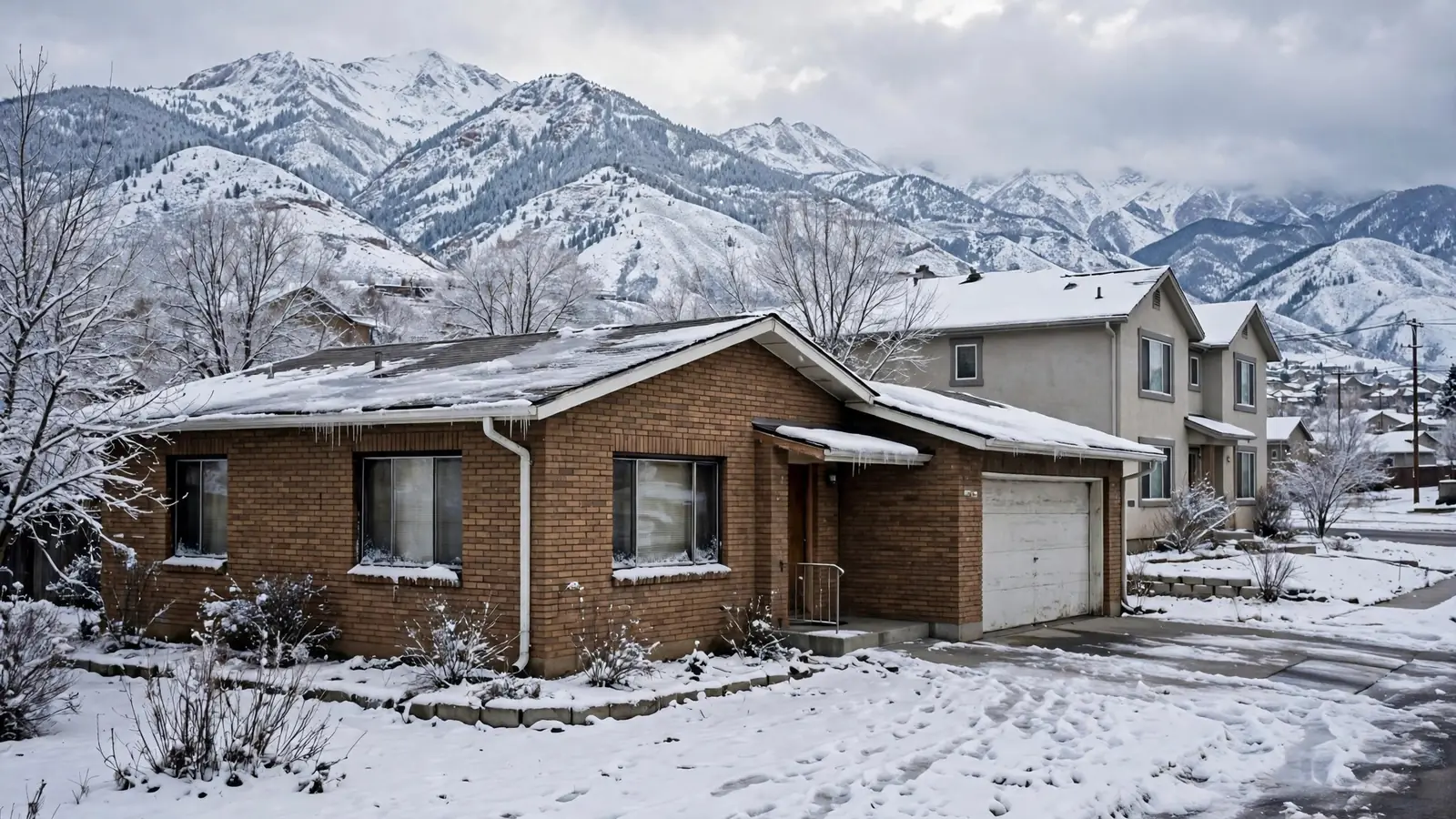
Springville has a wide mix of homes: early brick houses near Main Street, 1970s ramblers with full finished basements, and newer two-story homes in the west-side subdivisions. Basements are the common thread. When water gets in, it ends up there, under carpet, behind finished walls and around furnace and water heater platforms.
Weather adds to it. Winter cold freezes pipes in exterior walls, crawlspaces and garages. Heavy snowpack melts in spring and loads window wells and foundation soil. Hobble Creek runs high during runoff, and the city clears debris at bridges and diversion structures to reduce flood risk. Summer brings its own source: secondary irrigation lines that leak along a foundation.
- Finished basements collect water from every source
- Frozen pipes in winter
- Snowmelt and window-well flooding in spring
- Irrigation leaks in summer
Questions
Water damage questions from Springville callers
Can I call at night or on a weekend?
Yes. Calls are answered 24 hours a day, seven days a week, and connected to an independent contractor who handles water damage in Springville.
Do I need to wait for my insurance company first?
No. Most policies expect you to take reasonable steps to prevent further damage. Stop the water, take photos, and report the claim; starting mitigation does not usually have to wait for an adjuster.
Is a basement flood from snowmelt covered by homeowners insurance?
Often it is not. Surface water and flooding are commonly excluded from standard policies and need separate flood coverage. Water from a burst pipe is treated differently. Your policy wording decides.
Can I dry it myself with fans?
Small spills on hard floors, perhaps. Water that reached carpet pad, drywall or a finished basement usually needs extraction, moisture readings and commercial dehumidifiers to dry inside the walls in time.
Who will I be talking to?
An independent restoration contractor serving the Springville area. This site connects the call; the contractor provides the advice and the work.
Water in the house?
Talk to a Springville water damage contractor now
Questions about this page in Springville? Call any hour and speak with an independent restoration contractor on that same call.
Sources and citations
Keep reading