
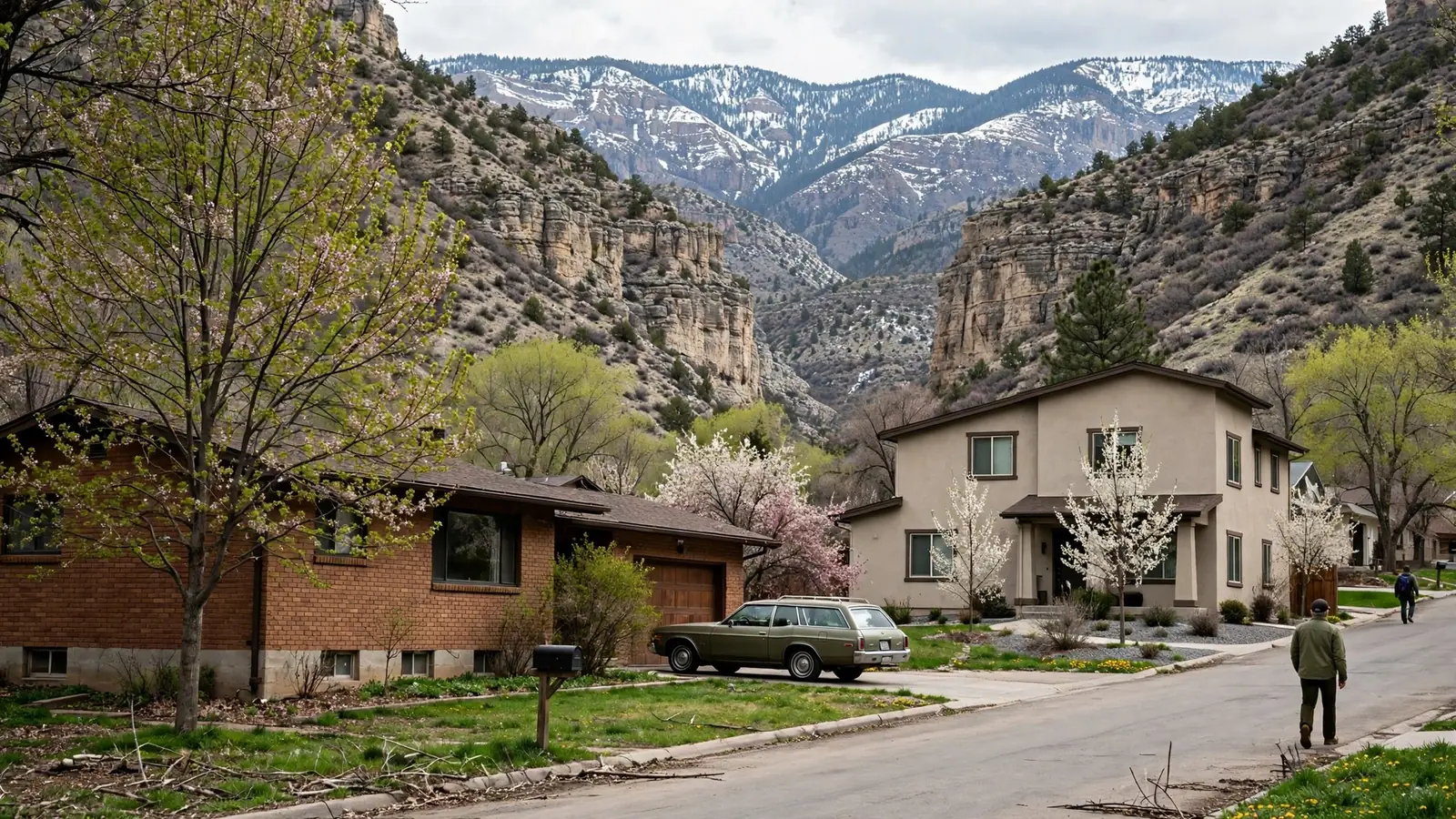
Key facts: Emergency: Hobble Creek Canyon
- Hobble Creek drains a mountain canyon east of Springville and runs high during spring runoff.
- FEMA maps special flood hazard areas along parts of Hobble Creek.
- Canyon temperatures fall lower than the valley floor, so pipes freeze more readily.
- Flooded private wells should be inspected and tested before the water is used for drinking.
In this page
- 1The two canyon emergencies
- 2What to do in the first hour
- 3Drying a cold canyon building
- 4Arriving at a flooded cabin
- 5When the creek is high
- 6Wells and septic after an emergency
- 7Keeping the next winter quiet
- 8What the first visit looks like in the canyon
- 9Belongings in a seasonal cabin
- 10Neighbors and shared roads
- 11Calling from out of town
- 12Canyon emergency questions
What happens here
The two canyon emergencies
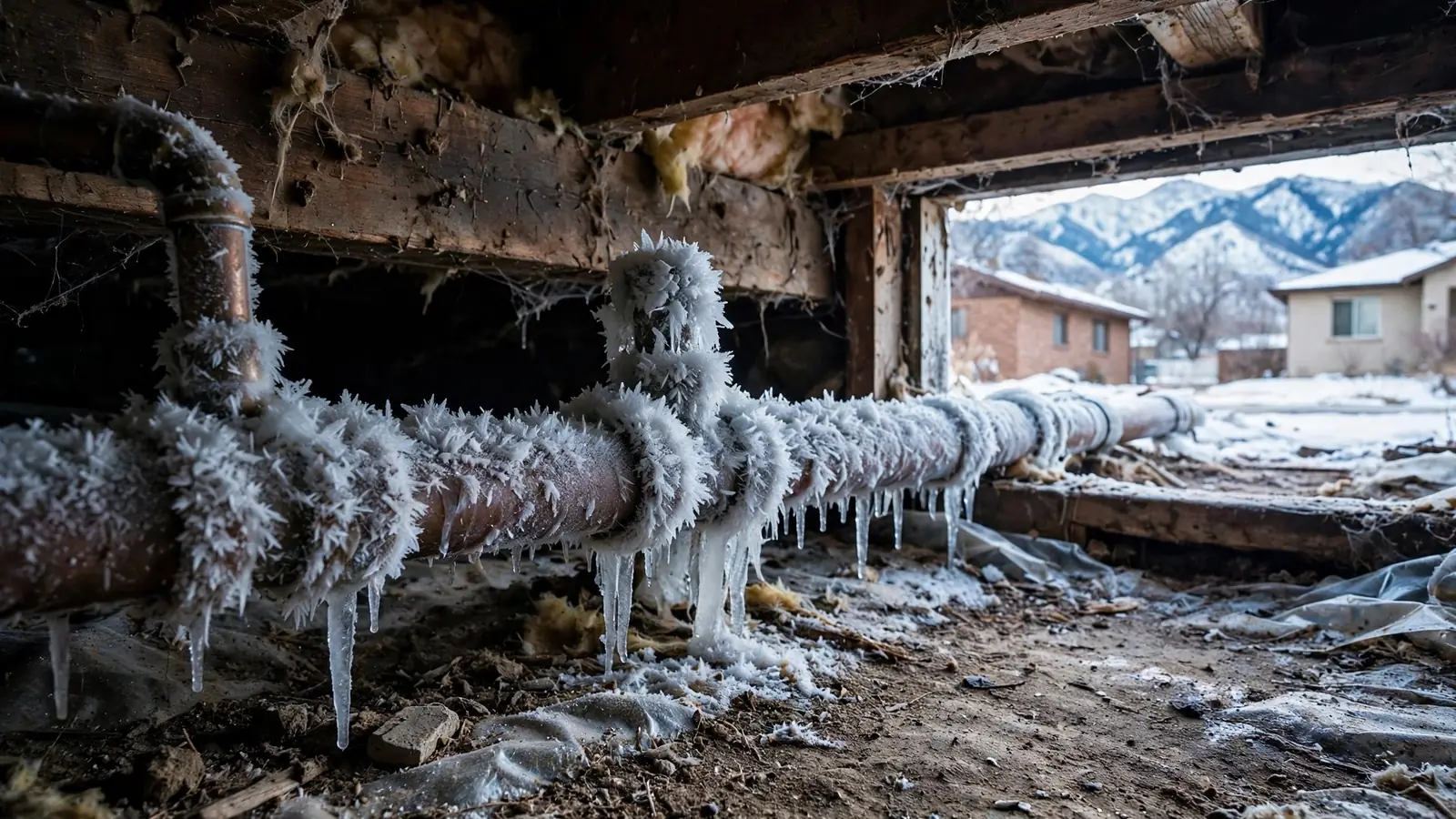
The first is the frozen cabin. Heat fails or is set too low, a line in a crawlspace or outside wall splits, and when the building warms slightly the water runs until someone visits. By then water can be in every room on the lowest level. These calls need extraction, removal of soaked materials and drying in a building that may still be cold.
The second is runoff. In big snow years Hobble Creek rises through April and May, groundwater climbs and low basements and crawlspaces take water. Creek water carries silt and is treated as contaminated, so carpet, pad and lower drywall it reaches are usually removed rather than dried.
First hour
What to do in the first hour
- 1
Stop the water
Main valve closed; well pump switched off at its breaker.
- 2
Check the building
Look for sagging ceilings and wet electrical items before walking through.
- 3
Restore heat if safe
A cold building dries slowly and pipes may freeze again.
- 4
Call
Mention access, heat, well and septic so the contractor brings the right equipment.
Drying
Drying a cold canyon building
Drying slows when materials are cold. Contractors often need to bring heat as well as dehumidifiers, and may use desiccant units that work better at low temperatures. Sealing off the affected rooms lets them heat and dry a smaller space efficiently. Expect daily readings and a longer job than the same loss in town.
On arrival
Arriving at a flooded cabin
Owners often discover the damage when they open the door after weeks away. Before going far inside, look up: a ceiling holding water may bulge or sag, and it can come down without warning. Look down: if water is near outlets, cords or a baseboard heater, do not walk through it. If you can reach the main valve and the well pump breaker from a dry spot, shut them both. Then step back outside and call.
Take photos from the doorway of each room, including the thermostat and any failed fitting you can see. Insurers ask whether the heat was on and whether the water was shut off; a photo of the thermostat setting answers the first question quickly.
Runoff
When the creek is high
During heavy runoff, the most useful thing is to watch: the water level, debris piling at bridges and culverts, and water appearing where it does not usually go. If water is entering the house from outside, there is little point extracting it until it stops. Instead, move belongings up, keep away from the banks, which can be undercut, and call to plan the cleanup for when the water drops. Contractors can bring pumps for a basement once inflow has stopped.
Private systems
Wells and septic after an emergency
Some canyon properties use private wells and septic systems. If floodwater reached the wellhead, do not drink the water until the well has been inspected, disinfected and tested; the county health department can advise. If the septic tank or drain field flooded, drains may back up into the house, and that water is treated like sewage. A septic service handles the tank; the restoration contractor handles the house.
Talk to a local contractor
Questions about emergency: hobble creek canyon?
One call connects you with an independent water damage restoration contractor who serves Springville.
Prevention
Keeping the next winter quiet
A remote temperature alert, an automatic shutoff valve and a habit of draining the lines before leaving take far less time and disruption than another flooded cabin. Ask the contractor, once the job is done, which pipes froze and why; often a short run of pipe in an uninsulated wall or crawlspace corner is the whole story.
First visit
What the first visit looks like in the canyon
Contractors working the canyon plan around distance. They load more equipment than a town job needs, because a second trip down the canyon for a forgotten pump or extra dehumidifier can add hours. On arrival they check the building for safety, confirm the water and well are off, and look at heat: if the furnace failed, getting warmth back into the building is part of the first visit.
Then the work looks like any serious water loss. Standing water is pumped and extracted, soaked carpet and pad come out, ceilings holding water are opened and drained, and lower drywall and insulation that stayed wet for days are removed. Because the water often ran for a long time, more material comes out than in a quick town leak. Drying equipment is set and the contractor arranges how readings will be taken, which may mean longer gaps between visits than in town.
Contents
Belongings in a seasonal cabin
Cabins tend to hold bedding, rugs, books, games and stored food. Soft items soaked for days usually cannot be saved and should be photographed and listed before disposal. Hard plastic, metal and glass can be washed. Food that touched floodwater or sat in a flooded room should be thrown away. If anything is irreplaceable, such as photographs or documents, keep it cool and ask the contractor about specialists who dry paper.
Away
Calling from out of town
Many canyon owners live elsewhere. If an alarm or neighbor tells you about water while you are away, call the line, explain that nobody is on site and describe how to get in. The contractor can tell you what they need to start.
Questions
Canyon emergency questions
Can someone reach a canyon cabin at night?
Often, depending on road conditions. Describe the route and driveway on the call.
Is creek water in the basement treated as clean?
No. It has crossed the ground and is handled as contaminated.
What about our well?
Have a flooded well inspected and tested before drinking from it.