
Key facts: East Bench
- Homes on sloped lots receive surface water from uphill properties and streets.
- Walkout basements have one wall fully below grade on the uphill side and one exposed wall downhill.
- Window wells on the uphill side of a house collect the most runoff.
- Retaining walls need drainage behind them; blocked drains push water toward foundations.
- Snowmelt on slopes can move quickly, especially when the ground below is still frozen.
In this page
- 1The east bench
- 2How water reaches east bench homes
- 3Walkout basements
- 4Reducing runoff damage on a slope
- 5Uphill side vs downhill side
- 6When water gets in
- 7Retaining walls and terraced yards
- 8Larger finished basements
- 9Springs and seeps on the slope
- 10Snow, sun and ice
- 11Common east bench problems and who fixes them
- 12Questions to ask on the call
- 13A typical east bench call
- 14Upper floors and attics
- 15Insurance on the slope
- 16More east bench questions answered in detail
- 17A year on the slope
- 18How cleanup on the slope differs
- 19What to tell the contractor when you call
- 20Selling or buying on the bench
- 21The people involved in an east bench repair
- 22Calling at any hour
- 23Newer construction on the bench
- 24The bottom line
- 25East Bench questions
About the area
The east bench
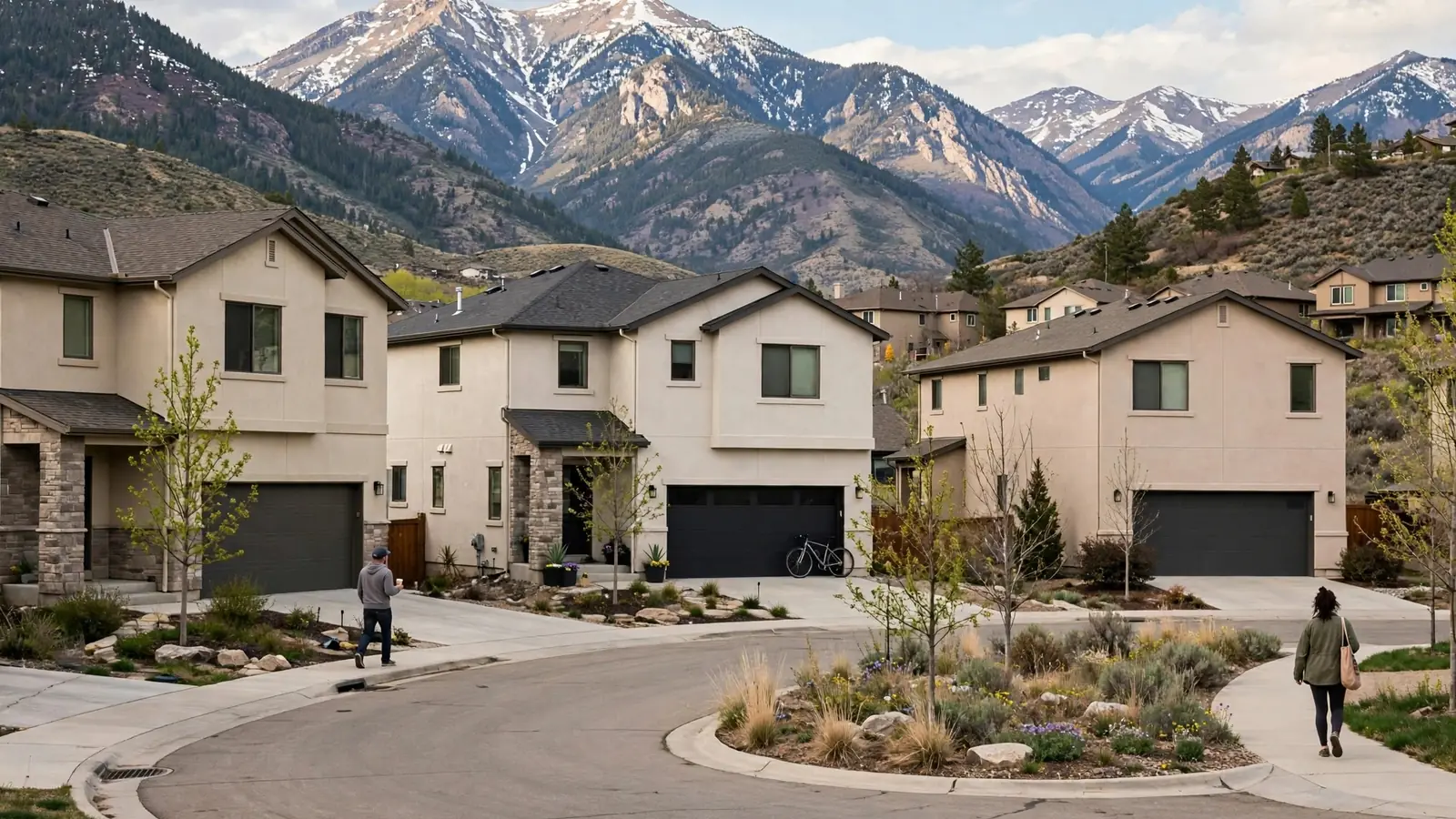
Springville climbs gently from the valley floor toward the mountains. East of about 1300 East, the slope steepens and homes sit on lots that fall away toward the west. Many have walkout or daylight basements: the uphill side is buried, while the downhill side opens onto a patio or yard. Neighborhoods here include homes from the 1970s through recent builds, many with large finished basements.
The view is the reason people buy here. The slope is the reason water behaves differently. Every rainstorm and every spring melt sends water downhill, and houses are in the way.
Sources
How water reaches east bench homes
- Uphill runoffWater from yards, streets and slopes above runs toward the uphill wall of the house.
- Window wells on the high sideWells on the buried side collect water and can overflow into basement bedrooms.
- Retaining wall drainageBlocked drains behind walls hold water against foundations.
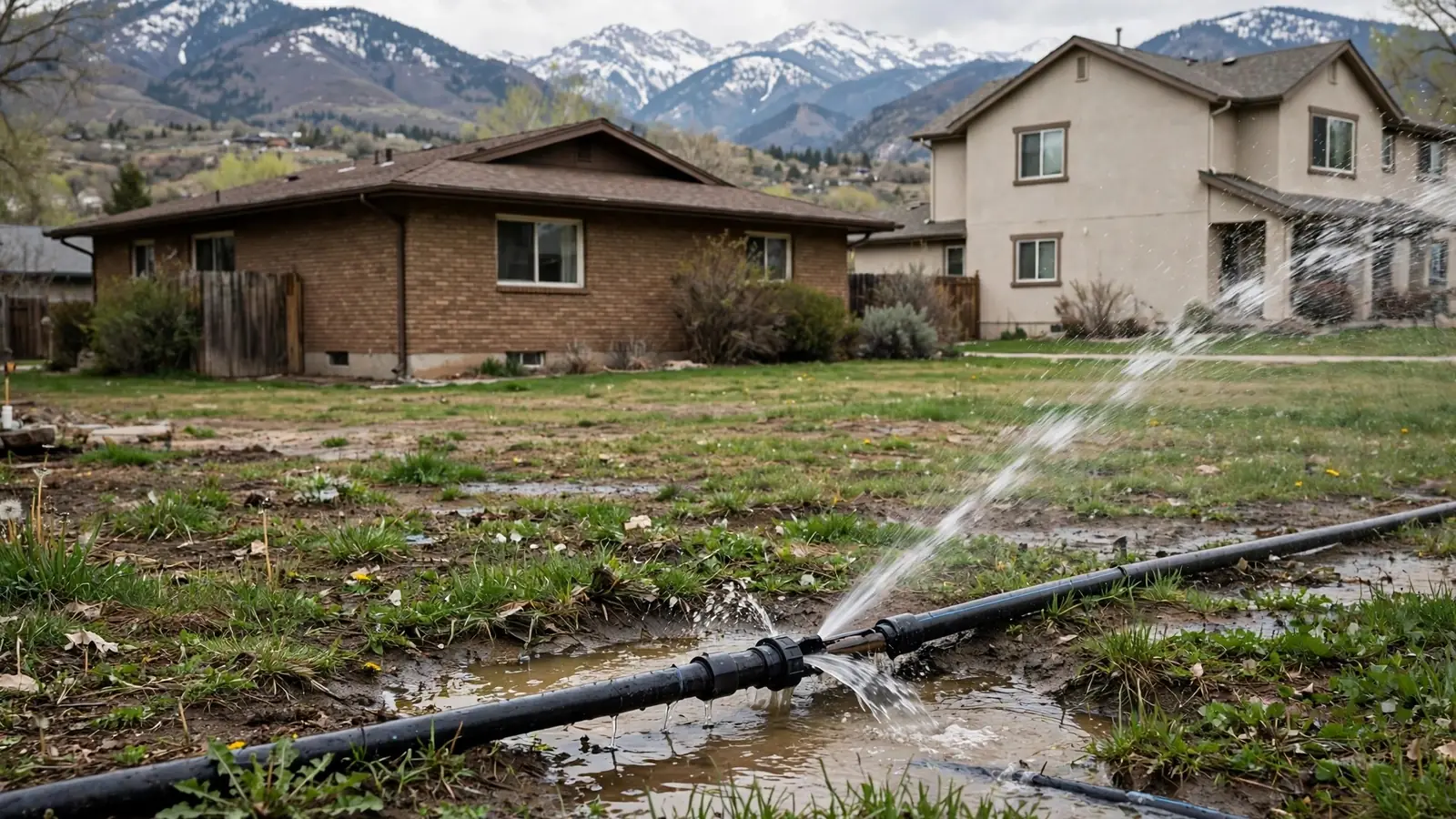
- IrrigationSprinklers and secondary water lines on slopes leak and run toward the house.
- SnowmeltDeep snow on slopes melts fast in spring sun.
- Walkout door thresholdsPatios that slope toward a walkout door let water in under it.
Walkouts
Walkout basements
A walkout basement is part basement and part ground floor. The uphill wall behaves like any basement wall: it holds back soil and water and can seep. The downhill wall has doors and windows at grade, where water from the patio can reach the threshold. Water entering at either side runs across the floor to the lowest point.
Cleanup in a walkout follows the same principles as any finished basement, but drying is often easier on the exposed side, where windows and doors let air move. The buried side, with insulation against concrete, usually needs more attention.
Prevention
Reducing runoff damage on a slope
- 1
Check grading
Soil should slope away from the house on every side, including the uphill side.
- 2
Install swales or drains
A shallow swale or drain on the uphill side can redirect water around the house.
- 3
Maintain window wells
Covers and clear drains matter most on the uphill side.
- 4
Watch irrigation
Check lines on slopes for leaks and keep heads aimed away from walls.
- 5
Keep retaining wall drains clear
Weep holes and drains behind walls must flow.
Comparison
Uphill side vs downhill side
| Factor | Uphill side | Downhill side |
|---|---|---|
| Soil against wall | Full height | Little or none |
| Main water source | Runoff and groundwater | Patio and door thresholds |
| Window wells | Common | Rare |
| Drying | Slower | Faster with airflow |
Response
When water gets in
Follow the same first steps as anywhere: stop any internal source, make it safe, photograph, protect belongings and call. If water is coming from outside, look for its route: an overflowing well, a door threshold, or a crack in the uphill wall. That helps the contractor plan, and later helps whoever fixes the drainage.
Outside water is generally treated as contaminated, so carpet pad and lower drywall it touched are usually removed. Water from a pipe inside the house is usually clean and can often be dried in place if work starts quickly.
Retaining walls
Retaining walls and terraced yards
Many east bench lots are terraced with retaining walls to create flat yard space on the slope. A retaining wall holds back soil, and the soil holds water. A well-built wall has gravel backfill and a drain pipe or weep holes to let that water out at the base. Over time those drains clog with fine soil and roots, and water builds up behind the wall.
When a wall is close to the house, that trapped water can find its way to the foundation. When a wall is uphill of the house, it can release a surge of water during a storm if it partly fails. Signs of trouble include water seeping from the face of the wall, bulging, leaning or cracking, and wet ground at the base long after a storm. These are problems for a landscape or structural contractor, but they often show up first as a damp basement wall.
Basements
Larger finished basements
East bench homes, particularly newer ones, often have big finished basements with home theaters, bedrooms, bathrooms and kitchenettes. More finished space means more to protect and more to dry. Carpet, padding, built-in cabinets and media equipment all sit on the slab. A leak from a basement bathroom or wet bar can run under several walls before anyone notices.
Contractors typically map moisture room by room in a basement like this, because water rarely stays where it started. They may lift carpet in a large area, remove the bottom of several walls, and set up dehumidification sized for the whole basement rather than one room.
Subsurface water
Springs and seeps on the slope
Hillside ground sometimes carries water underground in thin layers that surface as seeps or small springs, especially in a wet year. A homeowner may notice a patch of lawn that stays soft all summer, or water appearing at the base of a wall where none came before. Construction can redirect these underground flows, and a new house or wall uphill may change where water emerges.
If water keeps appearing in the same spot in your basement with no plumbing leak, that kind of subsurface flow is one possibility. A drainage contractor or geotechnical engineer is the right person to look at it. Meanwhile, the restoration contractor can dry the house and document where the water entered.
Winter
Snow, sun and ice
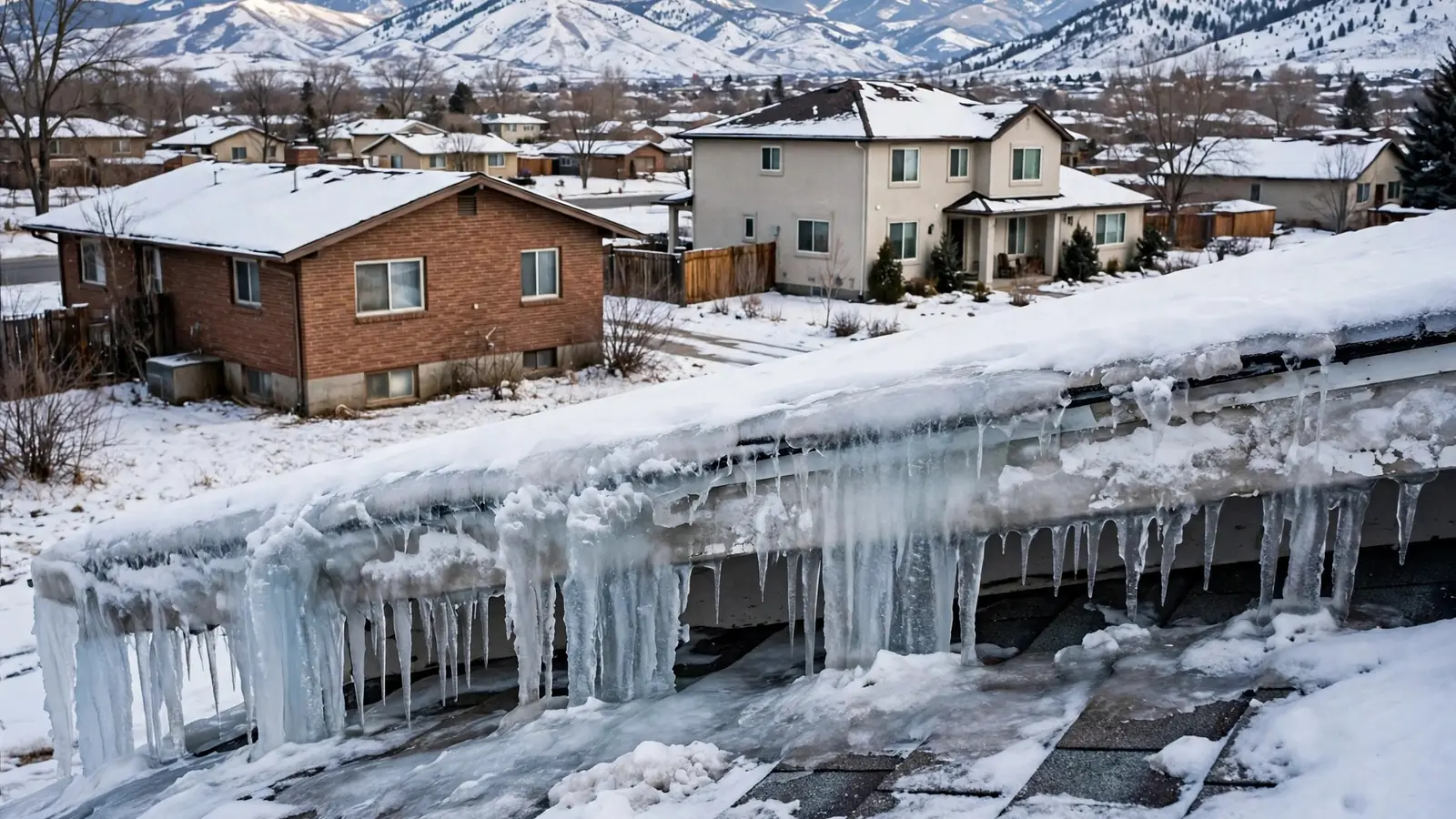
The east bench gets plenty of winter sun on its west-facing slopes. Snow on roofs and lawns can melt quickly on a bright afternoon and refreeze at night. That cycle builds ice dams on eaves, sends meltwater into gutters that may still be frozen, and pours water down walls toward window wells.
Keeping gutters clear in autumn, making sure downspouts extend well away from the house and shoveling snow back from the foundation and out of window wells in late winter all help. Clear well covers are a simple, effective upgrade for basement bedrooms on the uphill side.
Causes
Common east bench problems and who fixes them
| Problem | Who usually fixes the cause |
|---|---|
| Overflowing window well | Landscape or window well contractor |
| Blocked retaining wall drain | Landscape or structural contractor |
| Uphill runoff | Grading or drainage contractor |
| Ice dams | Roofer or insulation contractor |
| Plumbing leak | Plumber |
Ask
Questions to ask on the call
- Which side of the basement is wettest, and why?
- Will you remove carpet and drywall on the uphill side?
- How long will a basement this size take to dry?
- Can you document where water entered?
- Do you share daily readings?
- What licences and insurance do you carry?
Example
A typical east bench call
A common call from the east bench comes in late March or April. A family wakes up to wet carpet in a basement bedroom on the uphill side. The window well outside is full of meltwater, the drain at its base is buried under ice and silt, and water has come in around the window frame. The carpet is soaked for several feet into the room, and water has wicked into the bottom of the drywall.
The contractor pumps out the well and clears the drain so no more water enters. Inside, they extract the carpet, pull back and remove the pad, and take readings along the walls. Because the water came from outside, they cut the drywall above the wet line, remove wet insulation and clean the bottom plates. Dehumidifiers and air movers run for several days while readings are logged. The family is advised to add a well cover and check the drain each spring.
That pattern repeats across the east bench, with variations: a downspout emptying beside a wall, a sprinkler line broken in the yard above, a retaining wall that stopped draining. The cleanup follows the same principles each time.
Talk to a local contractor
Questions about east bench?
One call connects you with an independent water damage restoration contractor who serves Springville.
Attics
Upper floors and attics
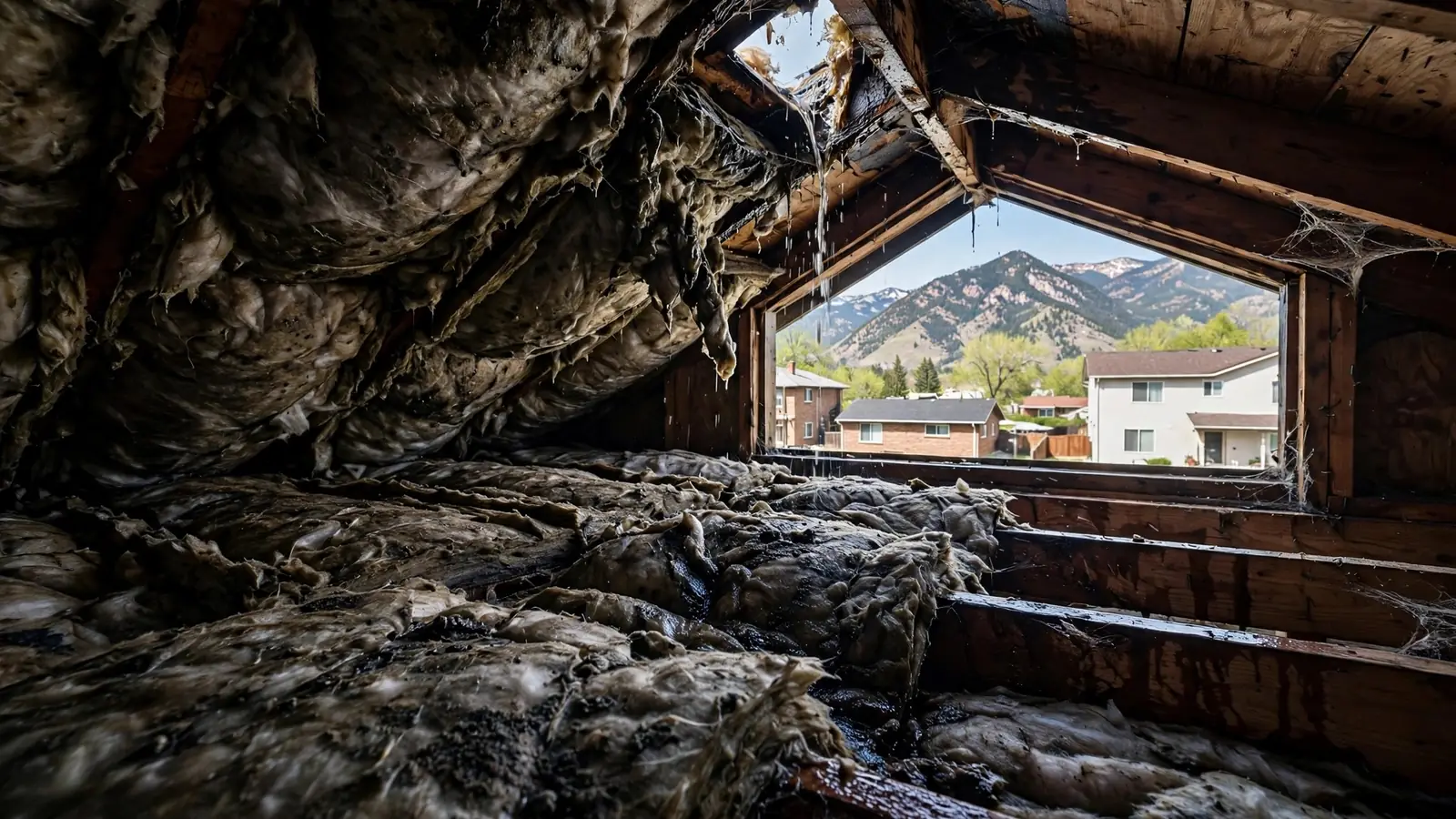
Basements get most of the attention, but east bench homes also take water from above. Ice dams form at eaves, especially where warm air leaks into the attic and melts snow on the roof, which then refreezes at the cold overhang. Meltwater backs up under shingles and drips into the attic, soaking insulation and staining ceilings.
Attic water damage is often found late, because nobody looks in the attic in winter. Wet insulation loses its value and can grow mold on the underside of the roof deck. Cleanup involves removing wet insulation, drying the framing and decking, and repairing the ceiling below. Preventing the next ice dam is usually a matter of improving attic insulation and air sealing, a job for an insulation contractor or roofer.
Coverage
Insurance on the slope
Insurers distinguish carefully between water that comes from inside the house and water that comes in from outside. A burst pipe in a basement bathroom is usually covered. Meltwater from a window well or runoff through a wall may be treated as surface water or seepage, which many standard policies exclude without additional coverage. Ice dam leaks are treated differently by different policies.
Read your policy before spring and ask your agent about flood coverage and water backup endorsements. After a loss, document the cause carefully: a photo of the full window well or the broken sprinkler line is evidence of how water entered.
Questions
More east bench questions answered in detail
Why does water come in on the uphill side even when the gutters are clear?
Gutters handle roof water, but slopes also deliver surface runoff and groundwater from above. Water moving through the soil on a hill reaches the buried wall of the house no matter how clean the gutters are. A swale, a drain along the uphill side or a perimeter drain inside are the usual long-term fixes.
My window well cover cracked under snow. Does that matter?
Yes. A cracked or missing cover lets snow and rain into the well. On the uphill side of a sloped lot, the well can fill quickly in spring. Replace damaged covers before winter, choosing ones rated for snow load.
Can a walkout basement door leak in a storm?
It can if the patio slopes toward the door, the threshold is low or the door seal is worn. Check that the patio drains away from the house and that the door's weatherstripping and threshold are in good condition.
How long will it take to dry a large finished basement?
Most clean-water losses dry in three to five days with proper equipment, but a large basement with many rooms, insulated walls and a cold slab can take longer. The contractor's daily readings will show progress.
Should I hire a landscaper or a restoration contractor first?
The restoration contractor first, to stop and dry the damage inside. Then a landscaper or drainage contractor to fix the cause outside. The restoration contractor's notes on where water entered help the second contractor.
Do hillside homes need flood insurance?
Being on a slope reduces the risk of river-style flooding, but runoff and groundwater are still possible. Flood insurance through the NFIP covers surface water flooding; it does not cover every kind of seepage. Discuss your situation with your agent.
Through the year
A year on the slope
Winter on the east bench is about snow loading and ice. Snow piles against uphill walls and into wells, and freeze-thaw cycles on sunny slopes build ice dams on roofs. Shovel snow back from the foundation and out of wells after big storms, and watch the eaves for icicles that signal ice dams.
Spring is runoff. When the snow melts, water runs downhill across lawns and into soil above the house. This is the peak season for uphill-wall seepage and window well flooding. Check the basement after warm days, and clear well drains as soon as the ice is out.
Summer is irrigation and storms. Sprinkler heads on slopes are knocked out of alignment and spray walls; secondary lines crack. Afternoon thunderstorms send fast runoff down streets and yards. Autumn is maintenance: clean gutters, check retaining wall drains and replace damaged well covers before snow.
Differences
How cleanup on the slope differs
Cleanup on a sloped lot is mostly about the uphill side. That wall usually takes the water, has the most soil against it and dries most slowly. Contractors often focus drying equipment there, remove more material from the bottom of those walls and recommend leaving inspection openings so the wall can be checked in the next wet season.
On the downhill side, walkout doors and windows can be used to move air, and drying is generally quicker. If water came in under a walkout door, the threshold and patio slope deserve attention once the house is dry.
On the call
What to tell the contractor when you call
- Your address and accessStreet address, gate codes or a steep drive, and where a crew can park in East Bench.
- Where the water came fromUphill or downhill wall, a window well, the patio door or a pipe.
- Which side of the houseUphill or downhill, and which rooms.
- What is outside that wallWindow well, retaining wall, patio or slope.
- Recent weatherSnowmelt, storm or irrigation running.
Real estate
Selling or buying on the bench
Water history matters when a house changes hands. Utah's seller disclosure forms ask about past water intrusion, and buyers on the east bench often look closely at basements on the uphill side. Keeping the restoration contractor's documentation, including the moisture log showing the house was dried to standard, gives a buyer confidence that a past problem was handled properly rather than covered up.
Buyers should look for signs of past water: replaced drywall at the bottom of uphill walls, new carpet in one basement room, efflorescence on exposed concrete, or window wells with fresh gravel and new drains. None of these mean a house is a bad buy, but they are worth asking about. A home inspection that includes a moisture check of the basement is worth doing on a sloped lot.
For sellers, fixing the cause before listing, whether that means a well cover, a regraded yard or a drain on the uphill side, is usually more persuasive than any explanation.
Coordination
The people involved in an east bench repair
A water problem on a sloped lot often involves several trades. The restoration contractor handles extraction, removal and drying. A landscaper or drainage specialist deals with the grading, swales and retaining wall drains outside. A window well company can replace a damaged cover or fix a drain. If a roof ice dam was the cause, a roofer or insulation contractor addresses that. Your insurer and adjuster sit alongside all of them. Keeping one folder of photos, reports and receipts makes coordinating them far easier, and the restoration contractor's notes on where water entered help everyone else start in the right place.
Around the clock
Calling at any hour
Snowmelt does not keep office hours. The worst east bench window-well floods often start overnight, when temperatures drop, a well drain freezes and water from the afternoon's melt has nowhere to go. Calls through this site are answered around the clock, so you can reach an independent contractor whenever water appears. Describe which side of the house is wet and what is outside that wall, and they can tell you whether to start bailing a well, move furniture or simply wait safely until they arrive. Acting in the first few hours keeps the wet area small and the drying short, which is the whole point of calling quickly.
Newer construction on the bench
Recent homes built higher on the bench usually have poured basement walls, exterior damp-proofing, perimeter drains and egress wells with drains tied into the system. That design keeps most groundwater out, but it depends on every piece working. A perimeter drain silted up during construction, a well drain never connected, or a downspout tied into the foundation drain can all overwhelm it. When a newer bench home takes water, the cause is often one of these small construction details rather than the slope alone, and a drainage contractor with a camera can usually find it.
Summary
The bottom line
Many east bench homeowners find that once drainage on the uphill side is sorted, their basement stays dry for years. The slope that causes the problem also makes the solution straightforward: give water a path around the house instead of into it. If water does get in, call early: the first day of drying shapes everything that follows, and the line is answered at all hours.
Questions
East Bench questions
Why does only one side of my basement get wet?
On a slope, the uphill side holds back soil and runoff, so it takes in most of the water.
Do walkout basements flood less?
They can drain more easily on the open side, but the buried side is still at risk.
Is runoff from a neighbor's yard my problem?
Water follows the slope. Grading and drainage on your lot are the practical fix.